

News
Ichiba OnePlatform Team - 22/05/2026
In this article
As ecommerce competition continues to grow in 2026, many online sellers are searching for scalable ways to expand their product catalogs without investing heavily in inventory, warehousing, or fulfillment operations. This shift has made b2b dropshipping suppliers increasingly important for entrepreneurs who want to build sustainable ecommerce businesses while maintaining lower operational risk.
The rise of wholesale b2b dropshipping has also changed how businesses approach supplier relationships. Modern dropshipping is no longer limited to basic, low-cost products with long shipping times. Today’s suppliers often provide faster fulfillment, private labeling services, branded packaging, automation tools, and integrations with ecommerce platforms such as Shopify and WooCommerce.
However, choosing the right supplier is not always straightforward. Some suppliers offer better pricing but require higher MOQs, while others focus on faster shipping or niche product categories. Understanding these differences is essential because supplier quality directly affects customer satisfaction, profit margins, and long-term business growth.
As the ecommerce industry becomes more competitive, many online sellers are moving beyond traditional retail sourcing models and looking for suppliers that can support long-term business growth. This is where b2b dropshipping suppliers play an important role. Unlike standard retail dropshipping providers that mainly target small sellers, B2B suppliers focus on wholesale fulfillment and scalable operations that help businesses expand more efficiently.
B2B dropshipping suppliers are wholesale providers that store inventory and fulfill customer orders on behalf of ecommerce retailers. Instead of purchasing products in bulk and managing warehouse operations independently, sellers list products in their online stores and forward customer orders directly to the supplier after a purchase is made.
The supplier then handles product picking, packing, and shipping directly to the end customer. Because of this structure, businesses can reduce upfront inventory costs while still offering a wide range of products across multiple categories.
One major difference between b2b dropshipping suppliers and traditional dropshipping middlemen is the level of supplier involvement and pricing structure. Traditional middlemen often act as intermediaries between manufacturers and retailers, which can increase product costs and reduce profit margins. In contrast, wholesale B2B suppliers typically provide direct access to manufacturers or large-scale inventory networks, allowing retailers to receive more competitive wholesale pricing.
Additionally, B2B suppliers are often designed to support larger order volumes and long-term business relationships. Many of them provide advanced features such as branded invoicing, private labeling, custom packaging, API integrations, and dedicated account management services.
The wholesale b2b dropshipping model combines the advantages of wholesale pricing with the flexibility of dropshipping fulfillment. Retailers can access bulk-level pricing without physically purchasing or storing inventory in advance, which significantly lowers operational risk for growing ecommerce businesses.

In this model, suppliers usually offer tiered pricing structures based on sales volume. As retailers generate more orders, they may qualify for lower product costs and better shipping rates. This creates an incentive for long-term cooperation between suppliers and sellers while improving overall profit margins.
The supplier retailer relationship is also more collaborative compared to standard retail dropshipping. Wholesale suppliers often work closely with sellers to improve inventory planning, optimize fulfillment processes, and maintain product consistency. Some suppliers even provide custom branding services that help retailers build stronger brand identities in competitive markets.
Although both models involve third-party fulfillment, there are several key differences between B2B suppliers and traditional retail dropshipping suppliers.
B2B dropshipping suppliers generally offer lower pricing because they operate on wholesale structures and higher order volumes. Retail dropshipping suppliers often include larger markups, which can reduce seller profitability.
Many wholesale suppliers require minimum order quantities or monthly sales commitments before offering the best pricing tiers. Retail dropshipping suppliers usually have fewer entry barriers but may provide less competitive pricing overall.
B2B suppliers commonly support private labeling, branded packaging, and custom invoices. This allows sellers to build recognizable ecommerce brands instead of operating generic stores. Retail dropshipping suppliers may offer limited branding flexibility, especially for beginner accounts.
Wholesale B2B suppliers are generally better equipped for scaling businesses because they support larger order volumes, automation systems, and long-term partnerships. Retail suppliers are often more suitable for testing products or starting small ecommerce stores.
Not all b2b dropshipping suppliers operate in the same way, and understanding the different supplier types is essential before building a scalable ecommerce business. Some suppliers work directly as manufacturers, while others act as supplier aggregators that connect retailers with multiple product sources through a single platform. In addition, shipping speed, pricing, and product quality can vary significantly depending on whether suppliers are local or international.
Manufacturer suppliers are companies that produce products directly and offer wholesale fulfillment services to retailers. These suppliers are often found on large sourcing platforms such as Alibaba and are commonly used by businesses that want lower product costs and stronger control over branding.
Instead of buying products through intermediaries, retailers work directly with factories or production facilities. This direct sourcing approach can significantly improve profit margins because there are fewer middlemen involved in the supply chain.
One of the biggest advantages of manufacturer-based suppliers is lower pricing. Since products come directly from factories, sellers can often negotiate better rates, especially when order volumes increase over time.
However, there are also several challenges associated with direct factory sourcing. Many manufacturers require higher minimum order quantities, even when offering dropshipping support. Communication barriers may also occur when working with overseas suppliers, especially if language differences affect product specifications or fulfillment expectations.
In addition, shipping times from international factories can sometimes be longer compared to local warehouse suppliers. Retailers targeting fast delivery markets such as the United States or Europe may need to balance lower product costs with customer shipping expectations.
Aggregator platforms simplify the process of finding reliable wholesale b2b dropshipping suppliers by connecting retailers with multiple pre-vetted suppliers through one centralized system. Instead of contacting factories individually, sellers can browse product catalogs, compare suppliers, and automate fulfillment operations from a single dashboard.
Popular platforms such as CJdropshipping, Syncee, and IChiba OnePlatform have become increasingly popular because they reduce many of the operational difficulties associated with direct sourcing.
One major advantage of aggregator platforms is convenience. Most platforms already verify suppliers before allowing them into the network, which helps reduce the risk of scams, inconsistent quality, or unreliable fulfillment.
Another advantage is lower entry barriers. Unlike many factory suppliers, aggregator platforms often support low or zero MOQ requirements, making them more accessible for new ecommerce businesses testing products.
However, aggregator platforms also have some limitations. Product prices are sometimes slightly higher because the platform itself operates as an intermediary layer between suppliers and retailers. Some platforms may also charge monthly subscription fees or transaction service fees.
Another important factor when choosing wholesale suppliers is whether to work with local or global fulfillment networks. Both options offer unique advantages depending on your business strategy and customer location.
Local suppliers, especially those based in the United States or Europe, are often preferred by sellers targeting fast shipping markets. Because products are stored closer to customers, delivery times are usually much shorter, often ranging from three to seven business days. Faster shipping can improve customer satisfaction, reduce refund requests, and increase store conversion rates.
Local suppliers also make communication easier and can simplify return handling processes. In some cases, product quality consistency may be more reliable due to stricter regional standards.
However, local suppliers generally have higher product costs compared to overseas manufacturers. This can reduce overall profit margins, especially in highly competitive ecommerce niches.
Global suppliers, particularly those based in China or other major manufacturing regions, typically provide lower wholesale pricing and larger product catalogs. These suppliers are popular among ecommerce businesses focused on maximizing margins and accessing trending products quickly.
The downside is that international fulfillment can involve longer shipping times, customs delays, and more complicated logistics management. Depending on the shipping method, international orders may take anywhere from seven to twenty days or longer to arrive.
Many successful ecommerce businesses solve this issue by combining both local and global suppliers. They use overseas suppliers for product sourcing and cost efficiency while leveraging local warehouses for faster fulfillment in key markets.
Today’s ecommerce market offers a wide range of b2b dropshipping suppliers, from global wholesale marketplaces to automation-focused supplier networks. Some platforms specialize in low-cost international sourcing, while others focus on fast local fulfillment or premium branding features. Below are some of the most popular wholesale b2b dropshipping suppliers that ecommerce sellers frequently use in 2026.
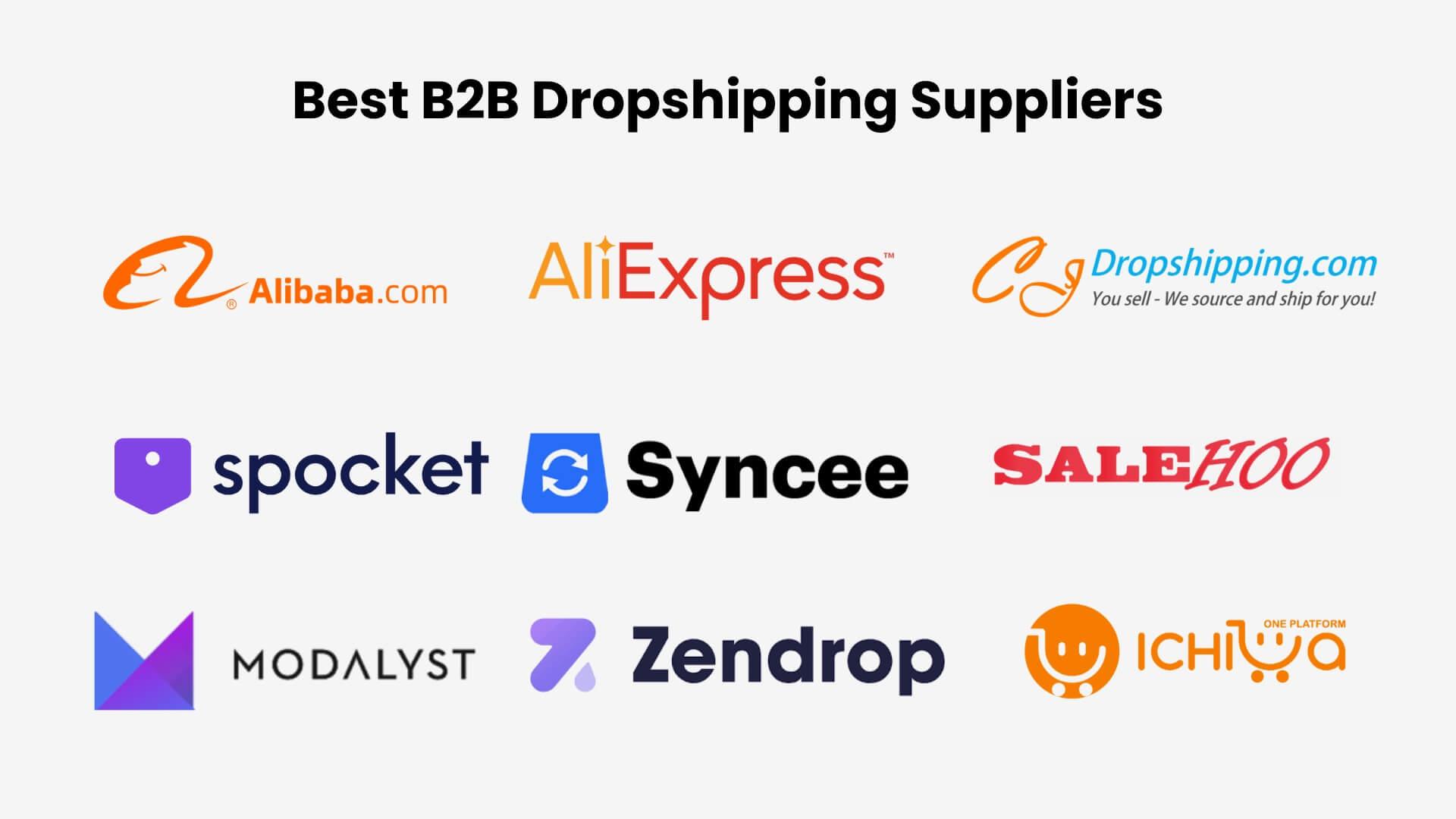
Alibaba remains one of the largest global sourcing platforms for wholesale suppliers and manufacturers. It is widely used by businesses that want direct factory pricing and custom product manufacturing options. Sellers can negotiate bulk pricing, private labeling, and custom packaging directly with suppliers.
AliExpress, while more retail-focused, is still commonly used by beginner dropshippers because of its low entry barrier and wide product selection.
Best for:
Direct factory sourcing
Custom manufacturing
Low-cost products
Large product catalogs
Potential drawbacks:
Longer shipping times
Communication barriers with some suppliers
Product quality inconsistency across vendors
CJdropshipping has become one of the most popular all-in-one dropshipping platforms for ecommerce businesses. It offers product sourcing, warehousing, automated order fulfillment, and integration with major ecommerce platforms.
Unlike traditional supplier marketplaces, CJdropshipping also helps sellers source products directly from manufacturers upon request.
Best for:
Product sourcing support
Automated fulfillment
Shopify integration
Faster shipping compared to standard AliExpress sourcing
Potential drawbacks:
Some products may still have long international shipping times
Product pricing can vary depending on sourcing availability
Spocket focuses primarily on US and EU suppliers, making it attractive for sellers targeting customers who expect faster delivery times. The platform emphasizes higher-quality suppliers and branded invoice options. Because suppliers are mostly local, shipping times are usually much faster than standard overseas fulfillment networks.
Best for:
US and European markets
Faster shipping
Higher quality product sourcing
Branded ecommerce stores
Potential drawbacks:
Higher product costs
Smaller product catalog compared to global marketplaces
SaleHoo operates as a supplier directory and research platform that connects ecommerce businesses with verified wholesale suppliers. It is particularly useful for beginners who want access to vetted suppliers without manually researching thousands of companies. The platform also includes educational resources for ecommerce sellers.
Best for:
Supplier research
Beginner-friendly sourcing
Verified wholesale directories
Potential drawbacks:
Limited built-in automation tools
Requires manual supplier communication in many cases
Syncee is a supplier marketplace and automation platform that helps sellers connect with suppliers from multiple regions worldwide. It supports automated inventory syncing, product imports, and order management across ecommerce platforms. The platform includes suppliers from the US, Europe, Canada, Australia, and Asia.
Best for:
Multi-regional supplier access
Automation features
Scalable ecommerce operations
Potential drawbacks:
Subscription costs for advanced features
Supplier quality may vary across regions
Modalyst focuses heavily on branded and higher-quality products, including fashion, beauty, and lifestyle categories. The platform integrates directly with Shopify and offers both independent brands and AliExpress sourcing options.
Best for:
Fashion ecommerce
Premium product sourcing
Brand-focused stores
Potential drawbacks:
Higher pricing on some premium products
Limited selection in certain niches
Zendrop was designed specifically for ecommerce automation and simplified fulfillment management. It offers product sourcing, branded packaging, subscription management, and automated order fulfillment. The platform is popular among Shopify store owners looking for simplified operations.
Best for:
Shopify automation
Branded packaging
Beginner-friendly fulfillment
Potential drawbacks:
Subscription required for premium features
Product selection is smaller than that of major marketplaces
IChiba OnePlatform is a growing B2B ecommerce solution that connects sellers with suppliers from Japan and other international markets. The platform supports dropshipping, print on demand, and fulfillment services while helping sellers access unique regional products.
Best for:
Japan sourcing
Cross-border e-commerce
Supplier diversification
Print on demand and fulfillment support
Potential drawbacks:
Smaller supplier ecosystem compared to older global platforms
Some features may still be expanding depending on the market
Supplier | Main Location Focus | MOQ | Integration Support | Best For |
Alibaba | China / Global | Medium to High | Limited direct integration | Factory sourcing |
AliExpress | Global | Low | Shopify apps available | Beginner dropshipping |
CJdropshipping | China + Global warehouses | Low | Shopify, WooCommerce | Automation and sourcing |
Spocket | US / EU | Low | Shopify, WooCommerce | Fast shipping |
SaleHoo | Global supplier directory | Varies | Limited | Supplier research |
Syncee | US, EU, Global | Low | Shopify, Wix, WooCommerce | Multi-supplier management |
Modalyst | US / Premium brands | Low | Shopify, Wix | Fashion and branded stores |
Zendrop | Global | Low | Shopify | Ecommerce automation |
IChiba OnePlatform | Japan / Global | Low to Medium | Ecommerce integrations | Cross-border fulfillment |
Each supplier:
Strengths (pricing, shipping, niche)
Weaknesses (fees, limitations)
A strong supplier partnership can improve customer retention, reduce refund requests, and create a more stable ecommerce operation. On the other hand, poor supplier management can lead to delayed orders, inventory issues, negative reviews, and declining profit margins.
Product quality is one of the most important factors in ecommerce success because it directly affects customer satisfaction and brand reputation. Even if a supplier offers low pricing and fast shipping, inconsistent product quality can quickly damage a store’s credibility.
One of the best ways to evaluate product quality is by ordering samples before listing products publicly. Testing samples allows sellers to inspect:
Material quality
Packaging standards
Product functionality
Accuracy compared to product images
Shipping condition upon arrival
In addition to sample testing, sellers should carefully review supplier ratings, customer feedback, and dispute history whenever possible. Reliable suppliers usually maintain consistent communication and transparent product information.
Consistency is equally important. A supplier may provide excellent sample products initially but fail to maintain the same standards during large-scale fulfillment. This is why long-term supplier monitoring is essential, especially when order volumes increase.
Businesses that plan to build private label brands should pay even closer attention to quality control because customer trust becomes directly tied to the brand itself rather than the supplier.
Competitive pricing is critical in wholesale b2b dropshipping because profit margins can quickly shrink when operational costs increase. Sellers should compare wholesale pricing across multiple suppliers instead of relying on a single sourcing platform.
One important consideration is the gap between wholesale cost and retail selling price. Products with extremely low margins may become difficult to scale after advertising expenses, transaction fees, refunds, and shipping costs are included.
It is also important to understand pricing scalability. Reliable suppliers often provide better pricing tiers as order volumes increase, which can significantly improve profitability for growing ecommerce businesses.
Maintaining healthy margins gives sellers more flexibility for advertising, promotions, and customer acquisition campaigns while protecting long-term business sustainability.
Shipping speed has become a major competitive factor in ecommerce, especially as customers increasingly expect fast and reliable delivery experiences. Slow fulfillment can reduce conversion rates and increase refund or chargeback requests.
Suppliers with local warehouses in target markets usually provide much faster shipping than suppliers relying solely on overseas fulfillment centers. For example, US local warehouse fulfillment often delivers within 3 to 7 business days, international fulfillment may take 7 to 20 days, depending on the carrier and destination country
Some suppliers still rely heavily on low-cost shipping methods such as ePacket, which can reduce shipping costs but may create longer delivery windows. Businesses targeting premium customers or highly competitive markets often benefit from suppliers that maintain regional warehouses closer to customers.
As ecommerce operations scale, manual order processing becomes increasingly difficult to manage. This is why integration and automation features are essential when choosing b2b dropshipping suppliers. Without automation, sellers may face inventory mismatches, delayed fulfillment, and operational inefficiencies.
API access is another important consideration for larger businesses or custom ecommerce systems. Suppliers with flexible APIs allow businesses to build more advanced workflows and improve operational scalability.
Strong communication is often overlooked when evaluating suppliers, yet it can become one of the most important factors during operational problems or fulfillment disruptions.
Slow supplier response times can create serious customer service issues, especially during peak sales periods or supply chain disruptions. Before committing to a supplier partnership, sellers should test communication responsiveness by asking detailed questions about shipping timelines, branding options, return policies, and many more. Professional suppliers usually respond clearly and transparently while demonstrating strong operational organization.
Although wholesale b2b dropshipping offers significant advantages for ecommerce businesses, it also comes with operational challenges that sellers must prepare for. Many beginners assume that dropshipping is completely automated and risk-free, but supplier management still requires careful planning, communication, and quality control.
One of the biggest risks in dropshipping is partnering with unreliable suppliers. Some suppliers may provide inconsistent product quality, delayed fulfillment, inaccurate inventory updates, or poor communication. In severe cases, unreliable suppliers can completely disrupt store operations and damage customer trust.
To reduce these risks, sellers should carefully vet suppliers before establishing long-term partnerships. This process includes checking supplier reviews, testing communication responsiveness, ordering samples, and verifying business legitimacy whenever possible.
Using platforms that provide payment protection or escrow systems can also reduce financial risk. Escrow protection helps ensure that suppliers fulfill their obligations before payments are fully released.
Another effective strategy is maintaining backup suppliers for important products. Having alternative sourcing options allows businesses to continue fulfilling orders even if one supplier experiences operational issues.
Minimum order quantity requirements are common when working with wholesale suppliers and manufacturers. While MOQs help suppliers maintain profitability, they can create challenges for beginner ecommerce sellers with limited budgets or uncertain product demand.
Some manufacturers require retailers to purchase products in bulk before offering lower wholesale pricing or branding services. This can increase upfront financial risk, especially for businesses still testing new product categories.
One solution is negotiating directly with suppliers. Many manufacturers are willing to lower MOQ requirements for new business partnerships, especially if sellers demonstrate long term growth potential.
Another strategy is starting with aggregator platforms that offer lower MOQ barriers. Platforms such as CJdropshipping, Syncee, or Zendrop often allow businesses to test products with minimal upfront investment before transitioning to direct factory sourcing later.
Businesses can also begin with smaller niche product selections instead of launching large catalogs immediately. This approach helps reduce operational complexity while validating product demand more efficiently.
Shipping delays remain one of the most common complaints in global dropshipping, especially when products are sourced internationally. Long delivery times can reduce customer satisfaction, increase refund requests, and negatively impact store reviews.
One of the best ways to reduce shipping delays is by using suppliers with local warehouses in key markets such as the United States or Europe. Local fulfillment centers can dramatically improve delivery speed and provide more stable customer experiences.
Another effective strategy is diversifying suppliers across multiple regions. Relying entirely on a single country or warehouse network creates higher operational risk if supply chain disruptions occur.
Clear communication with customers is equally important. Stores that provide realistic shipping timelines and proactive tracking updates often maintain higher customer satisfaction even when delays occur.
Businesses targeting premium ecommerce markets should prioritize suppliers that offer reliable tracking systems and consistent delivery performance instead of focusing solely on the lowest product cost.
Product saturation is another major challenge in the dropshipping industry. Many sellers rely on the same popular supplier platforms, which often leads to thousands of stores selling identical products with similar marketing strategies.
As competition increases, advertising costs rise while profit margins shrink. Saturated products also make it more difficult for stores to build long term brand differentiation.
Working with suppliers from unique sourcing regions can also help sellers access less competitive products that are not widely available through mainstream platforms.
Brand differentiation is equally important. Stores that invest in custom branding, content marketing, product bundles, and customer experience often perform better than stores competing purely on price.
Instead of building generic ecommerce stores, successful businesses usually focus on creating recognizable brands with stronger customer loyalty and more sustainable long-term growth.
Finding reliable b2b dropshipping suppliers is one of the most important steps in building a successful ecommerce business. While there are thousands of suppliers available online, not all of them offer the quality, fulfillment consistency, or long-term partnership potential that growing businesses need.
The following step by step process can help ecommerce sellers identify trustworthy suppliers while minimizing sourcing risks and operational problems.
Before contacting suppliers, sellers should first define a clear ecommerce niche instead of building a general store with unrelated products. A focused niche makes it easier to target the right audience, build stronger branding, and choose suppliers that specialize in specific product categories.
General stores often struggle because they compete against larger marketplaces with massive product selections and lower pricing advantages. In contrast, niche stores can create more targeted marketing strategies and stronger customer loyalty.
Once a niche is defined, the next step is researching supplier platforms and sourcing networks. Instead of relying on a single platform immediately, sellers should compare multiple sources to evaluate pricing, shipping speed, automation tools, and supplier reputation.
After identifying potential suppliers, sellers should contact them directly to evaluate professionalism, communication quality, and operational transparency. This step is critical because supplier responsiveness often reflects how they will handle future fulfillment issues or customer service problems.
Before launching products publicly, sellers should always place sample orders to test the supplier’s fulfillment process firsthand. This is one of the most effective ways to identify potential problems before customers experience them. Ideally, sellers should order products to multiple locations if targeting international customers. This helps verify regional shipping consistency and identify potential logistics delays.
Finding a supplier is only the beginning. Long-term e-commerce success usually depends on building strong supplier relationships that improve over time. Suppliers are more likely to prioritize businesses that provide consistent order volume and maintain professional communication.
What are the best B2B dropshipping suppliers?
The best b2b dropshipping suppliers depend on your business model, target market, and product niche. Some sellers prioritize low pricing and factory sourcing, while others focus on faster shipping or premium branding support.
Popular suppliers and platforms in 2026 include:
Alibaba for direct factory sourcing
CJdropshipping for automation and product sourcing
Spocket for US and EU fulfillment
Syncee for multi-supplier management
Zendrop for Shopify automation
Modalyst for branded and fashion products
SaleHoo for supplier research
IChiba OnePlatform for Japan sourcing solutions
Is wholesale dropshipping profitable in 2026?
Yes, wholesale b2b dropshipping can still be highly profitable in 2026, especially for ecommerce businesses that focus on niche markets, strong branding, and reliable supplier partnerships.
The industry has become more competitive compared to previous years, which means success now depends more on operational efficiency and customer experience rather than simply listing trending products.
How do I find reliable wholesale suppliers?
Finding reliable wholesale suppliers requires careful research and supplier testing. Instead of choosing suppliers immediately based on low pricing, businesses should evaluate overall operational quality. It is also important to maintain backup suppliers whenever possible. Relying entirely on a single supplier can increase operational risk if inventory shortages or shipping disruptions occur.
What is MOQ in B2B dropshipping?
MOQ stands for Minimum Order Quantity. It refers to the minimum number of units a supplier requires a retailer to purchase before accessing certain pricing levels or services.
In wholesale b2b dropshipping, MOQ requirements vary depending on the supplier and product category. Meanwhile, many aggregator platforms allow sellers to start with low or zero MOQ requirements, making them more beginner-friendly.
Finding the right b2b dropshipping suppliers can have a major impact on the long-term success of an ecommerce business. While many sellers initially focus on product pricing, sustainable growth usually depends on much more than low-cost sourcing alone. Product quality, fulfillment consistency, shipping speed, automation support, and supplier communication all play critical roles in creating a reliable customer experience.
As the ecommerce market continues to evolve in 2026, wholesale b2b dropshipping is becoming increasingly competitive and professionalized. Sellers who build strong supplier partnerships, focus on niche positioning, and invest in branding are far more likely to create scalable businesses than those relying only on short-term trending products.
Ultimately, successful wholesale b2b dropshipping is not simply about finding products to sell. It is about building an efficient ecommerce ecosystem where suppliers, fulfillment operations, branding, and customer experience work together to support long term business growth.

Work with us
Our solutions
Address:
 〒136-0082, Japan, Tokyo, Koto-ku, Shinkiba 3-5-6, 5F
Connect us:


Japan
〒136-0082, Japan, Tokyo, Koto-ku, Shinkiba 3-5-6, 5F
Texas, USA
1606 Audrey Dr, Garland, TX 75040, United States
California, USA
1316 John Reed Ct, City of Industry, CA 91745, United States