

News
Ichiba OnePlatform Team - 27/05/2026
In this article
The beauty industry has become one of the most competitive and profitable segments in global ecommerce, and beauty dropshipping is now attracting a growing number of online sellers who want to build scalable brands without holding inventory.
Unlike general product dropshipping, selling beauty products requires a deeper understanding of compliance, supplier reliability, and brand trust, all of which directly impact profitability and long term sustainability. For sellers who approach it strategically, beauty dropshipping can unlock high margins, repeat customers, and strong brand loyalty.
Beauty products dropshipping covers a wide range of categories, from skincare and makeup to haircare tools and personal beauty accessories, each with its own sourcing and regulatory challenges.
While demand continues to rise across the US, EU, Japan, and Korea, many sellers underestimate the risks involved when working with unreliable beauty dropshipping suppliers or non-compliant products. Ad account suspensions, customer disputes, and legal issues are common pitfalls that can quickly shut down a store if supplier selection is done carelessly.
Beauty dropshipping operates on the same fulfillment logic as traditional dropshipping, but the business model is far more sensitive to product quality, compliance, and customer trust. Instead of shipping gadgets or home accessories, you are selling products that go directly on the customer’s skin or hair, which means expectations are higher and mistakes are more expensive. Understanding how beauty dropshipping works at a structural level is the foundation for choosing the right suppliers and building a brand that can scale safely.
Beauty dropshipping is a retail model where you sell beauty and personal care products online without holding inventory, while your supplier manufactures, stores, and ships products directly to the end customer under your store name. These products typically fall into several major categories, including skincare items such as serums, moisturizers, and facial cleansers, makeup products like lipsticks, foundations, and eye palettes, as well as haircare products and beauty tools such as shampoos, styling devices, and accessories.
In practice, you focus on branding, pricing strategy, marketing, and customer experience, while the beauty dropshipping supplier handles production and logistics. Compared to general product dropshipping, beauty products dropshipping involves stricter requirements around ingredient disclosure, product safety, and packaging standards. A winning product is not defined only by price or trend, but by formulation quality, clear labeling, and the trust it builds with customers over time.
Another key difference is brand perception. Beauty shoppers are not only buying a product, but they are also buying confidence, safety, and results. This is why successful beauty dropshipping stores often look and operate more like real beauty brands rather than generic ecommerce shops.
Beauty dropshipping attracts sellers because of its strong upside, but the risks are equally significant when the model is executed without proper preparation. On the reward side, beauty products naturally encourage repeat purchases, especially in skincare and haircare, where customers reorder monthly or quarterly.
When paired with strong branding, this creates long-term customer value and predictable revenue streams. Beauty products also have high perceived value, which allows sellers to maintain healthy profit margins even when sourcing from premium beauty dropshipping suppliers.
At the same time, beauty is one of the most regulated ecommerce niches. Sellers must deal with compliance requirements from authorities such as the FDA in the US and cosmetic regulations in the EU, while also navigating strict advertising policies on platforms like Meta and Google. Unsupported claims, unclear ingredients, or non-compliant packaging can lead to ad account bans, payment processor issues, and chargebacks.
Because of this balance between opportunity and risk, beauty dropshipping is not a niche for shortcuts. Sellers who invest in proper supplier vetting, compliance checks, and brand credibility can build valuable long term assets, while those who rely on low-quality suppliers often struggle with refunds, negative reviews, and platform restrictions that stop growth entirely.
Unlike generic dropshipping, beauty products dropshipping leaves very little room for supplier mistakes, as quality issues or compliance gaps can quickly escalate into legal problems and damage to reputation. Understanding how each supplier model works will help you align your business strategy with the right level of risk and investment.
White-label beauty suppliers provide ready-made beauty product formulas that you can sell under your own brand name. The products are already developed, tested, and manufactured, while you focus on adding custom labels, brand visuals, and marketing assets. This model is popular among sellers who want to enter beauty dropshipping quickly without spending months on product development.
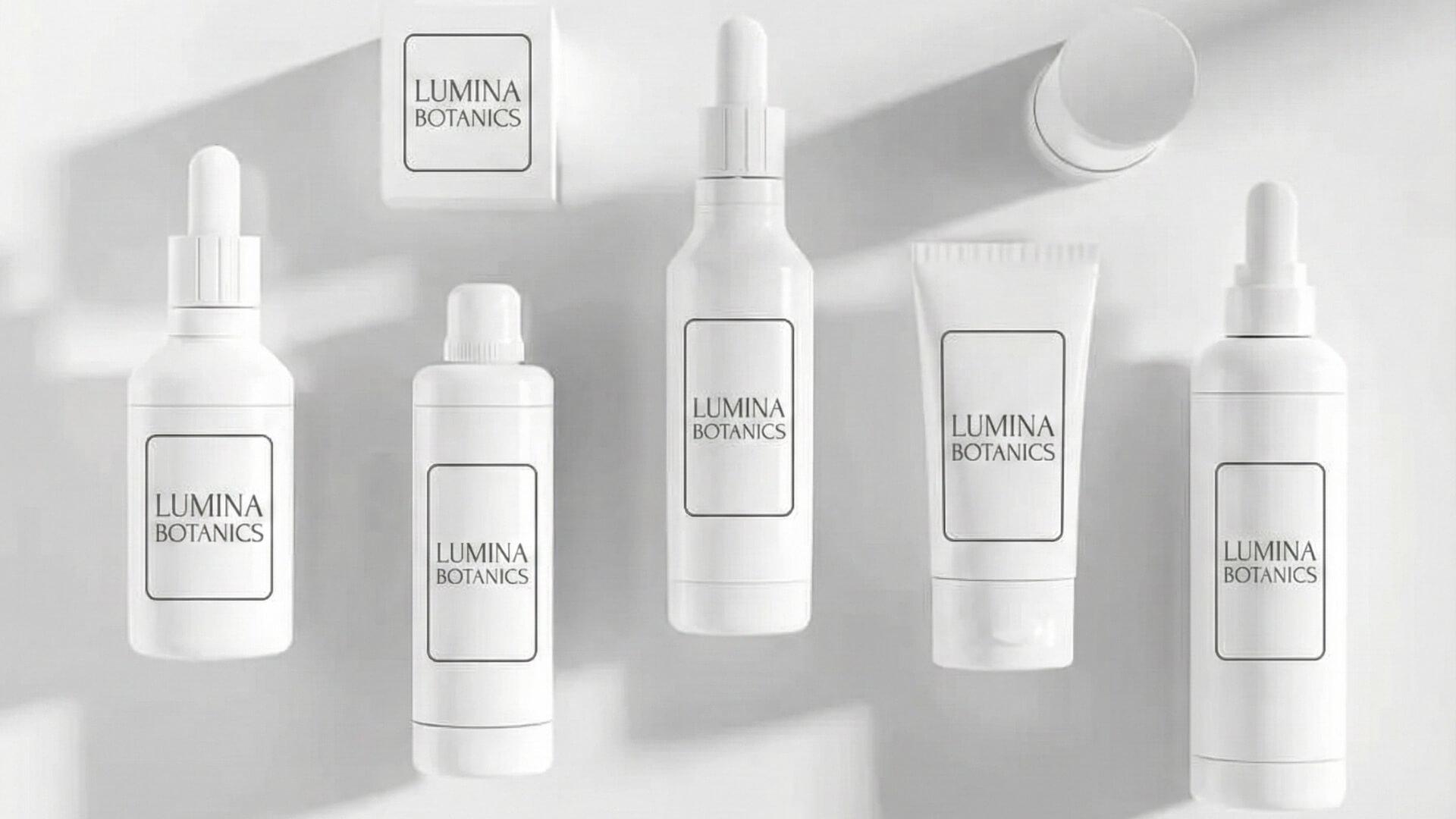
The main advantage of white-label beauty dropshipping is speed. You can launch a skincare or makeup line in a relatively short time and with lower minimum order requirements compared to custom manufacturing. Many white-label beauty dropshipping suppliers also handle basic compliance documentation, which reduces initial setup complexity.
However, white-label products are not exclusive. Other sellers may offer similar formulas under different brand names, which increases competition and limits differentiation. Profit margins are generally moderate, and brand defensibility depends heavily on marketing and customer experience rather than product uniqueness.
White-label beauty suppliers are best suited for sellers who want to test demand, validate branding concepts, start with a small order quantity, or build a short to mid-term revenue stream before moving into more customized solutions.
Private label beauty suppliers offer deeper customization, allowing you to modify formulas, ingredients, textures, packaging, and even scent profiles. In this model, you gain greater ownership over the product itself, which makes it easier to build a beauty brand with stronger differentiation and higher perceived value.
The biggest advantage of private label beauty dropshipping is control. Custom formulations and exclusive packaging create a stronger brand identity and reduce direct price competition. This often leads to higher profit margins and better customer loyalty. Private label suppliers also tend to provide more detailed documentation related to ingredient sourcing, testing, and regulatory compliance.
On the downside, private label beauty dropshipping requires higher upfront investment and longer lead times. Minimum order quantities are usually higher, and product development can take weeks or months. This model is best suited for sellers who already have market validation, stable traffic sources, and a clear brand vision, rather than beginners looking for a fast launch.
Wholesale beauty dropshippers work with established beauty brands and allow you to resell their products as an authorized retailer. Instead of building your own brand, you leverage the credibility and recognition of existing products that customers already trust.
This supplier model offers lower risk in terms of product quality and compliance, since established brands typically meet regulatory requirements in their target markets. Customer trust is easier to earn, and return rates are often lower compared to unbranded products. Wholesale beauty dropshipping suppliers can be a good entry point for sellers who want to avoid formulation and compliance complexity.
The tradeoff is lower profit margins and limited branding control. Pricing is often competitive, and differentiation relies heavily on marketing, content, and customer service rather than the product itself. Wholesale beauty dropshippers are ideal for sellers who prioritize stability and compliance over maximum margin and brand ownership.
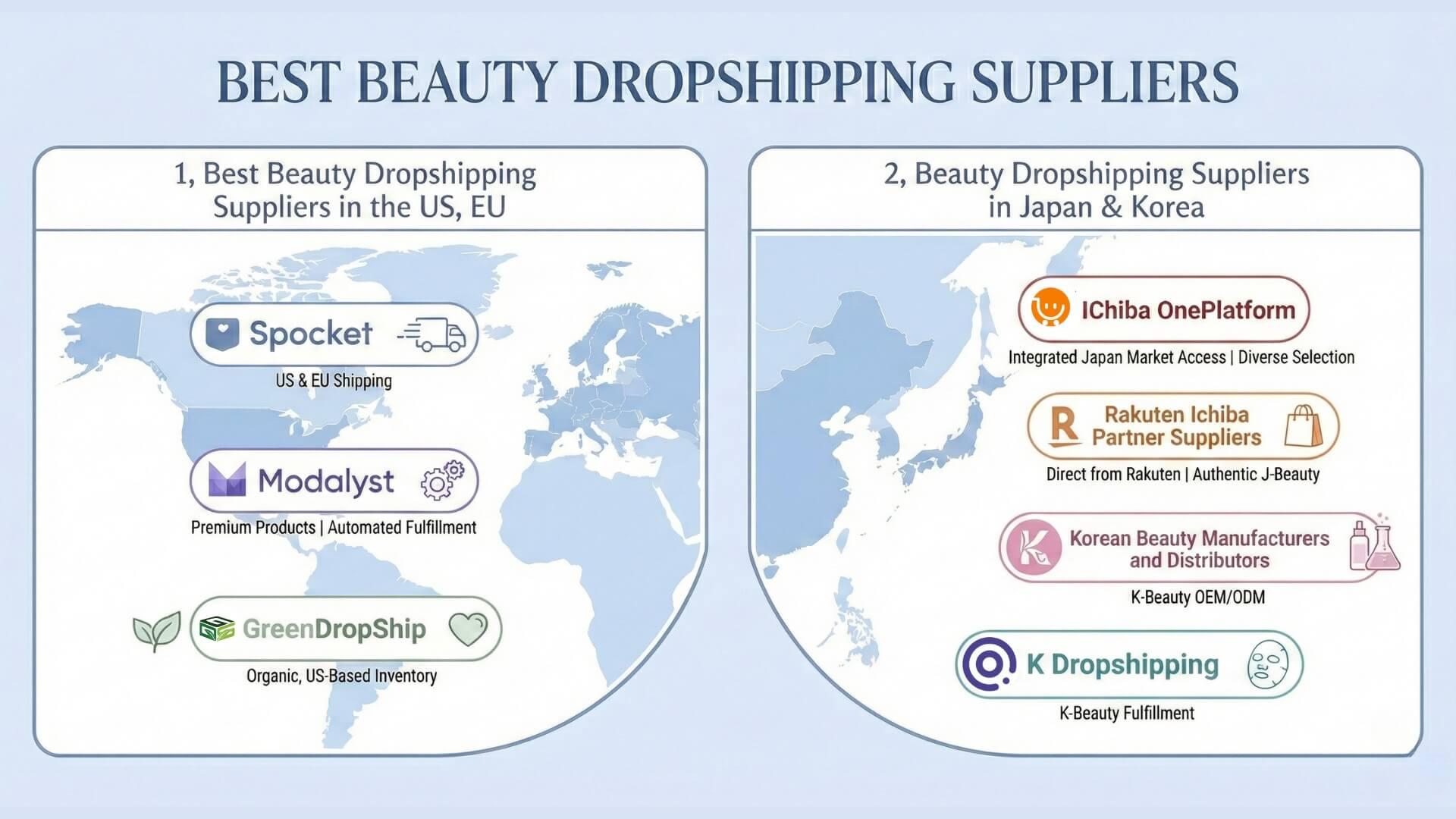
Finding reliable beauty dropshipping suppliers is not about chasing the lowest price, but about balancing compliance, shipping speed, product quality, and branding flexibility. For beauty products dropshipping, supplier credibility directly affects ad approval, customer trust, and brand survival. Below are some of the most practical options for sellers targeting the US, EU, and premium Asian beauty markets.
Spocket
Spocket connects sellers with beauty dropshipping suppliers based in the US and EU, which allows for faster delivery times and easier communication. Many of its beauty products focus on skincare, personal care, and clean beauty categories. The platform integrates well with Shopify and supports branded invoicing, making it suitable for sellers who want a semi-branded experience with reliable fulfillment.
Pros include fast shipping within the US and Europe, easier compliance alignment, and smoother returns handling. Cons include higher product costs and limited customization compared to private label suppliers. Spocket works best for sellers who prioritize delivery speed and operational simplicity over deep branding control.
Modalyst
Modalyst offers access to a curated network of US and EU beauty and wellness brands, including both independent labels and recognized names. The platform is particularly popular for sellers looking to resell branded beauty products with minimal compliance risk.
Its strengths lie in product quality, brand trust, and streamlined platform integrations. However, margins are typically lower, and branding opportunities are limited since you are selling existing brands. Modalyst is ideal for sellers who want to enter beauty dropshipping with lower regulatory exposure and predictable fulfillment.
GreenDropShip
GreenDropShip specializes in natural and organic beauty products sourced mainly from US suppliers. Many of the brands on the platform are already well known in the wellness space, which helps improve conversion rates and customer confidence.
The main advantages include access to certified products and reduced compliance concerns. On the downside, sellers must apply for approval, and pricing competition can be intense due to multiple resellers offering the same products. GreenDropShip is best for sellers targeting eco-conscious and ingredient-aware audiences.
IChiba OnePlatform
IChiba OnePlatform focuses on sourcing authentic beauty products from Japan and Korea, two markets globally recognized for high-quality skincare and cosmetic innovation. The platform connects dropshipping sellers with verified suppliers, manufacturers, and distributors, while also supporting order management, fulfillment, and cross-border shipping.
One of its strongest advantages is access to premium Japanese beauty brands and formulations that are difficult to source through Western platforms. This creates a strong differentiation opportunity, especially for sellers targeting customers who value quality, safety, and advanced skincare routines. IChiba OnePlatform also supports compliance documentation and controlled logistics, which helps reduce risk when selling internationally.
The tradeoff is that shipping costs and lead times may be higher compared to domestic US suppliers, and product selection is more focused on quality than mass market pricing. This platform is best suited for sellers who want to build a premium beauty dropshipping brand rather than compete on price alone.
Rakuten Ichiba Partner Suppliers
Through Rakuten suppliers, sellers can access a wide range of Japanese beauty products, including skincare, haircare, and cosmetics from established domestic brands. These suppliers often emphasize quality control and ingredient transparency.
The main benefit is product credibility and strong consumer trust in Japanese manufacturing standards. However, integration and communication can be more complex, and branding flexibility is limited. These suppliers are suitable for experienced sellers with cross-border selling experience.
Korean Beauty Manufacturers and Distributors
Korea remains a global leader in beauty innovation, particularly in skincare. Many Korean manufacturers offer white-label and private-label options for beauty dropshipping, covering categories such as serums, masks, and functional skincare.
Advantages include trend leadership and advanced formulations, while challenges include higher minimum order requirements and the need for careful compliance checks when selling in Western markets. These suppliers are ideal for sellers focused on brand building in the beauty space.
K Dropshipping
K Dropshipping is a Korean beauty dropshipping platform that gives sellers access to trending K beauty products sourced directly from the Korean domestic market. The platform is well-suited for selling skincare, makeup, and beauty tools that gain popularity quickly in Korea, making it easier for sellers to ride short term trends and viral demand.
With Shopify integration and overseas fulfillment options, K Dropshipping helps reduce delivery times to key markets such as the US compared to shipping directly from Korea.
The main advantage of K Dropshipping is speed to market and product variety, while the tradeoff lies in limited branding control and the need for careful compliance checks when selling internationally. Since most products are sold under existing brands, sellers must verify ingredient labeling and advertising claims before scaling paid traffic. This platform is ideal for beauty dropshipping sellers who prioritize trending sales over long-term brand ownership.
Selecting the right beauty dropshipping supplier is not only a sourcing decision but a risk management strategy. In beauty products dropshipping, the supplier you choose determines whether your store can run ads consistently, process payments smoothly, and maintain customer trust over time.
Compliance is the foundation of any sustainable beauty dropshipping business. Before listing a product, you must confirm that your beauty dropshipping supplier meets the regulatory requirements of your target market. In the United States, this includes FDA cosmetic guidelines, proper ingredient disclosure, and truthful product claims. For sellers targeting Europe, products must comply with the EU Cosmetic Regulation and be registered through CPNP before sale.
Ingredient transparency is critical. Every product should include a complete INCI ingredient list that matches the actual formulation, not marketing descriptions. In addition, reputable beauty dropshipping suppliers should operate under GMP certified facilities, which helps ensure consistent manufacturing quality and safety standards. If a supplier cannot provide documentation or avoids compliance questions, that is a clear signal to walk away.
Branding plays a major role in customer perception and repeat purchases in beauty dropshipping. When evaluating suppliers, look beyond the product itself and assess how much control you have over labels, packaging, and presentation. Custom labels, clear ingredient listings, and professional packaging design all contribute to brand credibility and higher conversion rates.
Many beauty dropshipping suppliers also offer sustainable or eco-friendly packaging options, which can significantly strengthen brand positioning, especially in skincare and wellness niches. Transparent ingredient sourcing and consistent packaging quality help build trust and reduce refund requests. Even if you start with white-label products, choosing a supplier that supports future branding upgrades will make scaling easier.
Shipping speed and return handling directly affect customer satisfaction in beauty products dropshipping. As a general benchmark, US fulfillment should deliver within three to seven days, while international shipping typically ranges from seven to fifteen days, depending on the destination. Suppliers who cannot meet these expectations often struggle with customer complaints and chargebacks.
Returns are especially sensitive for beauty products due to hygiene concerns and damaged packaging. A good beauty dropshipping supplier should clearly define return policies, handle defective products efficiently, and provide responsive support when issues arise. Consistent shipping performance and clear post purchase communication help create a professional customer experience that supports long term growth.
Beauty dropshipping can be highly profitable, but it is also one of the easiest niches to fail in when basic principles are ignored. Many sellers enter the market with experience in general dropshipping and assume the same shortcuts apply, only to encounter legal issues, ad rejections, and rising refund rates. Avoiding the mistakes below can save months of lost time and protect your store from unnecessary risk.
One of the most damaging mistakes in beauty dropshipping is working with suppliers who do not meet regulatory requirements. Non-compliant products can lead to serious consequences, including payment processor freezes, forced product removals, and permanent ad account bans. Even if a product sells well initially, compliance issues often surface once you scale traffic or expand to new markets.
Sellers should never rely on verbal assurances or generic certificates. A legitimate beauty dropshipping supplier must be able to provide clear documentation for ingredients, manufacturing standards, and market compliance. If a supplier avoids these questions or offers inconsistent information, the risk far outweighs any profit.
Many beginners make the mistake of copying product descriptions and marketing claims directly from AliExpress or supplier catalogs. In beauty products dropshipping, exaggerated claims such as instant results, medical benefits, or guaranteed outcomes are a fast track to ad disapproval and customer disputes.
Advertising platforms closely monitor claims, and unsupported promises can trigger account restrictions. Instead, sellers should create compliant messaging that focuses on product features, ingredient transparency, and customer experience rather than unrealistic results. Clear and honest communication builds trust and reduces refund rates over time.
Brand trust is not optional in beauty dropshipping. Stores that lack clear branding, professional design, ingredient information, or customer support details struggle to convert traffic and retain customers. Even high-quality products can underperform if the brand appears untrustworthy or incomplete.
Trust signals such as detailed product pages, transparent policies, verified reviews, and consistent branding help reassure customers when purchasing beauty products online. Sellers who invest in these elements early are far more likely to build repeat buyers and scale profitably in the long run.
Are beauty products legal to dropship?
Yes, beauty products are legal to dropship in most markets, but only if they comply with local cosmetic regulations. Sellers are responsible for ensuring that products meet safety, labeling, and ingredient disclosure requirements in the countries where they are sold. Using compliant beauty dropshipping suppliers is essential to avoid legal issues and platform restrictions.
Do I need FDA approval to sell skincare?
In the United States, cosmetic products do not require FDA pre-approval before being sold, but they must comply with FDA regulations. This includes safe ingredients, proper labeling, and truthful marketing claims. Even when working with beauty dropshipping suppliers, the seller remains responsible for ensuring compliance.
What is the best beauty dropshipping supplier in the USA?
There is no single best supplier for every seller. The right beauty dropshipping supplier in the USA depends on your business model, target audience, and branding goals. US suppliers with fast shipping and clear compliance documentation are often preferred for sellers who prioritize customer experience and ad stability.
Can beginners do beauty dropshipping?
Beginners can enter beauty dropshipping, but it requires more research and preparation than general product dropshipping. New sellers should start with compliant products, avoid aggressive claims, and work with reliable suppliers. Taking a cautious approach helps reduce risk while building experience in this competitive niche.
Beauty dropshipping offers a rare combination of high demand, strong repeat purchase potential, and long-term brand value, but it is not a niche that rewards shortcuts. Success depends on choosing the right beauty dropshipping suppliers, understanding regulatory requirements, and building trust through transparent branding and reliable fulfillment. Sellers who treat beauty products dropshipping as a real business, rather than a quick trend, are far more likely to scale sustainably.
By focusing on compliance, supplier quality, and customer experience from the start, dropshipping sellers can turn beauty into a defensible and profitable ecommerce model. Whether you are sourcing from beauty dropshipping suppliers in the USA or exploring premium products from Japan and Korea, a disciplined approach will help you avoid common pitfalls and build a brand that customers trust and return to.

Work with us
Our solutions
Address:
 〒136-0082, Japan, Tokyo, Koto-ku, Shinkiba 3-5-6, 5F
Connect us:


Japan
〒136-0082, Japan, Tokyo, Koto-ku, Shinkiba 3-5-6, 5F
Texas, USA
1606 Audrey Dr, Garland, TX 75040, United States
California, USA
1316 John Reed Ct, City of Industry, CA 91745, United States