

News
Ichiba OnePlatform Team - 20/05/2026
In this article
Finding the best Amazon dropshipping suppliers has become one of the most critical success factors for sellers who want to build a sustainable business on Amazon in 2026. As Amazon continues to tighten its enforcement around dropshipping practices, choosing the wrong supplier is no longer just a profitability issue, but a direct risk to your seller account.
Unlike traditional ecommerce platforms, Amazon places full responsibility on the seller of record, regardless of whether fulfillment is handled by a third party. Sellers must ensure that their suppliers can meet Amazon’s strict requirements on shipping speed, documentation, branding control, and customer service coordination.
At the same time, many sellers are actively searching for free dropshipping suppliers for Amazon or low-cost entry options, hoping to validate products before committing to wholesale inventory. The question is how to identify the best Amazon dropshipping suppliers based on real operational criteria rather than marketing claims. Let’s find out!
Dropshipping on Amazon is allowed, but only when sellers strictly follow Amazon’s official dropshipping policy. This is where many sellers misunderstand the rules and assume that any third-party fulfillment model qualifies as compliant dropshipping. In reality, Amazon evaluates dropshipping based on who appears as the seller of record and how orders are fulfilled from the customer’s perspective, not on whether you physically hold inventory.
You must be the seller of record
Amazon allows dropshipping as long as the seller is clearly identified as the seller of record on every order. This rule applies regardless of whether fulfillment is handled by a wholesaler, manufacturer, or dropshipping company. If the customer sees any indication that another retailer is involved, Amazon considers this a policy violation.
Packing slips, invoices, and branding rules
Sellers must ensure that packing slips, invoices, and external packaging do not include branding, logos, or contact information from other marketplaces or retail stores. This includes companies such as Walmart, Target, AliExpress, or any third-party retailer that could confuse the customer about who they purchased from. Amazon-compliant dropshipping suppliers are expected to provide neutral packaging or seller documentation when required.
Customer service responsibility
Customer service responsibility also remains fully with the seller. Even if a supplier handles shipping and returns, Amazon expects sellers to manage customer communication, refunds, replacements, and A-to-Z claims. This is why experienced sellers prioritize suppliers for Amazon dropshipping that offer reliable order data, fast response times, and proper documentation support.
Retail arbitrage dropshipping
One of the most common violations is retail arbitrage dropshipping, where sellers list products on Amazon and fulfill orders by purchasing them from another online retailer. This includes workflows such as Walmart to Amazon or Target to Amazon, which almost always leave retail branding inside the package. Amazon has clearly stated that this model is not allowed and is a leading cause of account suspension.
Using other marketplaces’ branding
Amazon also prohibits the use of other marketplaces’ branding at any stage of fulfillment. Even if shipping is fast and customers are satisfied, the presence of third-party logos, invoices, or marketing inserts is considered a violation. Many sellers unknowingly fail this rule when working with low-quality or free dropshipping suppliers for Amazon that are not designed for marketplace compliance.
Inconsistent tracking & fulfillment
Inconsistent tracking and unreliable fulfillment are another major risk area. Late uploads, invalid tracking numbers, or frequent shipping delays negatively impact seller performance metrics. When combined with dropshipping, these issues raise immediate red flags and can lead to listing suppression or account deactivation.
Most Amazon dropshipping stores do not fail because of poor product selection, but because of supplier compliance issues. Sellers often choose suppliers based solely on price, without verifying that invoices, packaging, and fulfillment workflows align with Amazon’s requirements. This mistake becomes especially costly at scale.
Late shipping is another common cause of suspension, particularly when sellers rely on overseas suppliers without US fulfillment or reliable shipping partners. Amazon’s performance standards leave very little margin for delays, and repeated late shipments can quickly push an account into suspension territory.
Intellectual property complaints also play a major role, especially in categories like electronics accessories, beauty tools, and branded goods. Using unauthorized suppliers or listing trademarked products without proper authorization exposes sellers to IP claims that Amazon takes very seriously. This is why experienced sellers only work with verified Amazon dropshipping companies that can provide clear sourcing documentation and consistent compliance.

Choosing Amazon dropshipping suppliers in 2026 is no longer about finding the cheapest source or the largest catalog. As Amazon continues to prioritize customer experience and platform trust, the quality of your supplier directly determines whether your business can survive long-term.
Experienced sellers evaluate suppliers for Amazon dropshipping based on compliance, operational reliability, and data transparency. While many dropshipping companies claim to support Amazon, only a small percentage can consistently meet Amazon’s performance standards at scale.
Amazon-compliant packaging
Amazon-compliant packaging is one of the most important requirements that sellers must verify upfront. A reliable supplier should ship products without retail branding, third-party logos, or marketplace identifiers. Packing slips and invoices must clearly display the seller’s information, ensuring that Amazon recognizes you as the seller of record on every order.
Fast & reliable shipping
Fast and reliable shipping is equally critical, especially as Amazon continues to raise customer delivery expectations. The best suppliers for Amazon dropshipping either operate domestic fulfillment centers or offer stable shipping lines with predictable delivery times. Sellers relying on slow or inconsistent shipping partners face higher late shipment rates and increased account health risk.
Consistent inventory levels
Consistent inventory levels are another core requirement, particularly for sellers managing multiple listings. Suppliers must provide accurate stock data and notify sellers in advance of inventory changes. Sudden stockouts without warning often lead to cancellations, which directly harm seller performance metrics.
Valid invoices & documentation
Valid invoices and documentation support are often overlooked by beginners, but they are essential for long-term account protection. Amazon may request invoices during account reviews, listing reinstatements, or IP investigations. The best supplier for Amazon dropshipping can provide legitimate invoices that clearly trace product sourcing.
On-time shipping rate
Beyond basic compliance, experienced sellers track specific performance metrics to evaluate supplier reliability. On-time shipping rate is one of the most important indicators, as repeated delays quickly affect account health. A dependable supplier consistently ships orders within the promised handling time.
Defect rate
This metric reflects issues such as incorrect items, damaged products, missing components, or customer complaints related to product condition. Suppliers with poor quality control often cause defect rates to rise gradually, which makes the problem harder to detect until Amazon issues a warning. Experienced sellers regularly review defect patterns to identify whether issues originate from product quality or fulfillment handling.
Cancellation rate
High cancellation rates usually signal inaccurate inventory data, unstable sourcing, or slow order confirmation processes. Amazon closely monitors cancellations, especially those initiated by the seller, and repeated issues can lead to listing suppression. The best suppliers for Amazon dropshipping provide real-time inventory updates and proactive communication when stock levels change.
Return handling quality
Return handling quality is another metric that separates professional suppliers from risky ones. Amazon expects smooth return processing and timely refunds, regardless of whether fulfillment is outsourced. Suppliers that can handle returns efficiently reduce operational friction and protect seller performance during high-volume periods.
One of the biggest red flags is the inability or refusal to provide valid invoices. Suppliers who avoid documentation requests often source products through unofficial or retail channels, which exposes sellers to suspension and IP complaints.
Retail store packaging is another immediate warning sign. If a supplier ships products with retail receipts, branded boxes, or promotional inserts from other marketplaces, they are not suitable for Amazon dropshipping. Many free dropshipping suppliers for Amazon fall into this category, making them risky despite their low entry cost.
Unrealistically low prices should also raise concern, especially when combined with branded or popular products. Prices that are far below market average often indicate counterfeit goods, unauthorized sourcing, or unstable supply chains. While profit margins may look attractive initially, the long-term risk to your Amazon account is significantly higher.
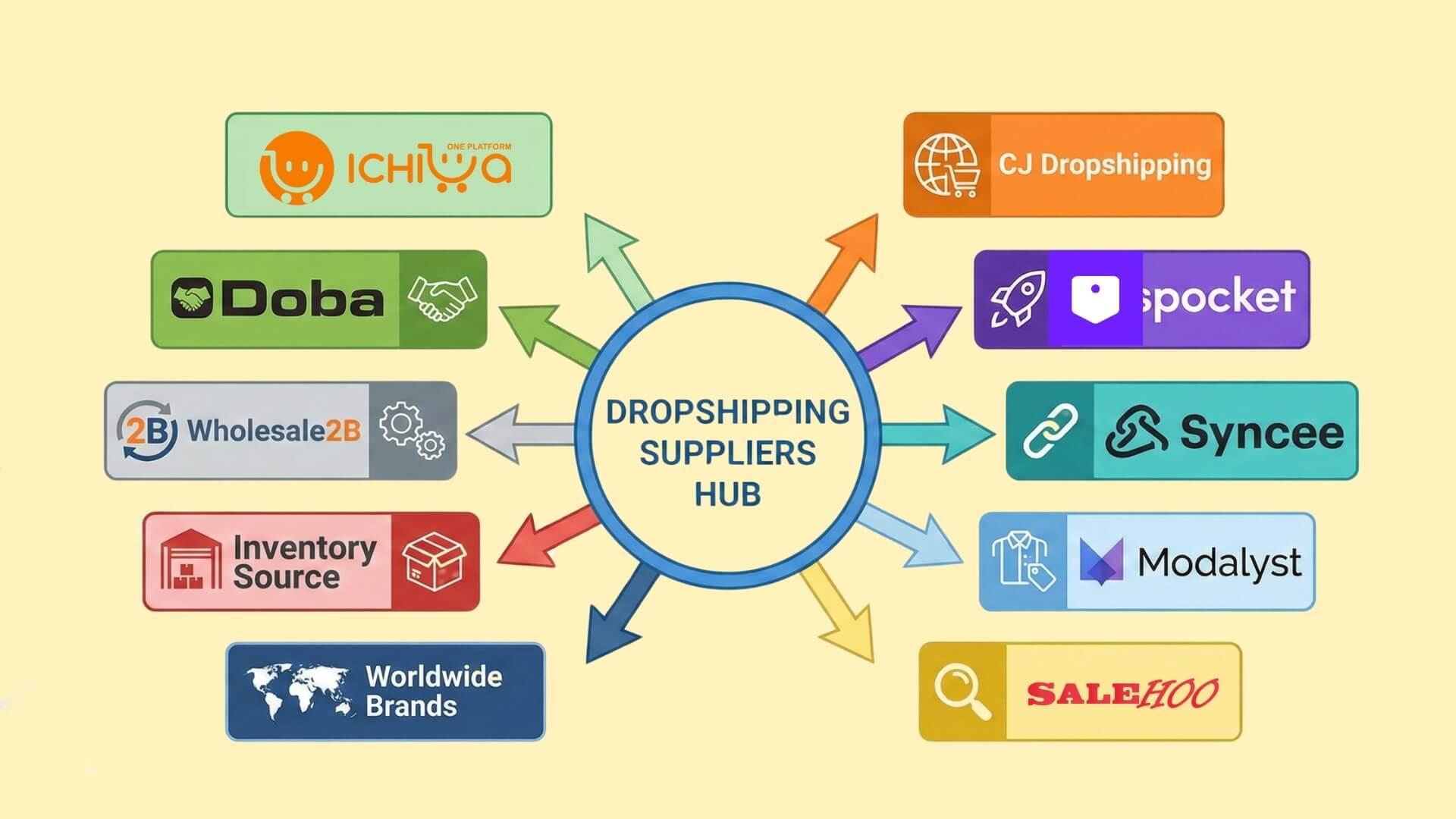
Not all suppliers that claim to support Amazon are actually safe to use. In practice, the best suppliers for dropshipping on Amazon are those that understand this platform’s compliance rules, provide operational transparency, and can scale without triggering performance issues. To help sellers at different stages, this section is divided into free entry suppliers and paid or wholesale partners.
Free or low-barrier suppliers are often used by beginners to test product demand before committing capital. While this approach can work, it requires careful supplier selection to avoid compliance risks. Below are some of the most reliable free dropshipping suppliers for Amazon when used correctly.
IChiba OnePlatform
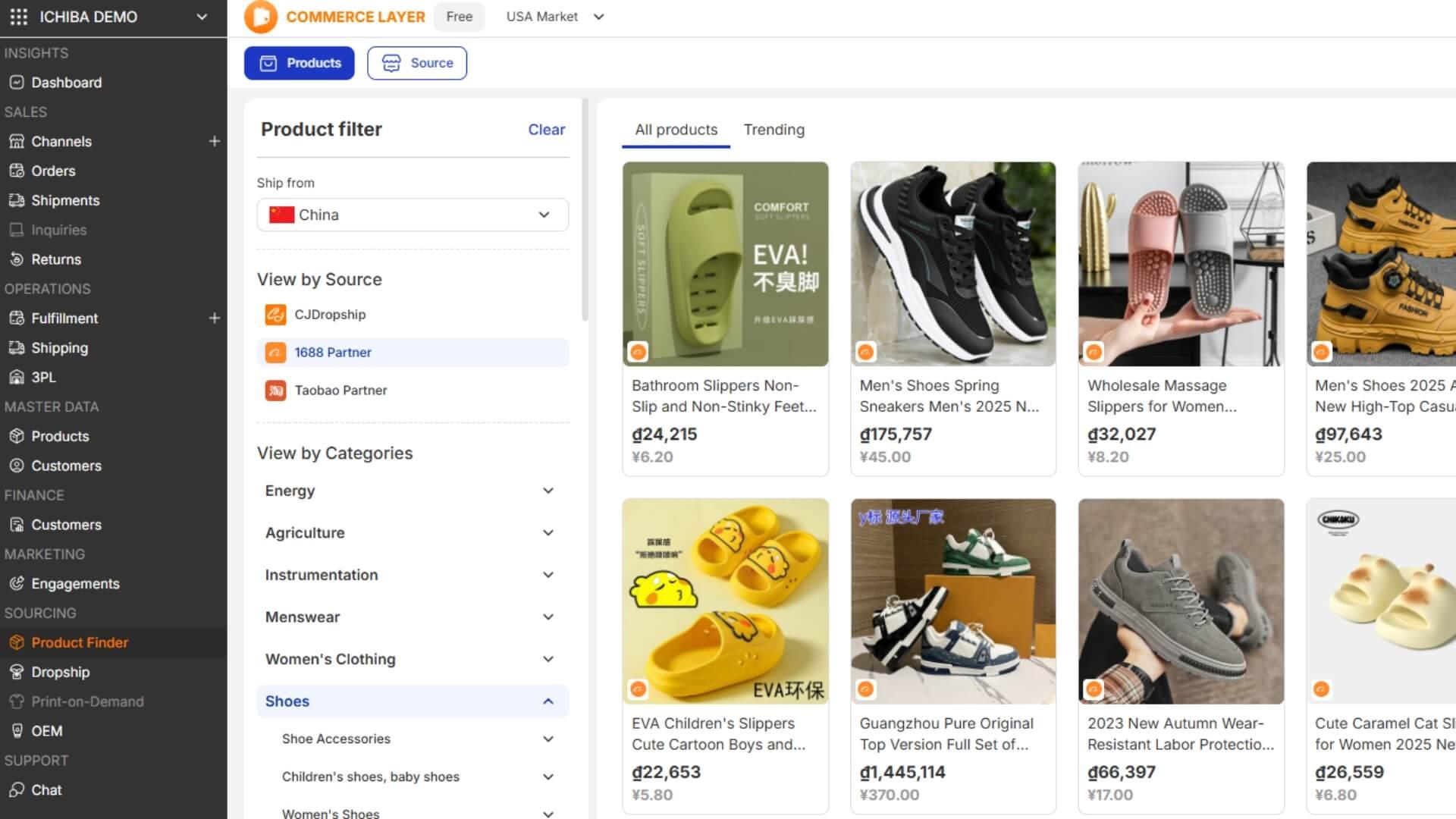
IChiba OnePlatform is designed specifically for cross-border dropshipping and marketplace sellers, making it one of the safest free options for Amazon dropshipping. The platform connects sellers with verified suppliers from Japan and Vietnam, while also offering centralized order management and fulfillment support.
What makes IChiba stand out is its focus on Amazon workflows. Sellers can source products, sync orders, and manage fulfillment without relying on retail arbitrage. With access to professional fulfillment services and proper documentation support, IChiba OnePlatform reduces the common risks associated with free dropshipping suppliers for Amazon.
CJ Dropshipping
CJ Dropshipping is widely used by Amazon sellers due to its large product catalog and global warehouse network. The platform offers basic sourcing and fulfillment services without upfront subscription fees, which makes it accessible for beginners.
However, sellers must carefully select products and fulfillment locations to maintain stable shipping times. CJ works best for unbranded products and categories with lower IP risk.
Spocket
Spocket focuses primarily on US and EU suppliers, which helps sellers maintain faster delivery times and better customer satisfaction. While the free plan has limitations, it allows sellers to test selected products before upgrading. Spocket is most suitable for sellers prioritizing shipping speed and supplier transparency, especially in home, office, and lifestyle categories.
Syncee
Syncee acts as a supplier directory rather than a traditional fulfillment service, allowing sellers to connect directly with manufacturers and wholesalers. Many suppliers on Syncee support neutral packaging and invoice generation, which is important for Amazon compliance. Seller due diligence is critical, as fulfillment quality depends on the individual supplier rather than the platform itself.
Modalyst
Modalyst provides access to both independent brands and private label suppliers, with a limited free plan for product exploration. It works best for niche categories where branding control and product differentiation matter more than catalog size.
For sellers who want stability, scalability, and lower suspension risk, paid or wholesale suppliers are often the better option. These suppliers typically offer stronger documentation support, better inventory control, and more predictable fulfillment performance.
SaleHoo
SaleHoo is especially useful for sellers looking to transition from pure dropshipping to hybrid or wholesale models on Amazon. The platform is a vetted supplier directory that connects sellers with verified wholesalers and manufacturers. While it requires a paid membership, it significantly reduces the risk of working with unreliable or non-compliant suppliers.
Worldwide Brands
Worldwide Brands offers lifetime access to a curated list of certified wholesalers. The platform emphasizes legitimacy and documentation, making it suitable for sellers focused on long-term account health. Its supplier network is ideal for sellers who want direct relationships rather than automated dropshipping tools.
Inventory Source
Inventory Source combines supplier integration with inventory automation, allowing sellers to manage stock levels and order routing more efficiently. Paid plans unlock full automation features, which help reduce cancellation and stockout issues. This platform works well for sellers managing a larger number of SKUs across multiple suppliers.
Wholesale2B
Wholesale2B offers direct access to multiple suppliers with integrated order management. Paid plans provide automation and supplier filtering, which helps sellers choose partners that better align with Amazon’s requirements. It is most effective for sellers who want a balance between automation and supplier control.
Doba
Doba operates as a marketplace connecting sellers with vetted suppliers, offering centralized product sourcing and order processing. While pricing is higher than free platforms, Doba provides more structured supplier management and reporting. This makes it suitable for sellers who prioritize operational visibility and consistency.
Product selection plays a major role in determining whether an Amazon dropshipping business remains profitable and compliant over time. Even when working with the best Amazon dropshipping suppliers, choosing the wrong category can expose sellers to account suspensions, IP complaints, or excessive returns. Successful sellers prioritize categories that align with Amazon’s policies, supplier capabilities, and customer expectations.
Rather than chasing trending products, experienced sellers focus on categories with stable demand, low brand sensitivity, and manageable operational complexity. This approach not only improves margins but also reduces long-term account health risks.
Home & kitchen
Home and kitchen products are among the most beginner-friendly categories for Amazon dropshipping. Many items in this category are unbranded, have consistent demand, and face relatively low IP enforcement compared to electronics or fashion. Products such as organizers, storage solutions, and basic household tools are well-suited for dropshipping suppliers that offer neutral packaging.
Office supplies
Office supplies also represent a low-risk entry point, particularly for sellers targeting small businesses and remote workers. Items like desk accessories, document organizers, and basic stationery typically have low return rates and minimal compliance requirements.
Tools & accessories
Tools and accessories, especially non-powered hand tools and simple attachments, offer another stable option for beginners. These products tend to be functional rather than branding, which reduces the likelihood of intellectual property complaints when sourced from verified suppliers for Amazon dropshipping.
Pets
Pet products remain one of the most attractive categories for Amazon dropshipping due to strong emotional buying behavior and repeat purchase potential. Accessories such as grooming tools, feeding solutions, and pet organization items often carry healthy margins when sourced from reliable suppliers.

Beauty tools
Beauty tools, particularly non-consumable items like facial rollers, makeup organizers, and skincare accessories, can also deliver strong profit margins. Sellers must ensure that products are unbranded and avoid any medical or cosmetic claims, as these can trigger listing suppression or compliance reviews.
Electronics accessories
Electronics accessories such as cables, stands, holders, and protective cases are another high-margin category when managed correctly. These items benefit from frequent replacement cycles and broad compatibility, but sellers should avoid products that include patented designs or brand-specific claims.
Branded products
Branded products present one of the highest risks for Amazon dropshipping sellers. Listing branded items without proper authorization often leads to intellectual property complaints, which can quickly result in account suspension. Even when a supplier claims authenticity, the burden of proof remains with the seller.
Gated categories
Gated categories should also be avoided, especially by beginners. These categories require additional approvals, documentation, and performance history, making them unsuitable for most dropshipping workflows.
Counterfeit-prone items
Counterfeit-prone items, including luxury accessories, popular electronics, and trending branded products, pose a serious threat to account health. These products attract high scrutiny from both Amazon and brand owners, and even a single complaint can jeopardize an entire seller account.
Setting up Amazon dropshipping correctly requires more than listing products and connecting to a supplier. Amazon evaluates sellers based on operational consistency, customer experience, and compliance history, which means every step in the workflow must be designed to prevent performance issues before they happen. Sellers who follow a structured setup process are far more likely to scale without facing account suspensions.
A well-built dropshipping system focuses on supplier validation, listing accuracy, and order execution rather than speed to market. This approach may take longer upfront, but it significantly reduces long term risk and operational stress.
Step 1: Product research
Product research should begin with demand validation and competition analysis rather than supplier availability. Sellers should prioritize unbranded products with stable sales history, reasonable review counts, and pricing that allows room for fulfillment costs and Amazon fees.
Step 2: Supplier verification
Supplier verification is the next critical step. Before listing any product, sellers should confirm packaging standards, shipping timelines, invoice availability, and return handling processes. Working with verified Amazon dropshipping suppliers reduces uncertainty and improves account stability.
Step 3: Listing optimization
Listing optimization must focus on accuracy and compliance rather than aggressive marketing claims. Titles, bullet points, and descriptions should reflect the actual product specifications provided by the supplier, avoiding restricted keywords or brand references that could trigger listing suppression.
Step 4: Order routing
Order routing should be automated where possible to minimize processing delays. Orders must be sent to suppliers quickly, and tracking information should be uploaded to Amazon within the required time frame. Delays at this stage often lead to late shipment metrics and customer complaints.
Step 5: Customer support
Customer support remains the seller’s responsibility at all times. Sellers should monitor messages, handle refund requests promptly, and communicate clearly with suppliers to resolve issues before they escalate into A to Z claims.
Stock syncing is essential for preventing overselling and cancellations. Sellers should only list products with reliable inventory updates and pause listings immediately when stock levels change unexpectedly.
Tracking uploads must be accurate and consistent. Invalid or late tracking information is one of the fastest ways to damage seller performance metrics. Reliable suppliers for Amazon dropshipping provide real-time tracking data that can be uploaded without manual intervention.
Handling backorders requires proactive communication. If a supplier experiences delays, sellers should update customers early and offer alternatives such as refunds or replacements. Transparent communication helps preserve customer trust and reduces negative feedback.
Understanding Amazon A to Z protection policies is critical for managing disputes and refunds. Sellers must be prepared to issue refunds promptly when required, even if the supplier is slow to respond.
Deciding between refunds and replacements should be based on cost efficiency and customer satisfaction. For low-cost items, issuing a refund is often more practical than arranging a replacement shipment.
Return workflows should be clearly defined with suppliers in advance. The best Amazon dropshipping suppliers offer structured return handling that aligns with Amazon’s expectations, allowing sellers to resolve issues quickly without damaging account health.
Is dropshipping allowed on Amazon?
Dropshipping is allowed on Amazon as long as sellers fully comply with Amazon’s dropshipping policy. This includes being the seller of record on every order, using packaging without third-party branding, and taking full responsibility for customer service and returns. Sellers who meet these conditions can operate dropshipping companies for Amazon without holding inventory.
What are the best Amazon dropshipping suppliers?
The best Amazon dropshipping suppliers are those that offer Amazon-compliant packaging, fast and reliable shipping, consistent inventory data, and valid invoices. Platforms such as IChiba OnePlatform, CJ Dropshipping, and verified wholesale suppliers are commonly used by experienced sellers because they support scalable and workflows.
Are there free dropshipping suppliers for Amazon?
Free dropshipping suppliers for Amazon do exist, but sellers must be selective when using them. Many free platforms allow product sourcing without subscription fees, yet not all of them meet Amazon’s compliance requirements. Sellers should always verify packaging standards, shipping timelines, and documentation support before listing products.
Can I dropship from AliExpress to Amazon?
Dropshipping directly from AliExpress to Amazon is highly risky and often leads to account suspension. Most AliExpress suppliers include marketplace branding, lack proper invoices, and have inconsistent shipping times. While some sellers attempt to use AliExpress for testing, it is not recommended for building a long-term Amazon dropshipping business.
How do I avoid Amazon dropshipping suspension?
Avoiding suspension starts with choosing compliant suppliers and following Amazon’s policies strictly. Sellers should focus on accurate listings, reliable fulfillment, fast shipping, and proactive customer support. Monitoring performance metrics such as late shipment rate and cancellation rate is essential for maintaining account health.
Can beginners succeed with Amazon dropshipping?
Beginners can succeed with Amazon dropshipping if they start with low-risk product categories and work with reliable suppliers. Focusing on compliance, conservative scaling, and operational discipline helps new sellers build experience while minimizing the risk of costly mistakes.
The best Amazon dropshipping suppliers are not defined by the size of their product catalog or how low their prices are. Instead, they are defined by their ability to meet Amazon’s policy requirements, ship orders reliably, provide valid documentation, and support sellers through every stage of fulfillment. Whether you choose free dropshipping suppliers for Amazon or paid wholesale partners, the evaluation criteria remain the same.
For sellers looking to build a compliant and scalable setup, platforms like IChiba OnePlatform represent a more modern approach to Amazon dropshipping. By combining supplier access, order management, and fulfillment support within a single system, sellers gain better control over compliance and performance without relying on risky retail arbitrage models.

Work with us
Our solutions
Address:
 〒136-0082, Japan, Tokyo, Koto-ku, Shinkiba 3-5-6, 5F
Connect us:


Japan
〒136-0082, Japan, Tokyo, Koto-ku, Shinkiba 3-5-6, 5F
Texas, USA
1606 Audrey Dr, Garland, TX 75040, United States
California, USA
1316 John Reed Ct, City of Industry, CA 91745, United States