

News
Ichiba OnePlatform Team - 27/05/2026
In this article
In 2026, finding the right dropshipping suppliers for Shopify is no longer just about product variety, it’s about speed, reliability, and seamless automation. The best dropshipping suppliers for Shopify offer native app integrations, automated order fulfillment, real-time inventory syncing, and transparent pricing.
Whether you’re a beginner launching your first store or an experienced seller looking to optimize margins and delivery times, this article will help you learn more about drop shipping suppliers for Shopify, from how they work and what criteria truly matter.
A dropshipping supplier for Shopify is a third party that provides products, stores inventory, and fulfills orders on behalf of a Shopify seller. Instead of buying products in bulk or managing a warehouse, the seller lists the supplier’s products on their Shopify store. When a customer places an order, the supplier processes it and ships the product directly to the end customer.
For dropshipping sellers, especially those running lean operations or testing new markets, suppliers are not just product sources. They are an extension of the business. Product quality, shipping speed, and after-sales support all depend heavily on how reliable the supplier is.
In a typical Shopify dropshipping workflow, the process starts when a customer places an order on your store. That order data is then sent to the supplier, who prepares the product, packs it, and ships it directly to the customer. Once shipped, tracking information is sent back to Shopify so the customer can receive updates automatically.
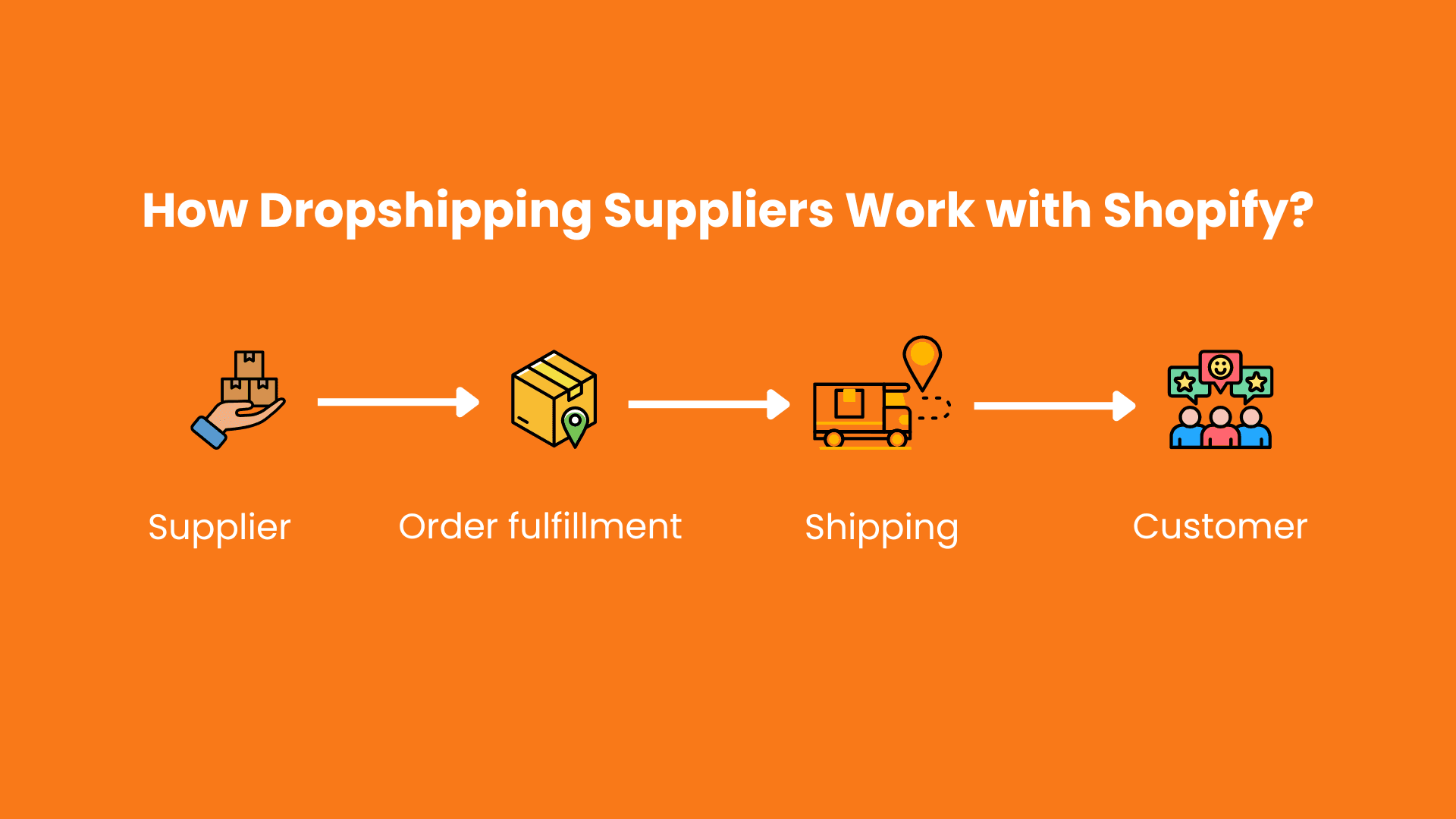
Most modern dropshipping suppliers connect with Shopify through apps, CSV-based product feeds, or direct API connections. App-based integrations are the most common and beginner-friendly. They allow sellers to import products, sync inventory, push orders automatically, and receive tracking numbers without manual work. CSV and API connections are often used by more advanced sellers working with private or regional suppliers who do not have a public Shopify app.
It is also important to understand the difference between agents, marketplaces, and private suppliers. Marketplaces aggregate products from many factories or vendors and focus on scale and variety. Agents act as intermediaries who source products, negotiate prices, and manage fulfillment on your behalf. Private suppliers usually work directly with brands or manufacturers and offer better consistency, branding control, and shipping reliability.
Dropshipping is fundamentally different from traditional wholesale models. With dropshipping, sellers do not hold inventory, which significantly reduces upfront investment and financial risk. This makes it easier to launch quickly and test multiple products without committing large amounts of capital.
However, this flexibility comes with trade-offs. Profit margins are usually thinner compared to wholesale, since suppliers handle storage, packing, and shipping. Sellers are also more dependent on supplier performance. Delays, stock issues, or quality problems can directly impact customer experience, even if the seller has done everything right on the storefront side.
Traditional wholesale offers more control and higher margins but requires inventory management, storage costs, and higher upfront risk. Dropshipping prioritizes speed, flexibility, and scalability, making it especially attractive for Shopify sellers focused on growth and market testing.
Not all dropshipping suppliers are optimized for Shopify. Shopify-specific suppliers are designed to integrate smoothly with the platform, which reduces manual work and operational errors. Native Shopify integrations allow automatic order syncing, inventory updates, and real-time tracking notifications sent directly to customers.
This level of automation is critical when scaling a store. Manual order processing increases the risk of mistakes and slows down fulfillment. Shopify optimized suppliers help sellers maintain faster processing times, better customer communication, and more consistent operations, all of which directly influence conversion rates and repeat purchases.
Choosing suppliers that truly understand Shopify is not just a technical decision. It is a strategic one that can define how efficiently your dropshipping business grows.
Native Shopify app integrations
Automated order syncing and fulfillment
Tracking updates and customer notifications
Choosing the right supplier is one of the most critical decisions for any Shopify dropshipping seller. The best dropshippers for Shopify are not defined by product count alone, but by how well they support your business operations, customer experience, and long-term scalability. Below are the key criteria you should evaluate before committing to any supplier.
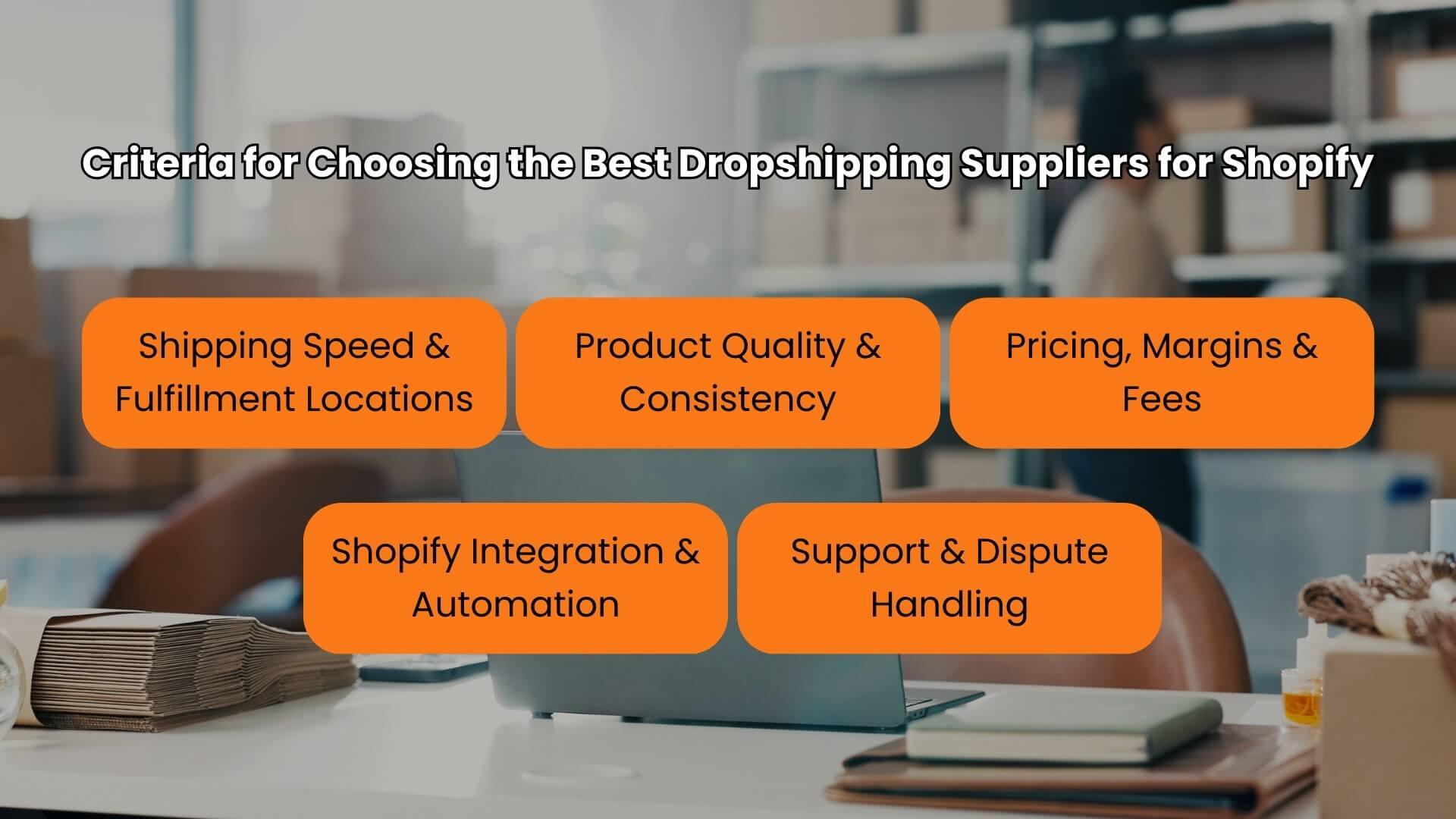
Shipping speed has a direct impact on conversion rates, customer satisfaction, and refund requests. Today’s online shoppers are used to fast delivery, and long shipping times often lead to abandoned carts or negative reviews.
Suppliers with fulfillment centers in the US or EU generally offer faster and more predictable delivery compared to suppliers shipping only from China. Local warehouses can reduce delivery times from weeks to just a few days, which significantly improves trust and repeat purchase rates.
According to Statista, 41 percent of online shoppers expect their orders to arrive within two to three days. When delivery times exceed customer expectations, refund requests and chargebacks increase. For Shopify sellers, slow shipping does not just affect one order. It damages brand credibility across the entire store.
Product quality is often the biggest challenge in dropshipping. Since sellers do not physically handle inventory, they rely entirely on suppliers to maintain consistent standards. A product that looks good in photos but arrives damaged or poorly made can quickly lead to disputes and negative feedback.
Ordering samples is a best practice that every serious seller should follow. Testing products allows you to evaluate material quality, packaging, branding, and actual delivery time. Consistency is just as important as quality. A supplier who delivers good products once but fails to maintain standards over time creates long-term risk.
Suppliers who offer branded packaging, quality control checks, and low damage rates are far more suitable for building a sustainable Shopify business.
Pricing transparency is essential when evaluating dropshipping suppliers for Shopify. Beyond the base product cost, sellers must consider shipping fees, processing fees, and any recurring subscription charges.
Some suppliers offer attractive product prices but offset them with high shipping costs or hidden per-order fees. Others require monthly subscriptions that may not be suitable for beginners or low-volume stores. Understanding the full cost structure upfront helps you calculate realistic margins and avoid unpleasant surprises later.
The best dropshipping companies for Shopify clearly disclose all fees and allow sellers to scale without sudden cost increases that eat into profits.
Strong Shopify integration is a non-negotiable requirement for modern dropshipping. Automated inventory syncing prevents overselling. Automated order fulfillment reduces manual workload. Automatic tracking number synchronization keeps customers informed without extra effort.
Suppliers that rely heavily on manual processes slow down operations and increase the risk of human error. As order volume grows, automation becomes essential. Shopify-friendly suppliers allow sellers to focus on marketing, product optimization, and customer experience rather than day-to-day order management.
Even with the best systems in place, issues will eventually arise. Delayed shipments, damaged products, and lost parcels are part of ecommerce. What separates good suppliers from bad ones is how they handle these situations.
Reliable dropshipping suppliers for Shopify offer clear refund policies, fast communication, and accountability when problems occur. Slow responses or vague dispute processes can turn small issues into serious brand damage.
For Shopify sellers, supplier support is not just a backup function. It is a core part of risk management and customer retention. Choosing suppliers who treat disputes professionally protects both your revenue and your reputation.
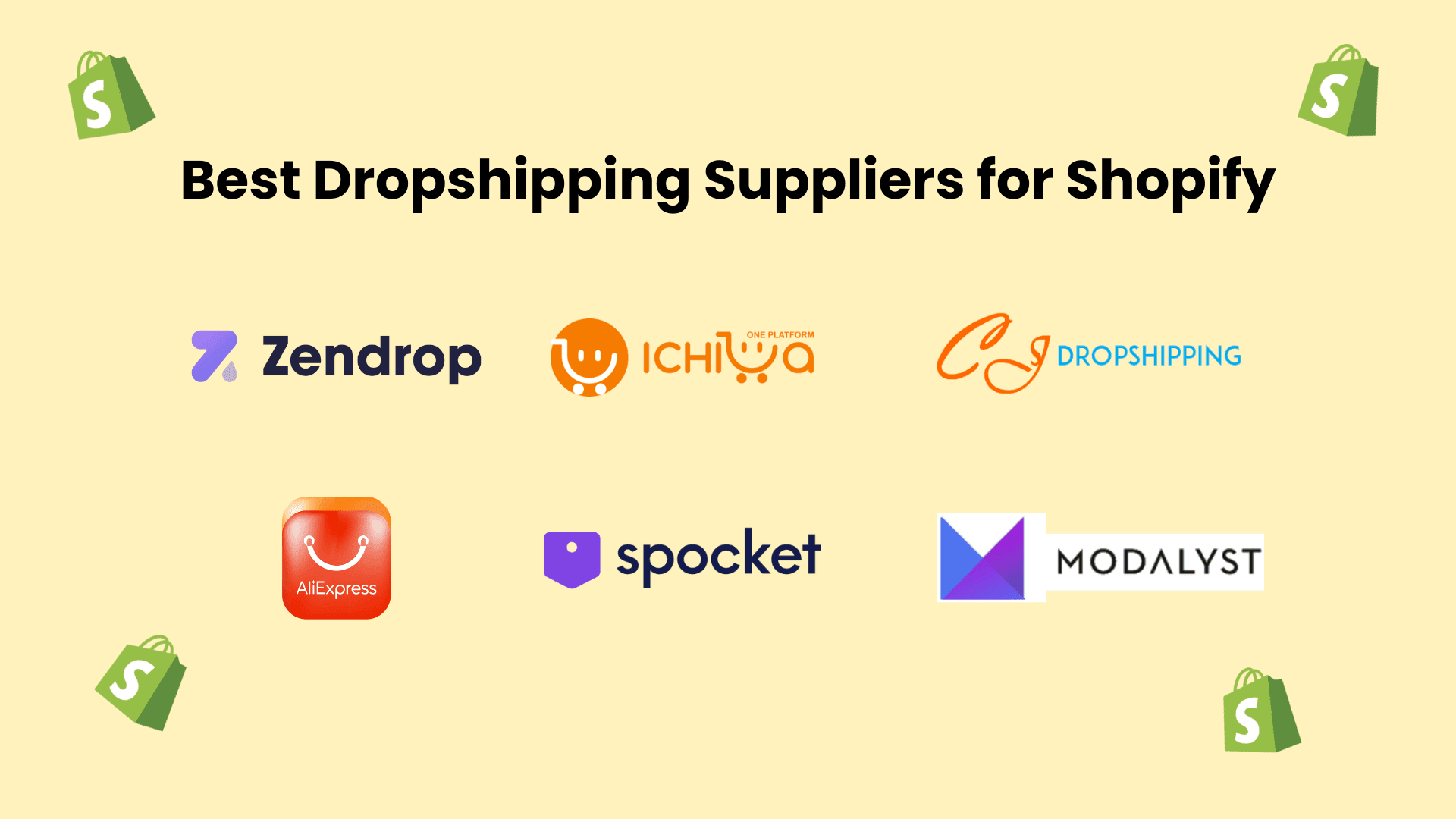
Below is a curated list of some of the best dropshipping suppliers for Shopify, based on integration quality, fulfillment performance, pricing transparency, and suitability for different seller levels. Each supplier serves a different business model, so choosing the right one depends on your target market, order volume, and branding goals.
Supplier | Free Plan | Shipping Speed | Best For | Shopify Integration |
AliExpress | Yes | Slow–Medium | Beginners | Via DSers or AutoDS |
Spocket | Limited | Fast (US/EU) | Branded stores | Native |
CJdropshipping | Yes | Medium–Fast | Scaling stores | Native |
Zendrop | Limited | Fast | Beginners | Native |
Modalyst | Yes | Fast | Premium products | Native |
IChiba Oneplatform | Yes | Medium-Fast | Beginners | Native |
AliExpress offers millions of products across almost every niche, which makes it ideal for product research and market testing. Sellers can quickly launch multiple products, analyze performance, and identify winning items without committing to inventory. DSers allows bulk order processing and supplier optimization, helping sellers switch suppliers if performance issues arise.
Pros:
Large product catalog across almost every niche
Very low product costs
Easy Shopify integration through DSers
Suitable for testing new products quickly
Cons:
Long shipping times for many products
Inconsistent product quality between suppliers
Limited branding and packaging control
Best for: Beginners who want to validate product ideas with minimal upfront cost and are comfortable with longer delivery times.
Spocket focuses on suppliers based in the US and Europe, making it a popular choice for Shopify sellers who prioritize fast shipping and higher product quality. The platform offers a clean Shopify integration and a curated supplier network.
The main limitation of Spocket is pricing. Products are generally more expensive than AliExpress alternatives, which can reduce margins unless sellers position their stores as premium or value-driven brands. Product selection is also more limited in certain niches.
Pros:
Fast shipping from US and EU warehouses
Higher quality products compared to open marketplaces
Strong Shopify app integration
Better customer satisfaction and lower refund rates
Cons:
Higher product costs than AliExpress
Limited product selection in some niches
Monthly subscription required
Best for: Shopify sellers targeting US or European customers who want faster delivery and are willing to trade lower margins for better reliability.
CJdropshipping positions itself as a hybrid solution that combines product sourcing, fulfillment, and branding services. Unlike open marketplaces, CJdropshipping allows sellers to request product sourcing, negotiate prices, and access multiple global warehouses.
The platform integrates with Shopify and supports automated order fulfillment and tracking updates. CJdropshipping also offers custom packaging, print on demand, and private labeling for sellers who want to build a more recognizable brand. A free plan is available, making it accessible to beginners, while paid services unlock faster processing and additional customization.
Pros:
Free to use with optional paid services
Global fulfillment centers
Custom packaging and branding support
Shopify integration with order automation
Cons:
Product quality varies by supplier
The interface can feel complex for beginners
Shipping times are inconsistent, depending on the location
Best for: Intermediate sellers who want more control over sourcing and fulfillment without fully managing private suppliers.
Zendrop is built specifically for Shopify dropshipping sellers, with a strong focus on automation and seller experience. It positions itself as a more reliable alternative to AliExpress-based dropshipping.
The main drawback is that many advanced features, such as custom branding and faster fulfillment, require a paid plan. The product catalog is smaller than that of large marketplaces, which limits niche exploration.
Pros:
Simple and intuitive Shopify integration
Faster shipping compared to AliExpress
Quality control on listed products
Beginner-friendly onboarding
Cons:
Limited free plan features
Smaller product catalog than large marketplaces
Advanced features require paid plans
Best for: Shopify sellers who want an easy-to-manage system with better reliability than open marketplaces.
Modalyst specializes in branded and private label products, including US-based and luxury suppliers. It integrates directly with Shopify and focuses on higher-value items.
Product costs on Modalyst are higher, and free plan limitations may restrict the number of products sellers can list. This makes it less suitable for sellers targeting mass-market, price-sensitive audiences.
Pros:
Access to branded and private label products
Fast shipping from local suppliers
Strong Shopify integration
Better positioning for premium stores
Cons:
Higher product prices
Limited free plan
Not suitable for ultra-low price strategies
Best for: Sellers building branded or premium Shopify stores who want to differentiate on quality rather than price.
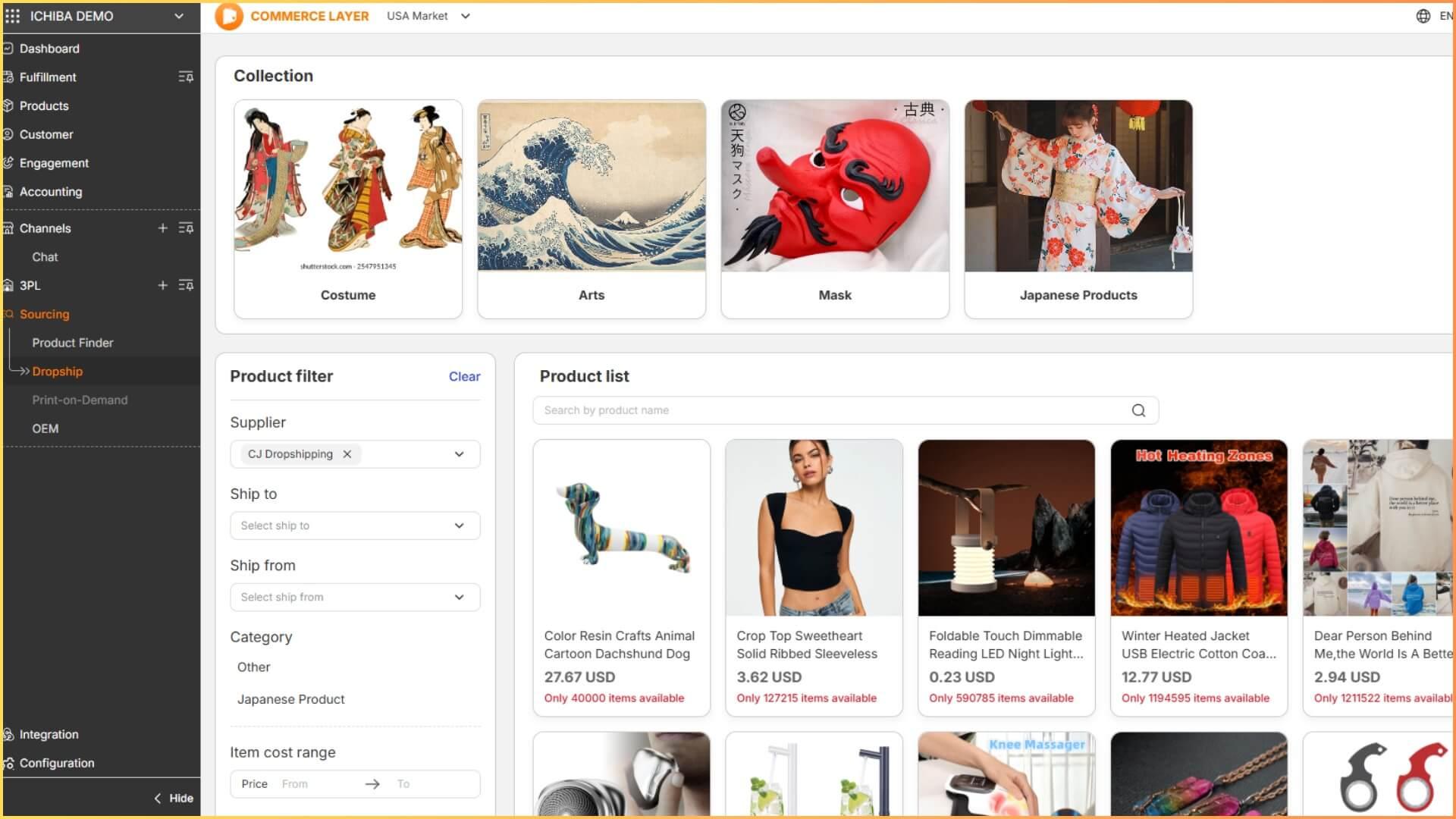
IChiba Oneplatform is an all-in-one dropshipping and wholesale solution connecting Shopify sellers with suppliers from Japan and Asia. It focuses on transparent pricing, stable supply, and free access for sellers. It stands out by offering free access with no subscription fees, making it attractive for sellers who want to control costs while accessing reliable suppliers.
The platform supports Shopify-friendly order processing and focuses on transparency in pricing and fulfillment. IChiba Oneplatform is particularly strong for sellers targeting cross-border markets or niche product categories such as Japanese consumer goods, lifestyle products, and specialty items.
Pros:
Free to use with no subscription fees
Access to Japanese and Asian suppliers
Shopify-friendly order processing
Suitable for both dropshipping and wholesale models
Cons:
Smaller catalog compared to global marketplaces
More focused on specific product categories
Best results when targeting niche or cross border markets
Best for: Shopify sellers looking for free dropshipping suppliers with reliable sourcing and a focus on Japanese products and cross-border selling.
For many dropshipping sellers, especially beginners or those testing new markets, cost control is a top priority. Free dropshipping suppliers for Shopify allow sellers to start selling without monthly subscriptions or long-term commitments. While free access often comes with certain limitations, these suppliers can still be powerful tools when used strategically.
Some of the best dropshipping companies for Shopify offer free entry while still providing solid integration and fulfillment capabilities. The key is understanding what is truly free and where additional costs may appear.
IChiba Oneplatform
IChiba Oneplatform stands out as a free dropshipping solution with no subscription fees. Sellers can access suppliers, manage orders, and scale without paying recurring platform costs. This makes it particularly attractive for new Shopify sellers who want to preserve cash flow while building their store.
AliExpress
AliExpress is another widely used option that does not charge a platform fee. Sellers can list products freely and pay only for the product and shipping costs. However, the trade-off is longer shipping times and limited quality control, which may affect customer satisfaction.
CJdropshipping (free plan)
CJdropshipping also offers a free plan that includes basic product sourcing and order fulfillment. While advanced branding and faster shipping options may incur extra costs, the free plan is sufficient for many Shopify sellers at the early growth stage.
Connecting dropshipping suppliers to Shopify can be done in several ways, depending on the supplier’s technical capabilities and your level of automation needs. Choosing the right connection method can significantly impact operational efficiency and order accuracy.
The most common and recommended method is using native Shopify apps. These apps allow sellers to import products directly into their store, sync inventory automatically, and push orders to suppliers with minimal manual effort. Tracking numbers are typically synced back to Shopify, enabling automatic customer notifications.
App-based connections are ideal for beginners and scaling sellers who want a streamlined workflow with minimal technical setup.
Some suppliers do not offer Shopify apps and instead rely on CSV files or manual order processing. Sellers upload product data using spreadsheets and send order details manually or in batches. While this approach offers flexibility, it increases workload and the risk of errors.
CSV-based workflows are more suitable for experienced sellers working with niche or private suppliers who offer unique products or better margins.
Regardless of the connection method, automation best practices are essential. Always ensure inventory is updated regularly to prevent overselling. Test order flows before launching paid ads. Monitor tracking updates closely to maintain accurate delivery estimates for customers.
Efficient automation allows Shopify sellers to focus on growth activities such as marketing and product optimization rather than repetitive operational tasks.
What are the best dropshipping suppliers for Shopify beginners?
For beginners, the best dropshipping companies for Shopify are those that offer easy setup, free or low-cost access, and reliable integrations. AliExpress via DSers, CJdropshipping, Zendrop, and IChiba Oneplatform are commonly chosen because they reduce upfront risk and simplify fulfillment.
Can I use multiple suppliers in one Shopify store?
Yes, Shopify allows sellers to work with multiple dropshipping suppliers in a single store. Many successful sellers use this approach to diversify product sources, reduce risk, and offer faster shipping options across different regions.
How do I avoid scams with dropshipping suppliers?
To avoid scams, always order samples, research supplier reviews, and test communication speed before scaling. Avoid suppliers with unclear pricing, unrealistic shipping promises, or poor dispute resolution processes.
What’s better: supplier apps or private agents?
Supplier apps are easier to manage and scale, making them ideal for beginners and growing stores. Private agents offer more control, better pricing, and branding opportunities but require higher order volume and more hands-on management. The right choice depends on your business stage and growth strategy.
Choosing the right dropshipping suppliers for Shopify is one of the most important factors that determines whether your store can grow sustainably or struggle with constant operational issues.
There is no single best dropshipping supplier for every Shopify store. Some sellers prioritize speed, others focus on margins or product uniqueness. What matters most is understanding the trade-offs and selecting suppliers that support automation, transparency, and a consistent customer experience.
As Shopify continues to evolve and competition increases, working with the right dropshipping partners can be the difference between short-term sales and a scalable e-commerce business. Take the time to evaluate your options carefully, test suppliers thoroughly, and build a supply chain that supports long-term success.

Work with us
Our solutions
Address:
 〒136-0082, Japan, Tokyo, Koto-ku, Shinkiba 3-5-6, 5F
Connect us:


Japan
〒136-0082, Japan, Tokyo, Koto-ku, Shinkiba 3-5-6, 5F
Texas, USA
1606 Audrey Dr, Garland, TX 75040, United States
California, USA
1316 John Reed Ct, City of Industry, CA 91745, United States