

News
Ichiba OnePlatform Team - 26/05/2026

In this article
Dropshipping has quickly become one of the most popular ways to start an online business in the United States. It offers flexibility, low upfront investment, and the freedom to sell products without handling inventory or shipping.
If you’ve ever wondered how to start dropshipping, this guide will walk you through the entire process, from understanding the basics to setting up and running your own store. Whether you’re a student, a full-time worker, or an aspiring entrepreneur, dropshipping gives you the opportunity to build a profitable online business from anywhere.
Before diving into the steps, let’s clarify the dropshipping meaning.

In a traditional retail model, you buy products in bulk, store them, and ship them to customers. Dropshipping flips this process. Instead of holding inventory, you partner with a supplier who stocks and ships products directly to your customers when an order is placed.
Here’s how it works:
You list products on your online store.
A customer places an order and pays you the retail price.
You forward the order to your supplier and pay the wholesale price.
The supplier ships the product directly to the customer.
Your profit is the difference between retail and wholesale prices.
Low startup cost: Unlike traditional retail, you don’t need to buy large quantities of products upfront or pay for warehouse space. Instead, you only purchase an item when a customer places an order and pays you first.
This eliminates the risk of overstocking, reduces financial pressure, and allows you to test multiple products without heavy upfront costs. For many U.S. entrepreneurs, this affordability makes dropshipping one of the easiest ways to enter eCommerce and learn how online business works without risking thousands of dollars.
Easy to start: You don’t have to worry about product manufacturing, packaging, or shipping, your suppliers handle all of that.
This means you can focus on what truly matters: choosing the right products, creating a strong brand, and marketing effectively. With platforms like Shopify, WooCommerce, or Etsy, setting up a store can be done in just a few hours. And because most tasks can be automated, from inventory updates to order fulfillment, running your business becomes more about strategy than manual work.
Flexible location: Dropshipping gives you the freedom to work from anywhere; all you need is a laptop and an internet connection. Whether you’re traveling, living abroad, or working from home, you can manage your business anytime, anywhere.
This flexibility is particularly appealing for digital nomads or those looking for a side income while keeping their full-time job. The business runs online, suppliers fulfill the orders, and you can monitor everything through apps and dashboards. Essentially, your business travels with you.
Low profit margins: Because dropshipping is easy to start, competition is fierce. Many sellers offer the same or similar products, which often leads to price wars. As a result, your profit per sale can be relatively low, especially in saturated niches like fashion accessories or electronics.
To overcome this, focus on branding and differentiation. Build a unique store experience, invest in strong visuals, and craft product descriptions that highlight benefits instead of just features. You can also increase average order value through upselling and bundling strategies. Success in dropshipping isn’t about who sells the cheapest; it’s about who builds the most trusted brand.
Less control: When you don’t handle inventory directly, you rely entirely on your supplier to deliver products that meet customer expectations. If your supplier sends the wrong item, delays shipping, or provides poor packaging, your store will take the blame.
This is one of the biggest risks in dropshipping. To minimize it, choose suppliers carefully and always test their products before listing them. Maintain regular communication and monitor feedback closely. Some sellers even work with U.S.-based fulfillment centers or vetted suppliers to ensure faster, more consistent delivery.
Starting a dropshipping business can seem intimidating at first, but once you understand the process, it’s much simpler than it looks. Below is a clear, step-by-step guide to help you launch your store with confidence, even if you’re a complete beginner.
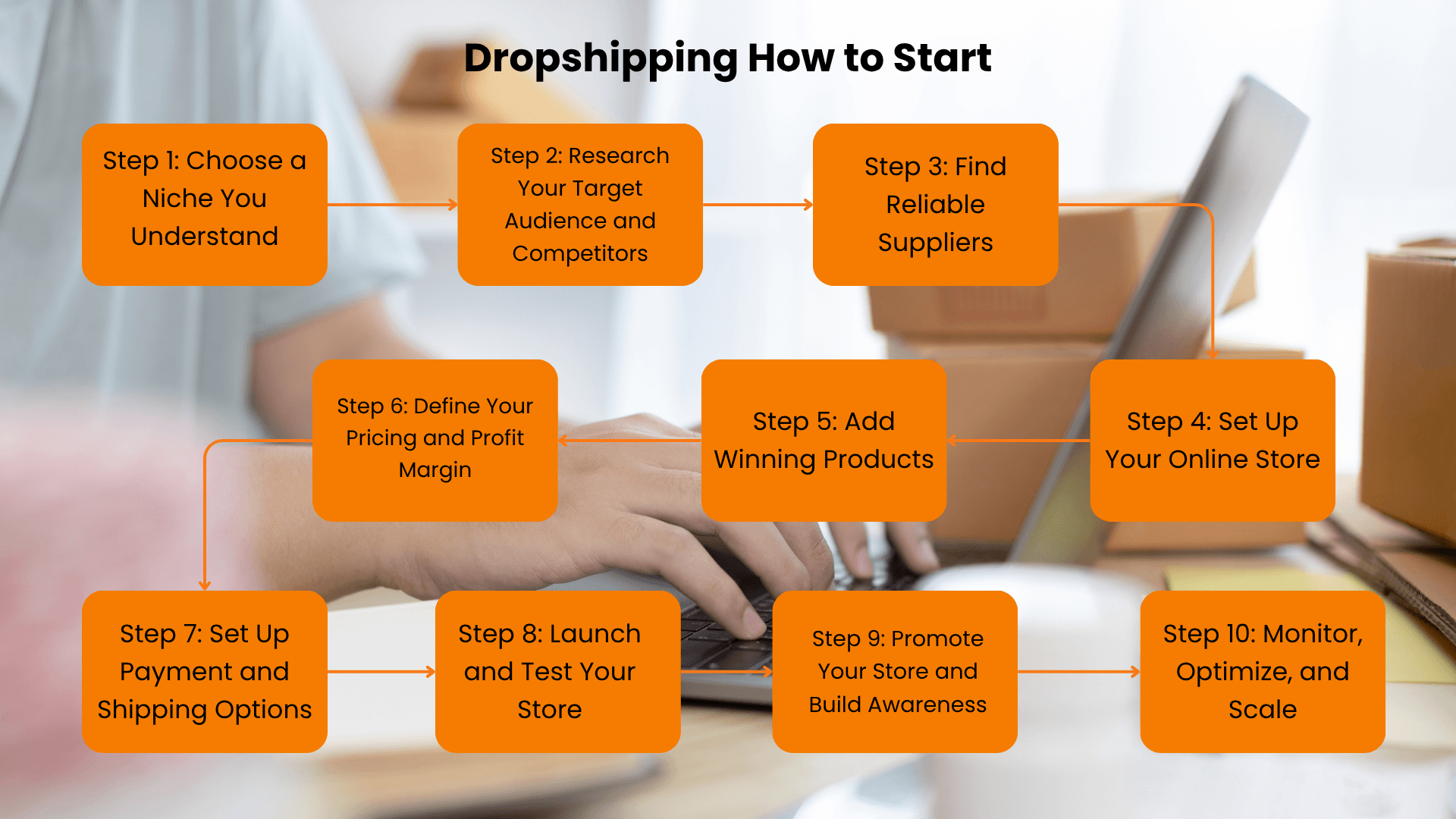
The foundation of every successful dropshipping store is a focused niche; instead of trying to sell everything, narrow down to a specific category such as eco-friendly home decor, travel accessories, or skincare tools.
When choosing your niche, consider three key factors: passion, profitability, and demand. Pick something you genuinely find interesting so that creating content and marketing feels natural. Then, validate it by checking if there’s consistent search volume, existing competition, and strong buying intent.
A clear niche helps you stand out from generic stores and makes it easier to target your ideal audience with precision.
Once you’ve chosen your niche, the next step is understanding who your customers are and what they care about.
Ask yourself:
Who are they (age, interests, location)?
What problems do they want to solve?
Which social media platforms do they spend time on?
At the same time, analyze your competitors. Visit their websites, read their product reviews, and study their ads. This helps you identify what’s working in your niche and where you can offer something better, such as faster shipping, higher quality visuals, or more transparent communication.
Remember: the more you know about your audience and competitors, the more effective your marketing and product choices will be.
Choosing the right supplier is one of the most important decisions in dropshipping.
Reliable suppliers ensure product quality, accurate stock levels, and timely shipping, all of which directly affect your reputation.
You can find suppliers through popular platforms such as AliExpress, Alibaba, CJ Dropshipping, or Spocket. Always order samples before listing products to verify their quality and packaging. Check communication speed, shipping options, and return policies before committing to a supplier.
If possible, work with suppliers that have warehouses in your main target country (for example, the U.S.) to shorten delivery times and improve customer satisfaction.
Now it’s time to build your online store, your brand’s digital home.
Most beginners start with user-friendly eCommerce platforms such as Shopify, WooCommerce, or Wix.
Choose a clean and professional theme, write detailed product descriptions, and upload high-quality images. Don’t forget essential pages like About Us, Shipping Policy, and Contact. These small details help your store look legitimate and build customer trust.
Focus on user experience, your website should load quickly, look great on mobile, and make it easy for visitors to find and purchase products with minimal friction.
Not every product will sell, so you need to choose carefully.
Look for products that solve a real problem, have a clear benefit, and are not easily found in local stores. Avoid fragile or overly complex items that can lead to returns and complaints.
Use tools like Google Trends, TikTok Creative Center, or Dropship Spy to spot trending products. Check their profit margins (after shipping and platform fees) and make sure they align with your brand style.
Once added, test a few products first rather than uploading hundreds. This makes it easier to track what performs best before expanding your catalog.
Your pricing strategy determines how profitable your business will be. The key is to balance competitiveness with healthy margins.
Consider all your costs: product price, shipping, transaction fees, ad spend, and potential returns before setting your final price. Many successful dropshippers use a markup of 2.5x to 3x the supplier’s price, depending on the niche and perceived value.
Experiment with bundle offers, limited-time discounts, and free shipping thresholds to increase your average order value. A smart pricing strategy can turn small wins into steady profits.
Customers need a smooth and secure checkout experience. Integrate trusted payment gateways such as PayPal, Stripe, or Shopify Payments to handle transactions safely.
For shipping, clearly display delivery times and tracking availability. Even if your products are shipped from overseas, transparency helps manage customer expectations. If possible, offer multiple shipping options, for example, standard, express, and eco-friendly delivery.
A seamless checkout process reduces cart abandonment and builds buyer confidence.
Now your store is ready to go live!
Start small. Run a few test campaigns to check if your product pages, payment system, and emails work properly.
Use Facebook Ads or TikTok Ads to drive initial traffic and gather data. Pay attention to which creatives or audiences bring the best results. Based on the data, adjust your targeting, visuals, and product mix.
Don’t aim for perfection right away. The goal of this phase is learning, what resonates with your audience and what doesn’t.
Marketing is the engine that drives your dropshipping business. Even the best products won’t sell if nobody knows about them.
Beyond paid ads, focus on organic marketing channels. Start a TikTok or Instagram account to share lifestyle content, behind-the-scenes videos, or product tutorials. Collaborate with micro-influencers who genuinely use your products.
Consider adding content marketing, blog posts, product guides, or customer stories, to build trust and boost SEO.
Consistent marketing builds recognition, while storytelling keeps your audience engaged.
Once you start getting sales, the real work begins, optimizing and scaling your store.
Track important metrics such as conversion rate, customer acquisition cost, and return on ad spend (ROAS). Identify which products and ads generate the most profit and scale them gradually.
At the same time, improve areas that underperform, such as slow-loading pages, unclear product images, or weak copy. Small improvements compound over time.
When you’ve reached a steady profit, consider reinvesting in automation tools, influencer partnerships, and even private labeling of your top products to build a stronger brand identity.
Starting a dropshipping business is simple, but turning it into a profitable and sustainable venture takes strategy, patience, and consistency. Below are key tips that can help you stand out from competitors and build long-term success.
Most beginners make the mistake of focusing only on products instead of building a brand. In a world where customers can buy similar items anywhere, branding is what makes your store memorable.
Start by defining your brand identity:
What emotions do you want customers to feel when they visit your store?
What story are you telling through your products?
What tone of voice and visuals represent your brand best?
Use consistent logos, color schemes, and messaging across your website, ads, and social media. A strong brand creates customer trust, allows you to charge premium prices, and reduces your dependence on low-margin products.
Customer experience is the real competitive edge in dropshipping. Since customers can’t physically see or touch your products before buying, their trust depends on how professional and reliable your store feels.
Here’s how to make every interaction count:
Offer transparent shipping information: Be honest about delivery times and provide tracking updates.
Use clear, reassuring language: Avoid vague or exaggerated claims in product descriptions.
Respond quickly: Fast and friendly communication builds loyalty and reduces refund requests.
Simplify returns: A straightforward refund or return policy shows confidence in your business.
When customers feel cared for, they are more likely to return and recommend your store to others.
Finding the right products is half the battle in dropshipping. Instead of guessing, use data to guide your choices.
You can analyze:
Search trends on Google or TikTok to see what’s gaining traction.
Competitor stores to spot winning products.
Customer feedback from marketplaces like Amazon to learn what people love (or hate) about similar items.
Once you launch, keep testing. Introduce new items regularly, monitor their performance, and discontinue underperforming ones. Dropshipping success comes from iteration, not perfection on the first try.
Automation is the secret to scaling your dropshipping business without burnout. Many platforms now offer integrations that handle repetitive tasks automatically.
For example:
Order fulfillment tools like DSers or AutoDS can automatically forward orders to suppliers.
Inventory sync tools ensure your stock levels are always up to date.
Email marketing automation (Klaviyo, Omnisend) helps you recover abandoned carts and nurture customers.
Analytics dashboards track key performance metrics in real time.
The less time you spend on manual operations, the more you can focus on strategy, marketing, and growth.
Many beginners rely only on Facebook or TikTok ads. While these platforms are powerful, your marketing should go beyond paid traffic.
A smart marketing strategy includes:
Search Engine Optimization (SEO): Optimize product titles, meta descriptions, and blog content to attract free organic traffic.
Social media presence: Build a community on Instagram, TikTok, or Pinterest by sharing tips, product demos, and lifestyle content.
Email marketing: Send newsletters, promotions, and personalized offers to existing customers.
Influencer partnerships: Collaborate with micro-influencers to gain authentic exposure.
Successful dropshippers don’t rely on luck; they rely on data. Every click, purchase, and abandoned cart tells a story about your customers.
Use analytics tools (like Shopify Analytics, Google Analytics, or Meta Ads Manager) to track key metrics:
Conversion rate
Average order value
Customer acquisition cost
Return on ad spend (ROAS)
By understanding these numbers, you’ll know which products to scale, which campaigns to pause, and where your real profit comes from.
Data-driven decision-making helps you scale sustainably and prevents costly mistakes.
Your suppliers are the backbone of your dropshipping business. One mistake many beginners make is working with random suppliers without vetting them properly.
To ensure reliability:
Always order samples before listing a product.
Check communication speed, slow replies are a red flag.
Look for suppliers with U.S. warehouses for faster shipping.
Maintain good relationships by paying on time and treating them as long-term partners.
Strong supplier partnerships lead to better product quality, fewer complaints, and consistent fulfillment, which directly impacts customer satisfaction.
Dropshipping can be your first step into eCommerce, but it shouldn’t be your last. Once you find consistent success:
Consider private labeling your best-selling products to increase profit margins.
Build exclusive supplier deals to secure better pricing.
Expand into new markets or product categories gradually.
Reinvest your profits into marketing and automation.
Think of dropshipping as your training ground, a way to learn how to run an online business efficiently before evolving into a full-fledged brand.
The dropshipping landscape changes quickly from algorithm updates to trending products. Staying informed gives you a competitive advantage.
Join dropshipping communities, follow eCommerce podcasts or YouTube channels, and subscribe to industry newsletters.
Continuous learning will help you adapt, improve, and discover new opportunities that others might miss.
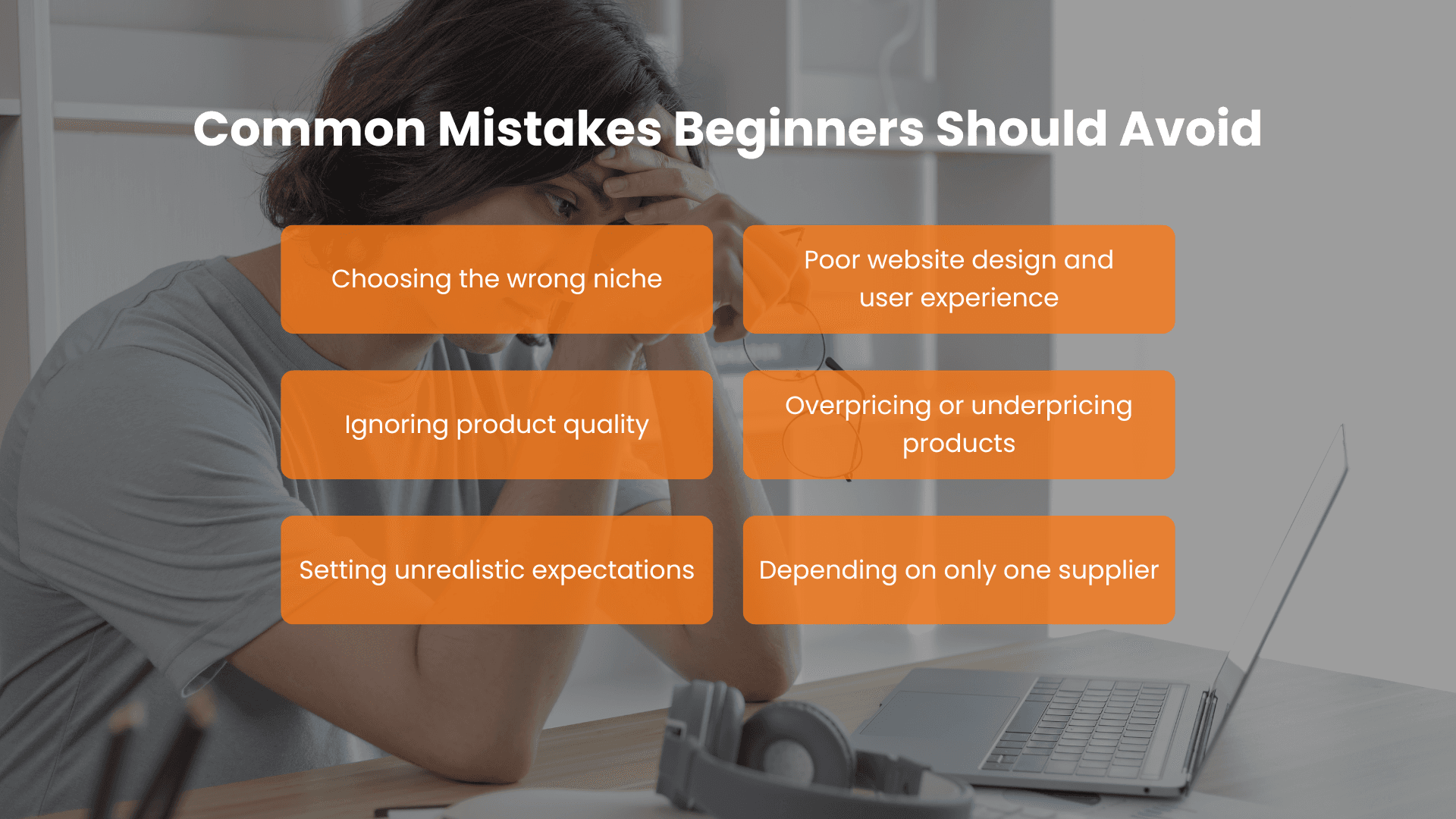
Starting a dropshipping business is exciting, but beginners often fall into avoidable traps that can slow down or even stop their progress. By understanding these common mistakes early, you can save time, money, and frustration and set a solid foundation for long-term success.
One of the biggest mistakes beginners make is jumping into a niche just because it looks profitable without checking if there’s real demand or if they actually understand the audience. Selling random trending items might bring a few quick sales, but it rarely builds a sustainable business.
Instead, choose a niche where you have interest and insight. You don’t need to be an expert, but you should understand what motivates your potential customers. A well-defined niche helps you write better marketing messages, select products with confidence, and stand out from thousands of generic stores online.
Many new dropshippers list products without testing them first. They rely completely on supplier photos and descriptions only to find out later that the product quality is poor or doesn’t match customer expectations. This leads to refund requests, bad reviews, and even account bans from payment gateways.
Before adding a product, always order a sample. Check the packaging, delivery time, and build quality yourself. This small investment ensures you only sell what you’d personally be happy to receive. Remember: your customers are trusting you, not your supplier.
Relying on a single supplier is risky. If that supplier runs out of stock, raises prices, or stops selling a product, your entire business could be disrupted. Shipping delays or changes in product details can also hurt your store’s credibility.
A smart approach is to work with multiple suppliers for your key products. That way, if one faces an issue, another can fulfill your orders without interruption. Tools like DSers or Oberlo (Shopify apps) make it easy to connect and manage multiple suppliers seamlessly.
Some beginners expect to make thousands of dollars within the first month, influenced by flashy “success stories” on social media. In reality, dropshipping requires time, testing, and patience. You might not see profit immediately because you’ll be learning how to advertise, optimize your store, and understand your audience.
Treat your store like a real business. Plan for 3-6 months of consistent effort before expecting steady sales. Focus on learning, improving your marketing, and building customer trust. Dropshipping is not a get-rich-quick model; it’s a skill-based business that rewards persistence.
Your website is the face of your brand. If it looks cluttered, loads slowly, or feels unprofessional, visitors will leave before even viewing your products. Beginners often use free themes, low-quality images, or inconsistent branding, which instantly lowers trust.
Invest time in creating a clean, easy-to-navigate, and mobile-friendly store. Use professional product photos, write clear descriptions, and keep your layout simple. Ensure that customers can find what they need and complete purchases without friction. A polished store doesn’t just attract customers, it converts them.
Finding the right price point is one of the trickiest parts of dropshipping. Beginners often make two opposite mistakes: setting prices too high (chasing unrealistic margins) or too low (trying to beat competitors). Both approaches can hurt your business.
If prices are too high, customers might not buy at all. If they’re too low, you might end up working hard for little to no profit. The key is to understand your costs, product price, shipping, platform fees, and ad spend, and then set a price that keeps your margins healthy while staying competitive.
Starting a dropshipping business in the USA is easier than ever, but success depends on strategy, consistency, and execution.
By following these drop shipping steps, you’ll have a solid foundation to build, market, and grow your online store. Remember: start small, learn fast, and keep improving.

Work with us
Our solutions
Address:
 〒136-0082, Japan, Tokyo, Koto-ku, Shinkiba 3-5-6, 5F
Connect us:


Japan
〒136-0082, Japan, Tokyo, Koto-ku, Shinkiba 3-5-6, 5F
Texas, USA
1606 Audrey Dr, Garland, TX 75040, United States
California, USA
1316 John Reed Ct, City of Industry, CA 91745, United States