

News
Ichiba OnePlatform Team - 20/05/2026
In this article
In dropshipping, success is rarely decided by product selection alone, as the real challenge begins after a customer clicks the buy button and expects fast, accurate delivery. Dropshipping order fulfillment plays a central role in shaping customer trust, store reputation, and profitability, especially as buyers become less tolerant of delays, missing tracking numbers, or poor post-purchase communication.
For many sellers, fulfilling dropshipping orders starts as a simple manual routine but quickly becomes a bottleneck as order volume increases. This is why dropshipping fulfillment has evolved from a back-end task into a strategic advantage for sellers who want to scale sustainably.
This guide is going to dig deep into how dropshipping ecommerce fulfillment works in practice. Whether you are just starting out or managing high-volume operations, understanding how to optimize your dropshipping order fulfillment will help you reduce operational stress while delivering a better customer experience.
In any dropshipping business model, the moment an order is placed marks the beginning of a complex operational flow that determines whether a store can truly scale. Dropshipping order fulfillment refers to the entire process of receiving a customer order, transmitting it to the supplier, coordinating payment and inventory, and ensuring the product is delivered accurately and on time without the seller ever holding physical stock.
At its core, dropshipping fulfillment is the method by which customer orders are fulfilled directly by suppliers instead of the seller. When a dropshipping order is placed on an online store, the seller forwards the order information to the supplier, who then picks, packs, and ships the product directly to the end customer under the seller’s brand or store name.
This fulfillment structure allows sellers to focus on marketing, customer acquisition, and brand building, while operational execution is handled externally. However, because the seller remains responsible for delivery experience, refunds, and customer satisfaction, dropshipping ecommerce fulfillment requires clear workflows, strong supplier coordination, and increasingly, automation to reduce manual errors.
Although the customer experience may appear simple on the surface, fulfilling dropshipping orders involves multiple interconnected steps behind the scenes. Each step plays a critical role in ensuring speed, accuracy, and transparency throughout the transaction.
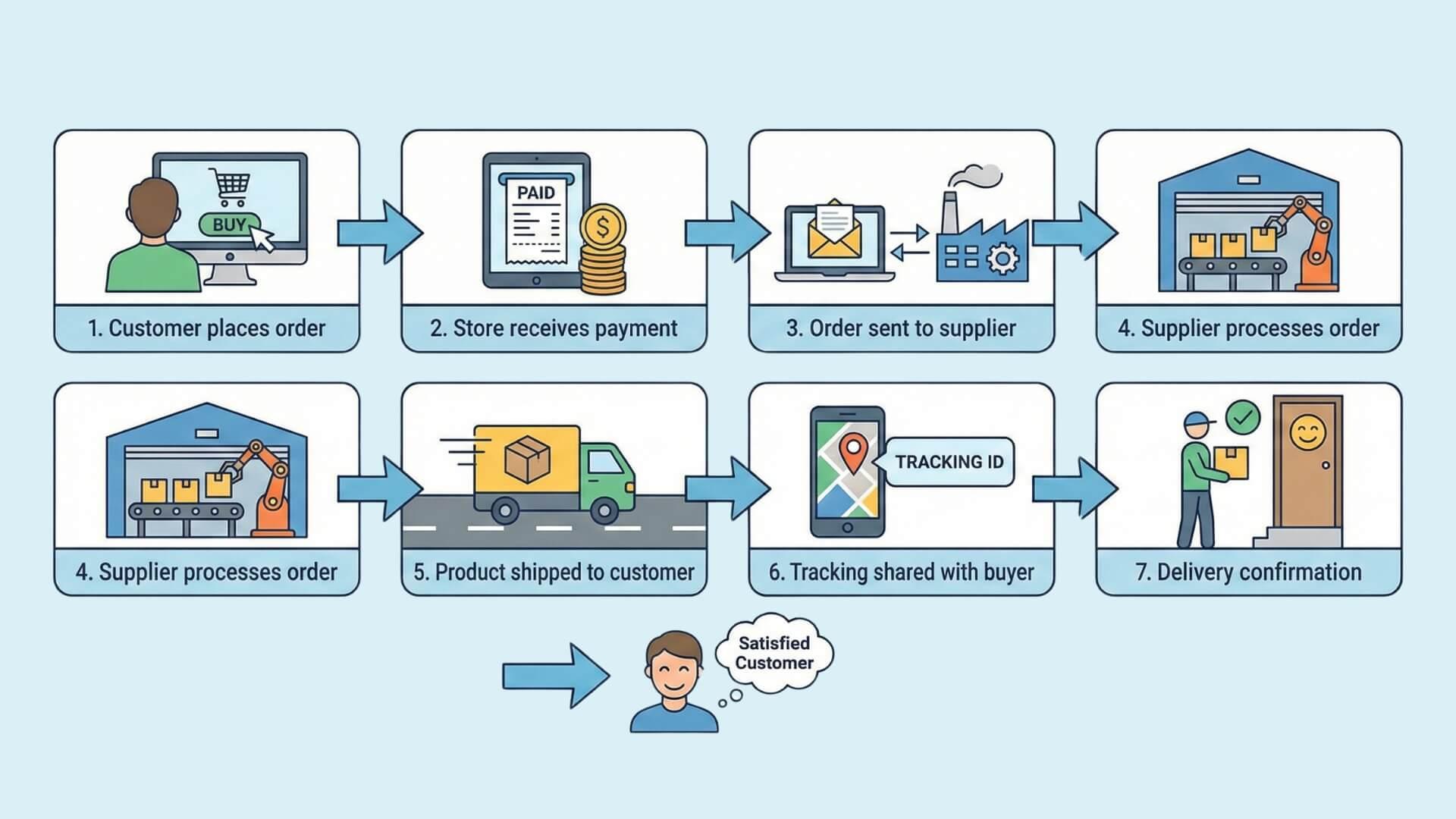
Step 1: Customer places order
Once a customer completes checkout on the store, the order is recorded within the ecommerce platform along with product details, shipping address, and payment status.
Step 2: The store receives payment
The seller collects payment from the customer, usually through a payment gateway, before any supplier costs are paid. This upfront payment structure is one of the key cash flow advantages of dropshipping.
Step 3: Order sent to supplier
Order information is then transmitted to the supplier either manually or through dropshipping auto fulfillment systems. This step includes customer shipping details, selected product variant, and any special instructions.
Step 4: Supplier processes the order
After receiving the order, the supplier confirms inventory availability, prepares the product, and schedules shipment. Processing speed at this stage directly impacts delivery timelines.
Step 5: Product shipped to customer
The supplier ships the product directly to the customer, often using local or international carriers depending on warehouse location and destination.
Step 6: Tracking shared with buyer
Once the shipment is created, tracking information is generated and sent back to the seller, then automatically or manually shared with the customer to provide shipment visibility.
Step 7: Delivery confirmation
The fulfillment cycle concludes when the order is delivered successfully, and confirmation is recorded, completing the dropshipping order process while triggering post purchase communication or support if needed.
As a dropshipping store grows beyond its first few sales, fulfillment quickly becomes the deciding factor between manageable growth and operational chaos. Understanding the differences between manual and automated dropshipping fulfillment is essential for choosing the right operational model at each growth stage.
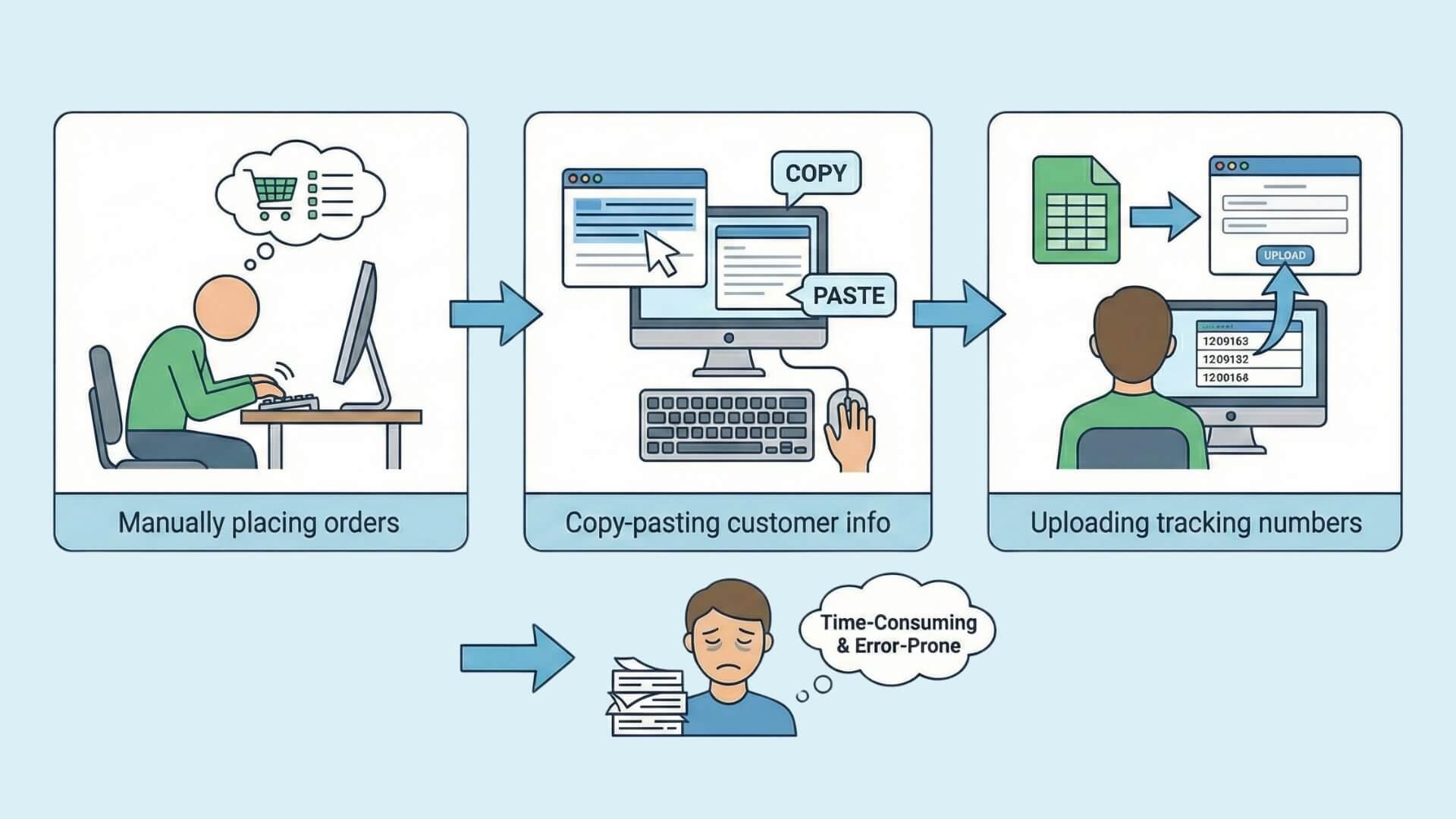
In manual fulfillment setups, sellers handle each dropshipping order individually, relying on human input rather than system workflows. This approach is common among beginners who want full control over early operations or who are still testing market fit.
Manually placing orders with suppliers requires sellers to log into supplier platforms, re-enter product selections, and confirm quantities for every single order. Customer information, such as name, address, and phone number, is often copied and pasted from the ecommerce backend into supplier order forms, creating multiple points of potential error.
Once the supplier ships the product, tracking numbers must be manually uploaded back into the store system and shared with the customer. While this process may seem manageable at low volume, fulfilling dropshipping orders manually becomes increasingly fragile as daily order counts rise. Delays, data entry mistakes, and missed tracking updates are common issues that limit scalability and increase refund risk.
As order volume increases, dropshipping auto fulfillment replaces repetitive manual actions with automated workflows that connect stores, suppliers, and logistics systems in real time. Instead of handling each step manually, automation tools synchronize order data across platforms the moment a purchase is completed.
With automated fulfillment dropshipping systems, orders are automatically routed to suppliers, payments are synced based on predefined rules, and tracking information is pushed back to the store without manual input. This creates a more resilient dropshipping order process where speed and consistency are no longer dependent on human availability.
The benefits of dropshipping auto fulfillment extend beyond time savings. Automation significantly reduces fulfillment errors, improves order accuracy, and enables sellers to scale without proportional increases in operational workload. For sellers managing multiple stores or international markets, automated dropshipping fulfillment becomes a necessity rather than an optimization.
As dropshipping fulfillment becomes more automated, the choice of tools directly affects how efficiently orders move from checkout to delivery. While many platforms offer automation at different levels, not all tools are designed for the same seller profile, supplier ecosystem, or fulfillment complexity. Below are some of the most widely used dropshipping auto fulfillment solutions, each serving a specific operational need.
DSers is best known as an official AliExpress dropshipping partner, designed to automate order placement for sellers working with high-volume, low-cost products. The tool allows orders to be bundled and sent to AliExpress suppliers in bulk, reducing the time spent on repetitive manual submissions.
For sellers managing multiple stores or product variants, DSers supports supplier mapping and basic automation rules. However, dropshipping fulfillment through DSers remains heavily dependent on AliExpress supplier performance, which can result in inconsistent shipping speed and limited control over branding or packaging quality.
AutoDS focuses on end-to-end automation across product importing, pricing updates, order routing, and tracking synchronization. The platform supports multiple supplier sources, making it suitable for sellers running a mixed catalog across marketplaces and independent stores.
In terms of dropshipping ecommerce fulfillment, AutoDS helps reduce operational workload by keeping inventory availability and price changes aligned with supplier data. While the system offers broad automation coverage, fulfillment speed and reliability still vary depending on external suppliers and shipping methods.
CJdropshipping combines sourcing, fulfillment, and basic warehousing into a single ecosystem. Its integration allows sellers to route orders directly to CJ warehouses, where products are picked, packed, and shipped to customers.
This model offers more stability than pure marketplace sourcing and allows limited branding options. However, fulfilling dropshipping orders through CJdropshipping often requires upfront inventory planning, which reduces the flexibility typically associated with traditional dropshipping fulfillment models.
Zendrop is designed for sellers targeting faster shipping and better customer experience, particularly in the US market. By working with vetted suppliers and fulfillment centers, Zendrop reduces common fulfillment issues such as long delivery times and unclear tracking.
Zendrop supports automated order processing and tracking updates, making it suitable for sellers prioritizing reliability over catalog size. That said, product selection can be more limited compared to open marketplace dropshipping fulfillment platforms.
Spocket focuses on connecting sellers with suppliers based in the US and Europe, making it a popular choice for stores that emphasize shorter delivery times and higher perceived product quality. Automation features include order routing and tracking synchronization, which simplify the dropshipping order process.
While Spocket improves delivery performance for specific regions, fulfillment dropshipping through Spocket often comes with higher product costs, which may impact profit margins for price-sensitive niches.
Shopify supports a wide range of fulfillment integrations that allow sellers to connect third-party logistics providers directly to their store backend. These integrations help centralize order management and automate tracking updates across multiple fulfillment partners.
For sellers operating hybrid models that combine dropshipping, local fulfillment, and third-party warehouses, Shopify fulfillment integrations provide flexibility. However, coordination between multiple providers can introduce complexity without a unified fulfillment control layer.
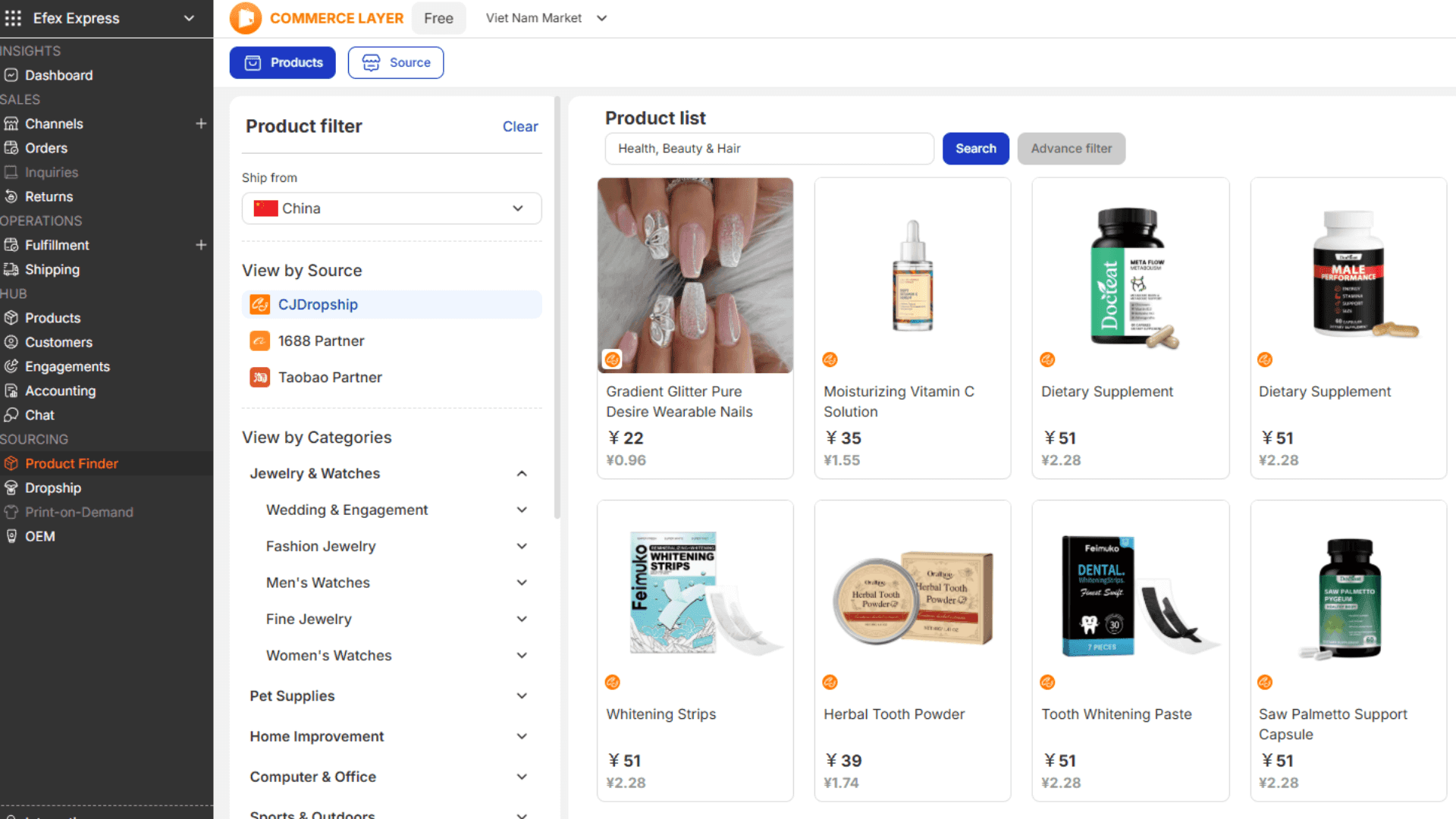
IChiba OnePlatform is designed for sellers who require a centralized, scalable solution for complex dropshipping fulfillment operations. Instead of focusing on a single supplier network, the platform acts as a fulfillment orchestration layer that connects stores, suppliers, warehouses, and shipping partners across multiple regions.
With IChiba OnePlatform, dropshipping orders are automatically routed based on predefined rules such as destination market, product type, or supplier location. Payment reconciliation, inventory visibility, and tracking updates are synchronized in one system, reducing manual intervention throughout the entire dropshipping order process.
One of the key advantages of IChiba OnePlatform is its ability to support cross-border fulfillment at scale, particularly for sellers sourcing from Japan, China and Vietnam while fulfilling orders to international markets. The platform supports branded packaging, return handling, and post purchase visibility, allowing sellers to maintain full control over customer experience while outsourcing execution.
For sellers managing multiple stores, high order volumes, or international expansion, IChiba OnePlatform enables true dropshipping auto fulfillment without sacrificing transparency or operational control. Instead of piecing together separate tools for sourcing, fulfillment, and tracking, sellers can operate within a unified ecosystem designed for long term growth.
As fulfillment becomes more automated and order volumes increase, the reliability of the fulfillment supplier becomes one of the most critical success factors in dropshipping. Choosing the right dropshipping fulfillment supplier is, therefore, not only an operational decision but a strategic one that directly affects scalability and customer experience.
In the dropshipping ecosystem, fulfillment suppliers typically fall into several distinct categories, each offering different levels of control, speed, and operational complexity.
Suppliers are commonly found on platforms such as AliExpress or similar sourcing networks. These suppliers offer a wide product selection and low entry barriers, making them attractive for testing new products. However, dropshipping fulfillment through marketplace suppliers often comes with inconsistent shipping times and limited accountability.
Private or dedicated suppliers work directly with sellers and usually offer more stable inventory, better communication, and improved packaging quality. This type of fulfillment dropshipping supplier is better suited for stores that have validated demand and want more predictable operations.
Fulfillment centers and hybrid suppliers combine warehousing and shipping services with dropshipping workflows. In this model, products may be pre-stocked in regional warehouses, allowing faster delivery while still maintaining dropshipping order handling. This approach is increasingly common in dropshipping ecommerce fulfillment strategies focused on customer experience and international expansion.
By carefully assessing suppliers across these criteria, sellers can build a fulfillment foundation that supports growth rather than limiting it, while ensuring that each dropshipping order contributes to a consistent and trustworthy customer experience.
Shipping speed
Fast and predictable delivery times directly affect customer satisfaction and repeat purchases. A reliable fulfillment supplier should provide clear shipping methods and consistent transit times across orders.
Stock stability
Stable inventory ensures that active products remain available while ads are running. Suppliers with poor stock control often cause sudden order cancellations and disrupt the dropshipping order process.
Packaging quality
Packaging quality influences how customers perceive your brand, even if you do not ship products yourself. Clean, protective packaging reduces damage rates and improves overall delivery experience.
Return handling
Clear return procedures help reduce post-purchase friction and support faster issue resolution. A good dropshipping fulfillment supplier should define how returns, exchanges, and damaged items are handled.
Communication speed
Fast supplier communication is critical when delays or fulfillment issues occur. Suppliers that respond quickly make it easier to protect customer trust and manage expectations.
Automation compatibility
Automation compatibility determines whether the supplier can scale with your business. Suppliers that support automated order routing and tracking updates reduce manual work and fulfillment errors.
As dropshipping operations scale, fulfillment issues often become more frequent and more visible to customers. While no fulfillment system is completely immune to problems, understanding the most common challenges in dropshipping order fulfillment allows sellers to reduce risk, respond faster, and protect long term customer trust.
Late shipping is one of the most common reasons customers request refunds in dropshipping. This issue often originates from suppliers with slow order processing, poor carrier selection, or unclear shipping timelines communicated at checkout.
To reduce delays, sellers should work with fulfillment suppliers that offer consistent processing times and defined shipping methods. Displaying realistic delivery estimates on product and checkout pages also helps manage expectations and reduces post purchase complaints.
Out-of-stock issues disrupt the dropshipping order process and force sellers to either delay fulfillment or cancel orders entirely. This problem typically occurs when suppliers lack real-time inventory updates or when multiple sellers compete for the same limited stock.
Using dropshipping fulfillment systems that sync inventory automatically can significantly reduce this risk. Sellers should also maintain backup suppliers for best-selling products to ensure continuity when stock levels change unexpectedly.
Tracking problems often arise when tracking numbers are delayed, invalid, or fail to update once a package is in transit. From a customer perspective, missing or unclear tracking creates anxiety and increases support requests.
To address this, sellers should prioritize dropshipping auto fulfillment tools that automatically sync tracking information as soon as shipments are created. Providing a branded order tracking page also improves transparency and reassures customers throughout the delivery process.
As competition in dropshipping increases, customer experience is no longer defined only by product quality or pricing. How efficiently and transparently orders are fulfilled plays a major role in shaping buyer trust, brand perception, and repeat purchase behavior. Optimizing dropshipping fulfillment with a customer-centric approach allows sellers to reduce friction while increasing long term value.
Clear delivery expectations help prevent misunderstandings that often lead to refunds or chargebacks. When customers understand how long shipping will take, they are more likely to wait patiently and less likely to contact support.
Creating dedicated shipping information pages that explain processing times and delivery ranges improves clarity across the store. Providing estimated delivery timelines at checkout and maintaining accurate order tracking pages also strengthens trust throughout the dropshipping order process.
Although sellers do not handle products directly, packaging remains a key touchpoint in the customer journey. Clean, protective packaging reduces damage while reinforcing professionalism and reliability.
Adding branded elements such as custom packaging, inserts, or brand cards helps differentiate a store from generic competitors. These small enhancements elevate the fulfillment dropshipping experience and increase the likelihood of repeat orders.
Refunds and chargebacks are often symptoms of poor communication rather than product issues. Proactive order updates, fast response times, and clear policies help reduce customer frustration when delays or issues occur.
Offering shipping insurance options and setting realistic expectations around delivery timelines further minimizes disputes. By strengthening communication and fulfillment reliability, sellers can protect revenue while maintaining positive customer relationships.
Who handles returns in dropshipping?
In most dropshipping models, the seller remains responsible for return management, even though fulfillment is handled by suppliers. This means the seller must coordinate return instructions, communicate with the fulfillment partner, and ensure refunds or exchanges are processed correctly.
Depending on the dropshipping fulfillment supplier, returned items may be sent back to a supplier warehouse, a regional fulfillment center, or handled through a third-party returns service. Clear return policies and predefined workflows help reduce friction and support faster resolution.
What is the best dropshipping fulfillment company?
There is no single best dropshipping fulfillment company for every seller, as the right choice depends on product category, target markets, and order volume. Some sellers prioritize low product cost, while others focus on faster delivery, branding options, or cross-border fulfillment capabilities.
The best fulfillment dropshipping partner is one that offers stable inventory, reliable shipping, strong automation compatibility, and responsive support. Sellers scaling internationally often benefit from platforms that provide centralized fulfillment control across multiple regions and suppliers.
Can fulfillment be outsourced completely?
Yes, dropshipping fulfillment can be outsourced almost entirely, including order processing, shipping, tracking updates, and even returns handling. With modern dropshipping auto fulfillment systems, sellers can operate with minimal manual involvement in daily order management.
However, while execution can be outsourced, accountability cannot. Sellers remain responsible for customer communication, delivery expectations, and overall experience, making supplier selection and system visibility essential.
How to fulfill orders when dropshipping?
To fulfill orders when dropshipping, a seller first receives payment from the customer and then forwards the order details to a fulfillment supplier. The supplier processes the order, ships the product directly to the customer, and provides tracking information.
Using dropshipping ecommerce fulfillment tools allows this entire process to be automated, reducing errors and improving speed. As order volume grows, automation becomes critical for maintaining accuracy and scalability across the dropshipping order process.
Dropshipping order fulfillment is no longer just an operational task that happens behind the scenes, as it has become a core driver of customer satisfaction, brand credibility, and sustainable growth. From understanding the complete dropshipping order process to choosing the right fulfillment suppliers and automation tools, every decision in fulfillment directly affects how customers experience your store.
For dropshipping sellers aiming to build a lasting business, investing in a structured and scalable fulfillment strategy is essential. By treating fulfillment dropshipping as a strategic advantage rather than a cost center, sellers can create smoother operations, stronger customer trust, and a foundation for consistent growth in an increasingly competitive ecommerce landscape.

Work with us
Our solutions
Address:
 〒136-0082, Japan, Tokyo, Koto-ku, Shinkiba 3-5-6, 5F
Connect us:


Japan
〒136-0082, Japan, Tokyo, Koto-ku, Shinkiba 3-5-6, 5F
Texas, USA
1606 Audrey Dr, Garland, TX 75040, United States
California, USA
1316 John Reed Ct, City of Industry, CA 91745, United States