

News
Ichiba OnePlatform Team - 20/05/2026
In this article
The global manga industry has evolved far beyond a niche hobby market, with demand continuing to surge across North The global manga industry has evolved far beyond a niche hobby market, with demand continuing to surge across North America, Europe, and Southeast Asia as anime culture becomes increasingly mainstream. According to Allied Market Research, the global manga market is projected to reach $21.8 billion by 2030, driven by streaming platforms, anime adaptations, collector culture, and the explosive popularity of online fan communities. At the same time, more entrepreneurs are exploring manga dropshipping as a way to enter the anime and pop culture eCommerce space without managing inventory or operating a physical bookstore.
We researched more than 12 manga and anime merchandise suppliers while also reviewing copyright guidance from publishing and IP sources to better understand how modern dropshipping manga businesses operate safely. The result is a practical roadmap designed for anime fans turning their passion into a business, print-on-demand creators looking for safer alternatives, and experienced dropshippers entering the fast-growing pop culture niche for the first time.
Before launching a manga dropshipping store, it is essential to understand that manga is protected intellectual property. While the business model itself is legal, many beginners unknowingly violate copyright laws by selling unofficial merchandise, copying artwork, or sourcing bootleg products from unverified suppliers.
The good news is that there are completely legitimate ways to build a manga dropshipping business if you understand the difference between reselling licensed products and creating unauthorized derivative merchandise.
Every manga series is protected by copyright and trademark law. The intellectual property rights are typically owned by publishers such as Shueisha, Kodansha, and Viz Media, alongside the original manga creators themselves. These rights cover character designs, logos, cover art, titles, storylines, and promotional imagery.
This means you cannot legally create your own branded merchandise using existing characters or artwork without permission from the rights holder. Many new sellers assume that fan art products fall into a legal gray area, but in commercial eCommerce, selling unlicensed fan art can still trigger copyright claims, DMCA takedowns, payment processor disputes, or even legal action.
However, selling officially licensed manga products through authorized distributors is completely different. If you source legitimate physical manga volumes or licensed anime merchandise from approved suppliers, you are simply acting as a retailer for existing licensed products. That model is fully legal and widely used by bookstores, comic shops, and online retailers around the world.
The key distinction is simple: reselling licensed products is legal, while creating or selling unlicensed derivative products is not.
There are several safe ways to build a dropshipping manga business without putting your store at legal risk.
This is the safest and most scalable approach for most beginners entering manga dropshipping. Instead of creating your own products, you sell officially published manga volumes sourced through authorized book distributors.
Major distributors like Ingram Content Group and Baker & Taylor already have legal agreements with manga publishers, which allow retailers to resell titles from major brands such as One Piece, Demon Slayer, Naruto, and Jujutsu Kaisen without copyright concerns.
Under this model, your store functions similarly to an online bookstore. You market and sell official products while the distributor handles fulfillment and shipping.
Another legal pathway involves partnering with suppliers that sell officially licensed anime merchandise. These suppliers work directly with publishers or licensing agencies to distribute approved products such as posters, figurines, apparel, wall scrolls, or accessories.
Companies like Funko and Trends International operate within official licensing ecosystems, which significantly reduces legal risk compared to sourcing unknown products from random marketplaces.
Still, sellers should always verify licensing documentation before listing products. Some suppliers claim products are anime-inspired or licensed-style without actually holding distribution rights.
Print on demand can also work within the manga niche, but only if the artwork is completely original and non-infringing. Many successful stores commission anime-inspired artwork that captures a similar aesthetic without copying existing characters, logos, or recognizable designs.
This approach offers much more creative freedom and avoids many of the licensing complications associated with copyrighted franchises. Platforms like Printful and Printify can handle fulfillment while creators focus on branding and community building.
However, originality matters. Simply changing hair color or clothing on an existing character design is usually not enough to avoid infringement claims.
Many copyright issues in dropshipping manga happen because sellers try to shortcut licensing requirements. Unfortunately, manga publishers and anime studios actively monitor marketplaces for unauthorized merchandise, especially when popular franchises are involved.
One of the biggest mistakes is selling fan art products featuring existing manga characters. Even if the artwork is custom-made, using copyrighted characters commercially can still violate intellectual property laws.
Another major risk comes from sourcing products through unverified suppliers on marketplaces like AliExpress or Alibaba. While some legitimate products exist on these platforms, bootleg manga merchandise is extremely common. Selling counterfeit products can result in store bans, payment freezes, and damaged brand reputation.
Store owners should also avoid using manga cover art, anime screenshots, or copyrighted promotional images in advertisements unless they have permission to do so. Even marketing assets are protected by copyright.
Finally, unofficial doujinshi or fan-made manga should never be sold without explicit permission from the original creator. Some independent creators allow resale partnerships, but assuming permission can create serious legal problems.
⚠ Legal Note: Always verify your supplier's licensing status before listing products. Consult a trademark/IP attorney if building a significant brand in this niche.
Over the past decade, manga has transformed from a niche hobby into a global entertainment powerhouse, fueled by the rapid expansion of anime streaming platforms, social media fandom culture, and collector-driven purchasing behavior.
Unlike many trendy dropshipping niches that fade after a few months, manga operates inside a much larger entertainment ecosystem. Every successful anime adaptation, viral TikTok recommendation, or major convention season creates another wave of demand for manga volumes, collector editions, and related merchandise.

The global manga industry continues to grow at an impressive pace. According to projections from Allied Market Research, the worldwide manga market is expected to reach $21.8 billion by 2030, supported by a steady compound annual growth rate of more than 6 percent. Streaming platforms such as Netflix and Crunchyroll have helped introduce anime and manga culture to millions of new viewers, many of whom later become manga buyers and collectors.
In North America, manga sales have experienced particularly strong momentum. Industry reports from NPD BookScan showed double-digit annual growth for multiple consecutive years, with manga now outselling traditional American superhero comics in the United States. That milestone reflects a major shift in consumer reading habits and demonstrates how mainstream the category has become.
Another important factor is customer spending behavior. Manga readers are not casual one-time buyers. Many fans follow long-running series that contain dozens of volumes, creating natural repeat purchase cycles over months or even years. A reader who buys Volume 1 of a series today may eventually purchase 20 more volumes, collector editions, spin-offs, and merchandise connected to the same franchise.
One reason manga dropshipping works so well compared to other book niches is the unusually high loyalty level within anime and manga communities. Fans are emotionally invested in specific series, characters, and creators, which often leads to repeat buying behavior that traditional eCommerce stores struggle to replicate.
Collectors rarely stop at purchasing a single volume. Many readers aim to complete entire series collections, especially for popular franchises like One Piece, Naruto, or Demon Slayer. Some collectors even purchase multiple editions of the same title, including box sets, hardcover releases, anniversary editions, and imported Japanese versions.
Seasonality also plays a major role in this niche. Whenever a popular anime adaptation releases a new season, search demand for the original manga often spikes dramatically. A trending anime episode on TikTok or YouTube can instantly create surges in traffic for related manga products, especially among younger audiences discovering a series for the first time.
Another advantage is the strong gifting market surrounding manga culture. Parents, friends, and partners frequently buy manga as gifts for teenagers and young adults, particularly during holidays, birthdays, and convention seasons. Because manga buyers are often already part of larger anime fandoms, stores can also cross-sell products such as posters, figurines, apparel, desk accessories, and collectibles alongside manga volumes.
Although the overall manga market is expanding, some categories consistently outperform others in terms of demand and profitability.
Mainstream shonen titles continue to dominate global sales. Franchises such as One Piece, Naruto, Demon Slayer, Jujutsu Kaisen, and My Hero Academia attract massive audiences and generate consistent purchasing activity across both books and merchandise.
At the same time, newer breakout series are creating fresh opportunities for smaller stores that move quickly on trends. Titles like Chainsaw Man, Spy x Family, Blue Lock, and Dungeon Meshi have developed passionate fan communities with strong social media engagement and high merchandise demand.
Beyond mainstream action series, niche demographics such as Seinen and Josei manga are also becoming increasingly valuable. These categories target older readers and often support higher average order values because adult collectors are willing to spend more on premium editions and curated collections.
Collecting products represents another major opportunity. Box sets, hardcover collector editions, imported Japanese releases, and exclusive bundles typically command much higher margins than standard single volumes. These products are especially popular during holiday seasons and anime convention periods, when buyers are more likely to purchase premium gifts or complete large series collections.
For entrepreneurs entering the manga dropshipping space, the market opportunity is not simply about selling books. It is about serving a deeply engaged entertainment fandom that continuously consumes content, builds collections, and actively participates in online communities year-round.
Choosing the right supplier is the most important decision in manga dropshipping because it directly affects product legitimacy, shipping speed, customer trust, and long-term business sustainability. Unlike generic eCommerce niches where suppliers can often be swapped easily, the manga industry operates within strict licensing systems. Working with authorized distributors and verified merchandise partners is essential if you want to avoid copyright problems and build a store that can scale safely.
Ingram Content Group is widely considered the strongest option for serious manga dropshipping stores. As one of the largest book distributors in the world, the company works directly with major publishers and provides access to millions of titles, including extensive manga catalogs from publishers such as Viz Media, Kodansha, and Yen Press.
One of Ingram’s biggest advantages is catalog scale. Sellers can access complete manga series collections instead of only a few trending titles, which is critical because manga readers often purchase entire series over time. This makes it much easier to build a true online manga bookstore rather than a small shop.
The platform also supports dropshipping workflows through its iPage ordering system and third-party Shopify connectors. Many store owners integrate inventory syncing tools that automatically import product information, ISBN data, cover images, and stock updates into Shopify stores.
Profit margins are generally healthy for books, with wholesale discounts often ranging from 35 to 55 percent below retail pricing, depending on publisher agreements and order volume. Domestic warehouse coverage across the United States, the United Kingdom, and Australia also helps reduce delivery times for international customers.
Baker & Taylor is another major book distribution company with strong manga catalog coverage. While similar to Ingram in many ways, Baker & Taylor focuses more heavily on institutional buyers such as schools, libraries, and established retailers.
Because of that, the platform is often better suited for higher volume sellers rather than absolute beginners. Some programs may require retailer verification, business documentation, or minimum purchasing commitments before approval.
That said, the supplier still offers access to many mainstream manga titles and can work well for stores targeting educational markets, collectors, or customers purchasing full series sets in bulk quantities.
For advanced sellers operating multiple storefronts or larger book operations, Baker & Taylor can become a valuable secondary supplier alongside Ingram.
The secondary manga market has become increasingly popular as collectors search for out-of-print titles, discounted volumes, and older editions that are difficult to find through traditional distributors. Platforms like AbeBooks and ThriftBooks create opportunities for pre-owned manga dropshipping through resale partnerships and inventory sourcing.
Legally, reselling used manga is generally protected under the first sale doctrine, meaning physical books can usually be resold without requiring additional licensing from the publisher. This makes second-hand manga one of the safer ways to enter the niche from a copyright perspective.
The lower pricing structure also appeals to budget-conscious anime fans and beginner collectors who want affordable access to long-running series. Since used manga volumes can often be sourced cheaply, some sellers generate surprisingly strong margins through curated bundles or complete collection packs.
However, quality control becomes more important in this model. Product condition must be described accurately because manga buyers pay close attention to cover wear, page discoloration, and missing inserts.
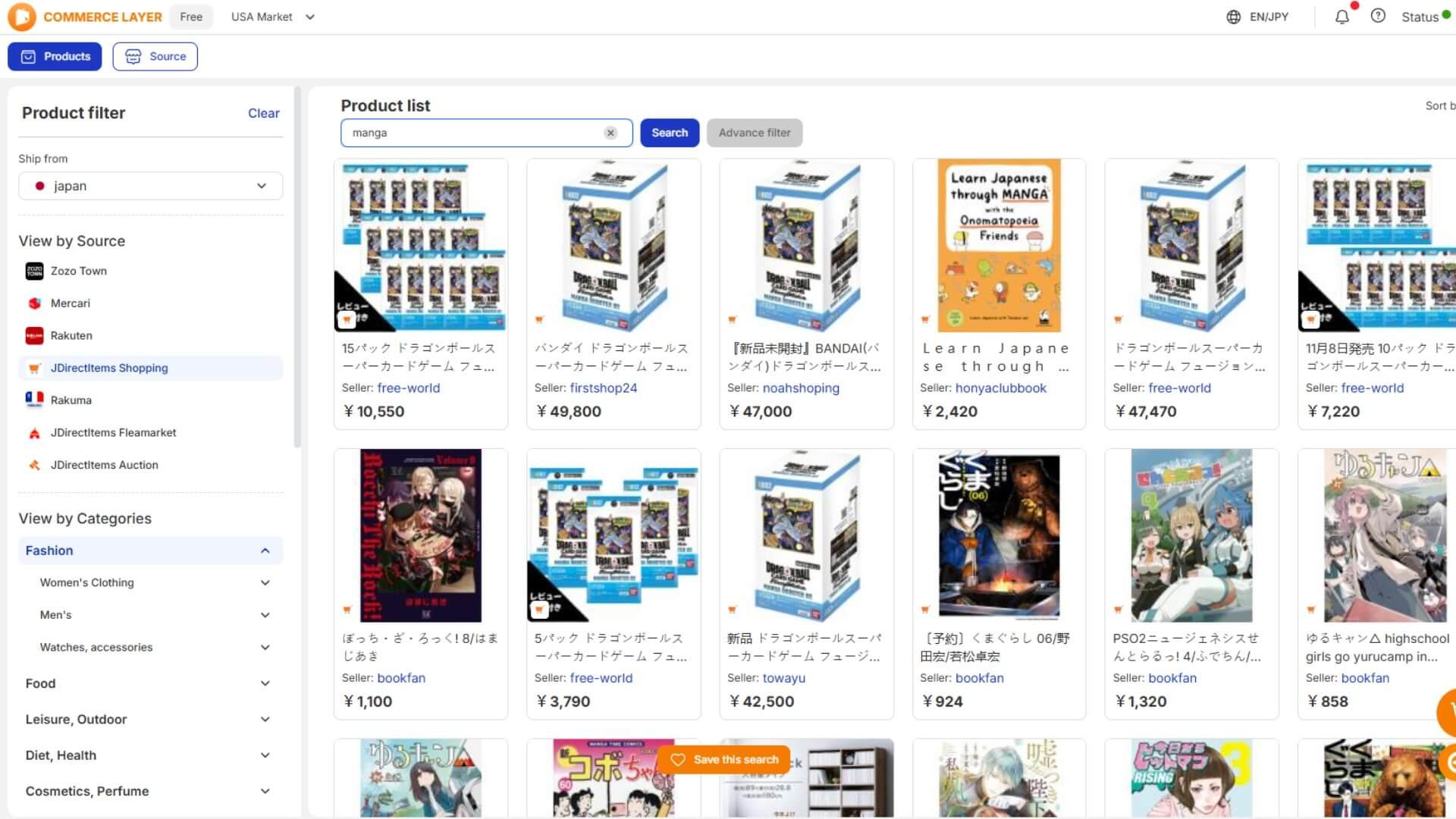
IChiba OnePlatform provides access to Japanese products for international sellers, making it an appealing option for entrepreneurs who want to source manga and anime goods directly from Japan. The platform supports cross-border dropshipping and fulfillment workflows, which is especially useful for stores targeting collectors interested in authentic Japanese editions and exclusive regional merchandise.
One advantage of sourcing from Japan is product uniqueness. Many Japanese releases, limited edition box sets, bookstore exclusives, and anime collaboration products never appear in Western distribution channels. This allows stores to differentiate themselves from competitors relying only on mass market US catalogs.
The platform can also support broader anime niche expansion beyond books, including stationery, lifestyle goods, accessories, and collectible products tied to manga culture.
Because international shipping from Japan may involve longer delivery windows, sellers should clearly communicate fulfillment timelines to customers and focus heavily on collector value rather than competing purely on price.
For stores that want to combine dropshipping manga with higher-margin anime products, licensed merchandise suppliers are extremely valuable. Trends International specializes in officially licensed posters, wall art, calendars, and pop culture accessories connected to major anime franchises.
Other suppliers, such as Funko, distribute licensed figurines and collectibles that pair naturally with manga purchases. These products often generate stronger profit margins than books because customers view them as collectible display items rather than standard media purchases.
Anime merchandise also performs particularly well during holidays and convention seasons, when buyers are more likely to purchase gifts or themed collections. Cross-selling posters, figures, desk accessories, and apparel alongside manga volumes can significantly increase average order value.
Still, sellers should never assume a product is officially licensed simply because it features recognizable anime artwork. Licensing verification is critical in this niche, especially when sourcing through third-party distributors or wholesale marketplaces.
Comparison table
Supplier | Type | Licensed? | Shopify | Margin | Best For |
Ingram Content | Books distributor | Yes — all publishers | Yes | 35–55% | Full manga volumes |
Baker & Taylor | Books wholesale | Yes | Partial | 30–45% | Volume / B2B |
AbeBooks/Thrift | Pre-owned resale | First sale doctrine | No | Variable | Budget stores |
Printful/Printify | POD merchandise | Your original art only | Yes | 25–45% | Original anime art |
Trends Intl. | Licensed merch | Verify per product | No | 35–50% | Posters & wall art |
For most entrepreneurs, Shopify is the best platform for manga dropshipping because it combines beginner-friendly store management with strong app integrations, customizable storefronts, and reliable scalability. Shopify also works particularly well for book and media businesses thanks to its product organization tools and large ecosystem of inventory management apps.
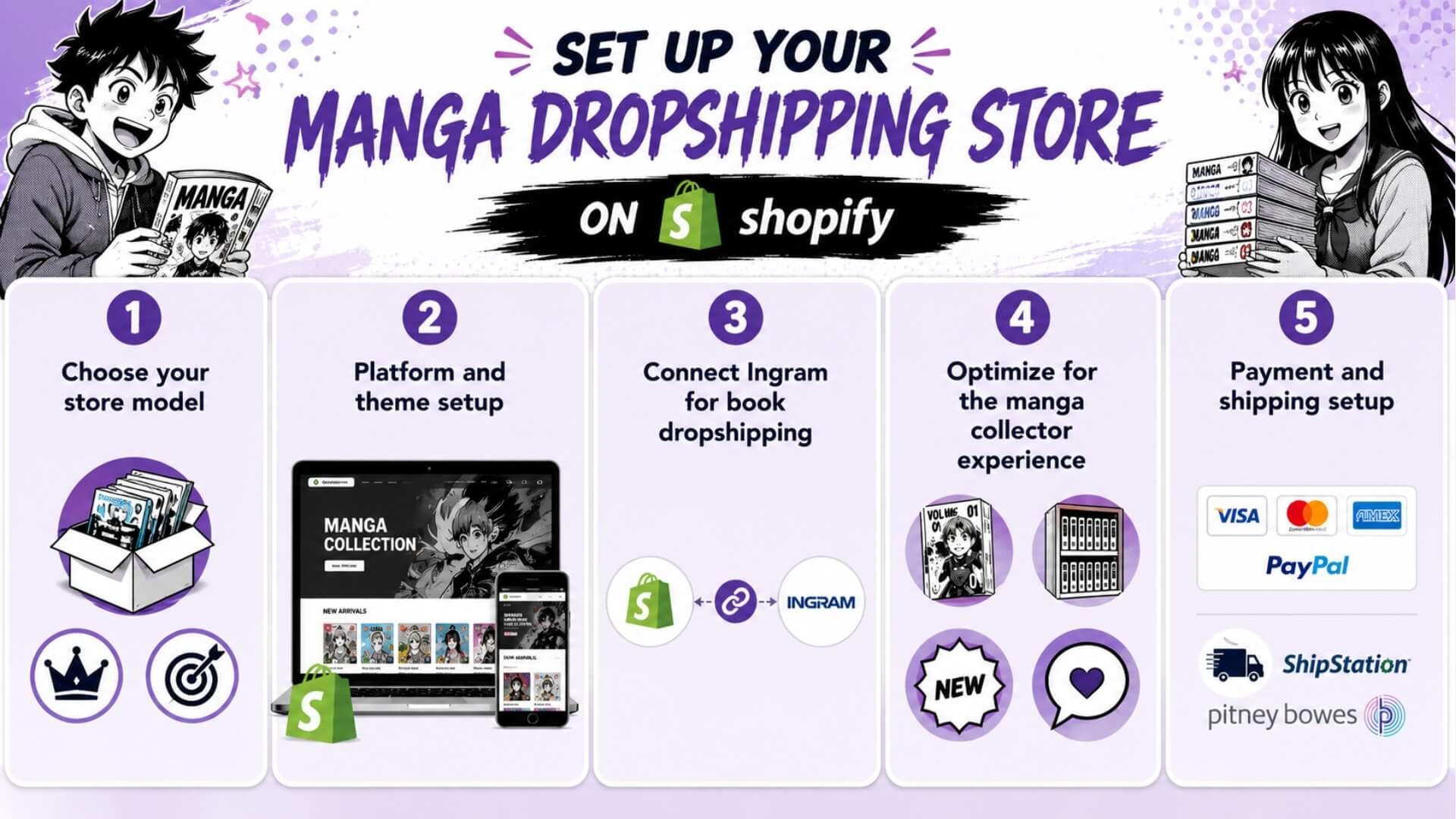
Before building your store, decide which business model fits your goals. A full catalog manga bookstore works best for sellers using suppliers like Ingram Content Group, while niche stores often combine manga with anime merchandise for higher order values. Some entrepreneurs focus on print on demand anime inspired art, while others build stores around pre-owned manga collections for budget-conscious buyers.
Shopify is the best platform for most manga dropshipping stores because it is beginner-friendly and supports integrations. Clean themes like Craft, Dawn, and Sense work especially well since manga buyers prefer organized browsing layouts. Apps such as Judge.me can also help build trust through customer reviews and social proof.
After setting up your storefront, connect your supplier and import products into Shopify. Sellers working with Ingram usually apply for an iPage retailer account, then use inventory sync tools to import titles, cover images, ISBN data, and stock availability automatically. Product organization is critical because manga buyers often search by series order and volume number.
Manga shoppers behave more like collectors than casual book buyers, so your store should focus heavily on the browsing experience. Organize products by series, create collection landing pages, and offer bundle deals like “Volumes 1–3” sets to increase order value. Pre-order functionality is also important because manga fans actively follow new release dates.
Most manga stores use trusted payment gateways like Stripe and PayPal for smooth checkout experiences. Offering free shipping thresholds between $35 and $50 works well because customers frequently buy multiple volumes at once. Clear delivery estimates and damage protection policies are also important since collectors care deeply about book condition.
Marketing a manga dropshipping store is very different from promoting generic eCommerce products. Manga buyers spend large amounts of time consuming content, joining online fandoms, watching anime reviews, and discussing series recommendations across social platforms. Because of that, the most successful manga stores focus heavily on marketing instead of relying only on paid ads.
The advantage of this niche is that anime and manga fans constantly search for new recommendations, release updates, reading orders, and collection ideas. A well-optimized content strategy can attract highly targeted traffic with strong buying intent.
SEO is one of the strongest long-term traffic sources for manga stores because search demand around anime and manga never truly stops. Instead of targeting only broad keywords like “buy manga online,” successful stores focus on long tail search intent tied to specific series and reader interests.
Content such as “Is Jujutsu Kaisen Worth Reading?” or “Best Manga for Beginners” attracts readers who are already close to making a purchase decision. Review content works especially well because users searching for opinions on a manga series are often preparing to buy the first volume shortly afterward.
Volume-specific content can also generate strong traffic spikes during release periods. Articles like “Chainsaw Man Volume 19 Review” or “Blue Lock Reading Order” help capture organic searches from active fandom communities. Seasonal content is equally important because anime premiere announcements often trigger major increases in manga searches.
Product pages should also use structured Book schema markup whenever possible. Rich search results displaying ratings, release information, and series details can improve click-through rates significantly.
Social media is one of the biggest growth drivers for manga brands, especially through short video platforms. Communities like #MangaTok on TikTok have become major discovery engines for manga readers worldwide, with collection videos, manga hauls, and recommendation clips regularly reaching hundreds of thousands of views.
Instead of posting direct product advertisements constantly, most successful stores focus on entertainment and recommendation content. Videos ranking favorite manga arcs, showing collector shelves, or recommending beginner-friendly series usually perform much better than aggressive sales pitches.
Instagram also works well for visual content. Flat lay photography, unboxing reels, aesthetic bookshelf setups, and manga collection showcases tend to generate high engagement among anime fans. Because manga is a highly visual, attractive product, presentation can significantly improve brand recognition.
Micro influencers are especially valuable in this niche. Smaller anime YouTubers, BookTok creators, and manga reviewers with engaged audiences often drive more qualified buyers than large mainstream influencers.
Anime and manga communities are highly active online, making community engagement one of the most effective organic growth strategies for manga dropshipping stores.
Platforms like Reddit contain massive manga communities where readers discuss recommendations, collections, and upcoming releases daily. Subreddits such as r/manga and r/anime can drive traffic if store owners participate authentically instead of posting pure self-promotion.
Discord communities also play a major role in anime fandom culture. Many servers include recommendation channels, collector discussions, and marketplace sections where manga fans actively share purchasing suggestions.
Websites like MyAnimeList and AniList can also indirectly support brand visibility through sponsorships, affiliate campaigns, or recommendation content partnerships.
For larger stores, anime conventions and online fandom events create additional partnership opportunities. Even small sponsorship placements can help stores build credibility within collector communities.
Email marketing performs exceptionally well in the manga niche because fans actively want updates about new releases and restocks. Unlike many industries where promotional emails are ignored, manga collectors often subscribe specifically to receive release notifications for their favorite series.
One of the highest performing campaigns is the new volume release alert. Emails announcing that a new volume has arrived frequently generate strong open rates and repeat purchases because collectors want to continue their series immediately.
Series completion campaigns are another powerful tactic. Personalized emails such as “Volume 24 of Your Favorite Series Just Released” help encourage returning customers and ongoing collection building.
Wishlist and restock notifications are equally important, especially for popular box sets or limited collector editions that regularly sell out.
Platforms like Klaviyo work especially well for advanced automation flows, while Omnisend is often a more budget-friendly option for beginners.
Compared to many traditional dropshipping niches, manga dropshipping usually operates with lower product margins but much stronger repeat purchase potential. Manga readers rarely stop after buying a single volume, which means long-term customer value is often more important than maximizing profit on the first order.
Most stores generate profit through a combination of repeat buyers, bundle offers, collector editions, and merchandise cross-selling rather than relying only on large margins per product.
After accounting for platform fees, payment processing costs, shipping subsidies, returns, and advertising expenses, most manga stores operate with moderate but sustainable net margins. Books generally have thinner margins than apparel or accessories, so successful stores focus heavily on customer retention and community building.
Business Model | COGS | Gross Margin | Net Margin* | AOV Target |
Manga volume reselling | 45–65% of retail | 35–55% | 15–25% | $25–$60 |
Licensed merchandise | 45–60% of retail | 40–55% | 18–28% | $20–$45 |
Original POD art | Base cost + shipping | 25–45% | 12–22% | $25–$55 |
Pre-owned manga | Sourcing dependent | 30–60% | 15–30% | $15–$40 |
Bundle sets | Blended COGS | 40–55% | 20–30% | $50–$120 |
* Net margin after platform fees (~2.9%), shipping subsidies, returns (~3–5% for books), and ad spend (15–25% of revenue).
Pricing manga competitively is essential because customers frequently compare prices across multiple stores, especially against Amazon. For mainstream single volumes, matching or staying close to Amazon pricing is often necessary to remain competitive.
However, trying to compete purely on price is rarely a winning strategy for smaller stores. Instead, successful manga brands differentiate themselves through curated collections, bundle offers, collector experiences, and fandom branding.
Bundle pricing works especially well in this niche. Selling “Volumes 1–3 Starter Sets” or themed franchise collections increases average order value while making purchasing easier for new readers. Collector box sets and hardcover editions also allow much higher markups because fans view them as premium display items rather than ordinary books.
Subscription manga boxes have become increasingly popular as well. Monthly manga curation boxes typically range from $25 to $45 per month and can generate stronger margins through themed product combinations and repeat billing models.
Stores that combine manga volumes with licensed merchandise often achieve better profitability because accessories, posters, and figurines usually carry higher margins than books alone.
Like most eCommerce businesses, manga dropshipping takes time to build momentum. New stores usually spend the first few months organizing catalogs, creating SEO content, testing social media strategies, and building trust within anime communities.
During the first 1 to 3 months, many beginner stores generate little or no profit while focusing on setup and traffic acquisition. Revenue during this stage often falls between $0 and $2,000 per month, especially for stores relying primarily on organic growth.
By months 4 to 6, stores that consistently publish content and build audiences on platforms like TikTok or Instagram may begin reaching $3,000 to $10,000 in monthly revenue. This stage usually depends heavily on growing email lists, improving SEO rankings, and increasing repeat customer activity.
Between months 7 and 12, more established stores with strong search traffic, active fandom communities, and optimized product bundles may scale toward $10,000 to $35,000 per month in revenue. Stores that launch subscription boxes or premium collector products often grow faster because of stronger customer retention.
It is important to approach these benchmarks realistically. These figures are based on general industry observations and dropshipping community data, not guaranteed income levels. Success depends heavily on supplier quality, content strategy, consistency, and the ability to build trust inside anime fandom communities.
In the manga niche, long-term profitability rarely comes from aggressive short-term advertising alone. The stores that perform best are usually the ones that become trusted destinations for collectors, readers, and anime fans over time.
Disclaimer: These benchmarks are industry-based estimates from dropshipping community data, not individual income guarantees. Book margin is thinner than physical goods — volume and repeat purchase are the path to profitability.
Although manga dropshipping can become a profitable niche, many stores fail because owners underestimate how different anime and manga audiences are from typical online shoppers. Copyright issues, poor supplier choices, weak catalog organization, and misunderstanding of collector behavior are some of the biggest reasons new stores struggle early.
One of the fastest ways to get a store suspended is by using unlicensed manga artwork, anime screenshots, or fan-made merchandise without permission. Many beginners assume that anime products are automatically safe, but copyright enforcement in the manga industry is extremely aggressive.
Publishers and studios regularly issue DMCA takedowns against stores using unauthorized imagery, especially for popular franchises like One Piece or Demon Slayer.
To avoid this problem, only source officially licensed products or use completely original artwork for print-on-demand products.
Many new sellers make the mistake of sourcing manga or anime merchandise from marketplaces like AliExpress without checking licensing status. While these platforms may offer attractive prices, bootleg manga products and counterfeit merchandise are extremely common.
Low-quality replicas can damage your brand reputation quickly and may also lead to payment disputes, account bans, or legal complaints.
Whenever possible, work with verified distributors and licensed suppliers instead of choosing products based only on low pricing.
Trying to beat Amazon on individual manga volume pricing is usually a losing strategy. Large retailers operate with massive scale advantages and can often afford thinner margins than smaller independent stores.
Instead of competing purely on price, successful manga brands focus on collector experiences, curated bundles, fandom communities, subscription boxes, or niche series collections that larger retailers do not prioritize.
Creating a store that feels built specifically for anime fans is usually far more effective than trying to become the cheapest seller online.
Manga readers rarely buy a single volume and stop there. Most collectors want full series access, which means incomplete catalogs often frustrate customers and reduce repeat purchases.
If your store stocks volumes 1 through 5 of a series but not later releases, many shoppers will simply leave and purchase elsewhere. Organizing products clearly by reading order and maintaining consistent inventory across the complete series is extremely important.
Bundle offers and “Complete Your Collection” recommendations can also improve conversion rates significantly.
Pre orders are one of the biggest revenue opportunities in manga ecommerce, yet many beginner stores ignore them completely. Manga fans actively track release schedules and often want to reserve upcoming volumes immediately after announcement dates.
Without pre order functionality, stores miss major traffic spikes during launch periods and lose repeat customers to competitors who support early reservations.
Even simple “Coming Soon” product pages can help capture email subscribers before official release dates.
Different manga demographics attract very different audiences. Mainstream Shonen readers behave differently from collectors focused on Seinen, Josei, or mature titles.
Stores selling adult or mature content should implement age verification and carefully review platform compliance rules for advertising and payment processing. Ignoring these requirements can create issues with payment providers or social advertising platforms later.
Understanding fandom differences also helps improve marketing. A Seinen audience may respond better to premium presentation and long reviews, while younger Shonen audiences often engage more with short TikTok content.
Many manga stores focus heavily on paid advertising while completely ignoring organic fandom communities. This is a major mistake because manga discovery today is heavily driven by social platforms and recommendation culture.
Communities on TikTok, Instagram, and Reddit influence buying behavior far more than traditional ads in many cases.
BookTok alone has become one of the largest organic traffic drivers for manga sales globally. Stores that consistently create entertaining recommendation content usually build stronger long-term audiences than stores relying only on paid campaigns.
One of the biggest advantages of manga buyers is that they actively want updates about new releases, restocks, and collector editions. Yet many stores fail to capture emails early, losing valuable repeat traffic opportunities.
Release alerts, wishlist notifications, and restock emails often generate extremely high engagement because collectors closely follow ongoing series. A strong email list can eventually become one of the most valuable long-term assets for a manga brand.
In many cases, successful manga dropshipping stores do not win because they have the cheapest products or the biggest advertising budgets. They succeed because they understand anime fandom culture, build trust with collectors, and create a shopping experience designed specifically for manga readers.
Q1: Is dropshipping manga legal?
Yes, manga dropshipping is legal if you sell officially licensed products sourced from authorized distributors or verified suppliers. Problems usually happen when sellers use unlicensed fan art, counterfeit merchandise, or copyrighted images without permission. Working with legitimate suppliers like Ingram Content Group helps reduce copyright risks significantly.
Q2: Can I dropship manga on Shopify?
Yes. Shopify is one of the best platforms for manga dropshipping because it supports large product catalogs, book integrations, and customizable storefronts. Many manga stores use Shopify together with inventory sync tools connected to book distributors and anime merchandise suppliers.
Q3: How do I avoid copyright issues when dropshipping manga?
The safest approach is to sell officially licensed manga volumes or authorized anime merchandise only. Avoid using copyrighted character art, unofficial fan merchandise, or bootleg products from unverified suppliers. If you create print-on-demand products, make sure the artwork is completely original and does not copy existing manga characters or logos.
Q4: What is the profit margin on manga dropshipping?
Profit margins for manga dropshipping are usually lower than traditional fashion or accessory niches because books are highly competitive products. Many stores operate with moderate margins on single volumes but improve profitability through bundles, collector editions, subscription boxes, and repeat purchases from loyal readers.
Q5: Where can I source manga for dropshipping?
Popular manga suppliers include Ingram Content Group, Baker & Taylor, IChiba OnePlatform, and second-hand marketplaces like AbeBooks. Some stores also combine official manga volumes with licensed anime merchandise suppliers for higher average order values.
Q6: Can I dropship anime merchandise along with manga?
Yes, and many successful stores do exactly that. Posters, figurines, apparel, desk accessories, and collectibles often pair naturally with manga products and usually offer higher margins than books alone. Just make sure all merchandise comes from officially licensed suppliers.
Q7: How do I compete with Amazon for manga sales?
Instead of competing only on price, focus on collector experiences and fandom culture. Successful manga stores usually differentiate themselves through curated bundles, niche recommendations, exclusive imports, subscription boxes, community content, and better shopping experiences for anime fans.
Q8: Is there a print-on-demand option for manga dropshipping?
Yes, but you cannot legally print copyrighted manga artwork or existing anime characters without permission. Print on demand works best when selling completely original anime artwork through platforms like Printful or Printify.
Manga dropshipping is no longer just a niche idea for anime fans. As global manga consumption continues to grow, the industry is creating real opportunities for entrepreneurs who understand fandom culture, collector behavior, and the importance of operating within proper copyright guidelines.
Unlike many short eCommerce trends, manga benefits from long-term audience loyalty, repeat purchasing habits, and constant demand driven by anime adaptations, social media communities, and collector culture. Readers do not simply buy one product and disappear. Many follow series for years, purchase complete collections, and actively look for new releases, merchandise, and premium editions.
At the same time, this niche requires more responsibility than many beginner dropshipping categories. Selling unofficial products, using copyrighted artwork, or sourcing from unverified suppliers can quickly create legal and platform-related problems. Building a sustainable manga dropshipping business means prioritizing licensed suppliers, transparent branding, and authentic community engagement from the beginning.

Work with us
Our solutions
Address:
 〒136-0082, Japan, Tokyo, Koto-ku, Shinkiba 3-5-6, 5F
Connect us:


Japan
〒136-0082, Japan, Tokyo, Koto-ku, Shinkiba 3-5-6, 5F
Texas, USA
1606 Audrey Dr, Garland, TX 75040, United States
California, USA
1316 John Reed Ct, City of Industry, CA 91745, United States