

News
Ichiba OnePlatform Team - 20/05/2026
In this article
"The global tea market is worth $69.51B+ and growing. Here's how to get your slice of it - without ever touching a tea leaf."
The global tea market is projected to surpass $250 billion by 2030, driven by rising demand for wellness beverages, ceremonial matcha, loose leaf tea, and functional herbal blends. As consumers increasingly search for premium tea experiences online, tea dropshipping has become one of the most attractive ecommerce opportunities for new entrepreneurs. Unlike many other product categories, tea is lightweight, shelf-stable, easy to ship, and capable of supporting strong profit margins through premium branding and subscription models.
In this guide, we evaluated more than 15 tea dropshipping suppliers across the US, Europe, Japan, and China, comparing product quality, shipping speed, private label options, and Shopify integrations. You will learn the differences between ready-to-ship, white label, and private label tea models, discover the best tea dropshipping companies for matcha and yerba mate, and explore how to build a profitable Shopify tea dropshipping store from scratch.
Tea has evolved far beyond a traditional beverage category and is now deeply connected to wellness, lifestyle, and premium ecommerce branding. From ceremonial matcha and loose-leaf tea to adaptogen blends and yerba mate, consumers are increasingly willing to spend more on products that deliver both experience and health-focused positioning.
The global tea market is projected to reach more than $115.19 billion by 2033, with specialty tea segments growing at the fastest pace. According to Grand View Research, rising consumer interest in wellness products, functional beverages, and premium lifestyle brands continues to fuel market expansion worldwide. Categories such as matcha dropshipping, herbal tea blends, organic loose leaf tea, and adaptogen-infused products have seen especially strong growth over the past few years.

Tea market growth chart 2023-2033 with specialty segment overlay
One of the biggest drivers behind this trend is the post-pandemic shift toward healthier daily routines. Consumers are increasingly replacing sugary drinks and excessive coffee consumption with tea products associated with focus, relaxation, immunity support, and natural energy. Matcha and yerba mate have become particularly popular among younger wellness-focused audiences, while functional tea blends featuring ingredients like turmeric, reishi, lion’s mane, and ashwagandha are gaining traction across both the US and European markets.
Tea also benefits from strong repeat purchase behavior, which is extremely valuable in ecommerce. Unlike one-time purchases, tea is a consumable product that customers reorder regularly, creating high lifetime value potential for dropshipping stores. Subscription models, monthly tea boxes, and seasonal collections work especially well in this niche, making it easier for sellers to build recurring revenue over time.
Tea is one of the most beginner-friendly products for dropshipping because it combines simple logistics with strong branding opportunities. Most tea products are lightweight, non-perishable, and inexpensive to ship, which helps reduce fulfillment costs and operational complexity. Unlike frozen food or fragile items, tea typically requires no cold chain handling and can be shipped internationally with minimal risk.
Another major advantage is the high perceived value of specialty tea products. Premium matcha, loose-leaf tea, and culturally authentic blends can often be sold at significant markups despite relatively low sourcing costs. This gives sellers the ability to position their products as luxury wellness items while maintaining healthy margins. Many tea dropshipping suppliers also offer white-label and private-label options, making it possible to create a branded tea business without manufacturing products from scratch.
The niche diversity within the tea industry also makes it easier to target specific audiences. Sellers can build stores around Japanese matcha culture, South American yerba mate traditions, detox and wellness teas, fitness energy blends, or luxury tea gift sets. Because there are so many sub-niches available, tea dropshipping companies can differentiate themselves more effectively than stores competing in oversaturated general product categories.
Finally, tea works extremely well with marketing strategies. Platforms like TikTok, Instagram, Pinterest, and YouTube favor visually appealing products, and tea naturally fits this format through brewing videos, matcha preparation content, wellness routines, and aesthetic lifestyle photography. Combined with SEO focused blog content and email subscription models, tea dropshipping offers strong brand-building potential for Shopify entrepreneurs.
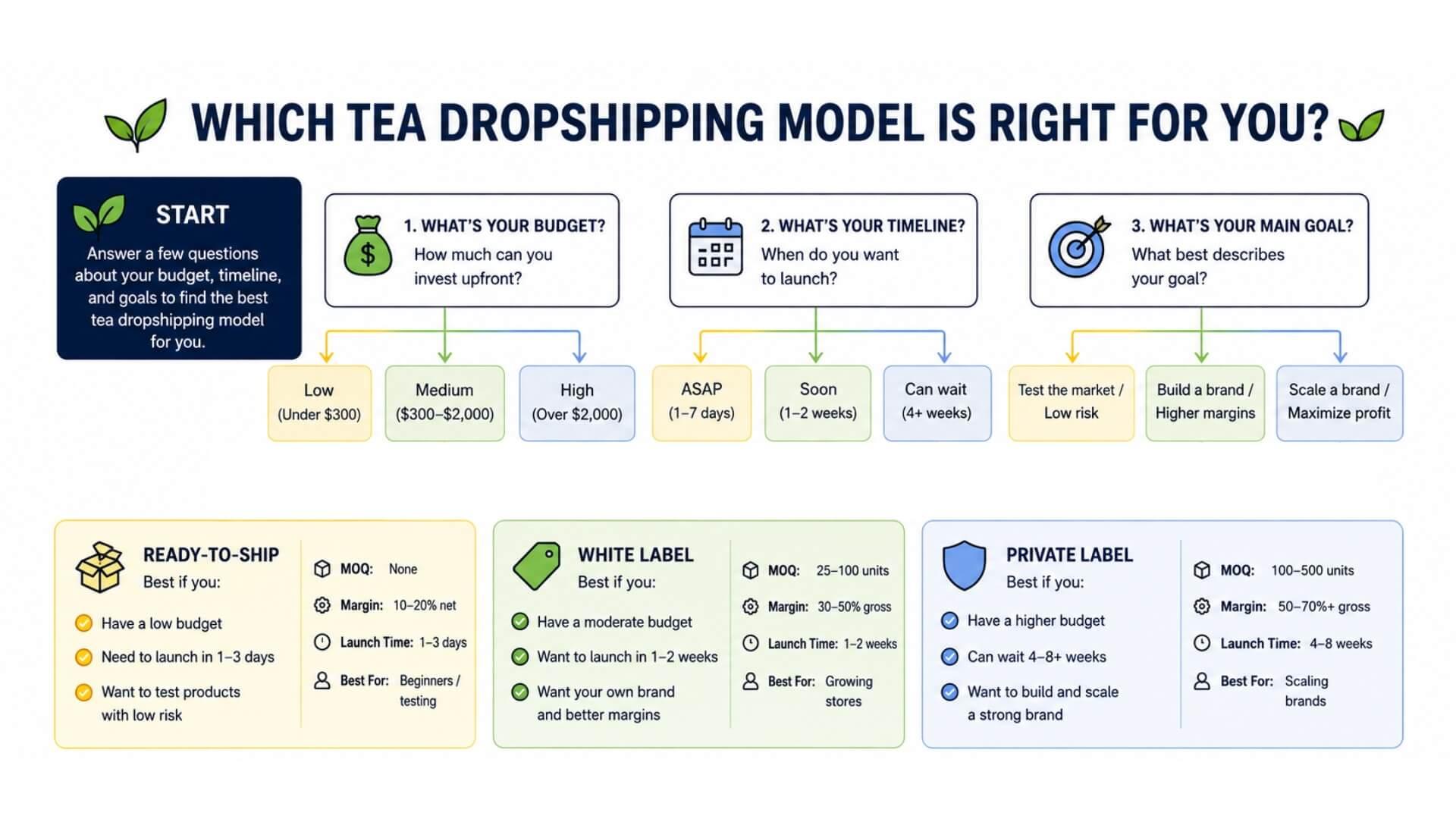
Not all tea dropshipping businesses operate the same way. Some sellers focus on testing products quickly with ready-to-ship suppliers, while others invest in building long-term brands through white-label or private-label tea products. Choosing the right model depends on your budget, timeline, branding goals, and how much control you want over packaging and product formulation.
For most beginners, starting with a simple tea dropshipping setup is the fastest way to validate demand before scaling into a branded business. As revenue grows, many store owners transition into white-label or private-label tea dropship models to improve margins and create stronger customer loyalty.
Ready to ship tea dropshipping is the simplest and lowest risk model for beginners. In this setup, you sell tea products that are already manufactured and packaged by a supplier, either under the supplier’s existing branding or with minimal customization. Orders are fulfilled directly by the supplier, meaning you never need to hold inventory or manage packaging yourself.
This model works especially well for entrepreneurs who want to test different tea niches before investing heavily into branding. Sellers can quickly launch a Shopify tea dropshipping store and experiment with categories such as matcha, loose leaf tea, herbal blends, detox teas, or yerba mate without committing to large minimum orders.
The biggest advantage is speed and simplicity. Most ready-to-ship tea suppliers offer low or zero MOQ requirements, allowing new sellers to launch with very little upfront capital. However, competition can be higher because many stores may sell similar products. Profit margins also tend to be lower compared to white-label or private-label tea businesses since differentiation is limited.
Ready to ship dropshipping is best for:
Beginners testing product demand
Low-budget Shopify stores
Sellers validating tea niches before branding
Entrepreneurs prioritizing speed over customization
White label tea dropshipping
White-label tea dropshipping offers a balance between simplicity and brand building. Instead of selling generic supplier products, you use pre-existing tea blends that are packaged under your own brand name and custom label. The tea formulation itself remains the supplier’s product, but the customer sees your branding throughout the buying experience.
This model has become increasingly popular among Shopify tea dropshipping businesses because it allows stores to look more professional without requiring custom product development. Many tea dropshipping suppliers now provide low MOQ white-label services, including custom pouches, tins, labels, and branded inserts.
White-label tea also provides significantly better margins than generic dropshipping. Because customers perceive the product as a branded premium experience, stores can often charge higher retail prices while improving customer retention and repeat purchases. Turnaround times are relatively fast as well, with many suppliers able to produce custom-labeled tea products within one to two weeks.
Private label tea dropshipping is the most advanced and profitable model, but it also requires the largest investment. With private label tea, you create your own custom tea blends, packaging, ingredient combinations, and brand identity. Instead of using existing supplier formulations, the products are manufactured specifically for your business.
This model gives you full control over sourcing, certifications, flavor profiles, packaging design, and brand positioning. Many successful tea brands eventually move into private label because it creates stronger differentiation and much higher margins. Premium matcha blends, functional wellness teas, and signature loose leaf collections often perform especially well under private label branding.
The tradeoff is that private label suppliers usually require higher MOQs and longer production timelines. Depending on the supplier and packaging complexity, minimum orders may range from 100 to 500 units per SKU, with production times averaging four to eight weeks. However, stores operating at scale can achieve gross margins of 50 to 70 percent or higher.
Private label tea dropshipping is best for:
Established stores scaling beyond $10K/month
Brands focused on customer loyalty and subscriptions
Sellers targeting premium wellness positioning
Entrepreneurs building ecommerce assets
Ultimately, the best tea dropshipping model depends on where you are in your ecommerce journey. Most successful sellers begin with ready-to-ship products, move into white-label tea once they identify winning products, and eventually transition into private-label tea as their brand grows. This phased approach reduces risk while creating a clear path toward higher margins and business value.
Model | MOQ | Margin | Launch Time | Best For |
Ready-to-ship | None | 10–20% net | 1–3 days | Beginners / testing |
White Label | 25–100 units | 30–50% gross | 1–2 weeks | Growing stores |
Private Label | 100–500 units | 50–70%+ gross | 4–8 weeks | Scaling brands |
Choosing the right supplier is one of the most important decisions when building a tea dropshipping business. Product quality, shipping speed, packaging options, and platform integrations can directly affect customer retention and profitability. While many dropshipping tea suppliers exist online, only a small percentage offer reliable fulfillment, premium tea quality, and scalable branding options suitable for serious ecommerce businesses.
Siplii is one of the strongest all-around solutions for tea dropshipping beginners and growing Shopify brands. Based in the United States, the platform specializes in white-label tea dropshipping with no minimum order quantity, making it especially attractive for new sellers who want to launch quickly without investing heavily into inventory.
The supplier offers more than 100 tea SKUs, including green tea, black tea, herbal blends, rooibos, oolong, and ceremonial matcha. One of its biggest advantages is direct Shopify integration, allowing sellers to automate inventory syncing and order fulfillment directly from their storefront.
Siplii also includes custom label printing and branded packaging support, helping stores create a more premium customer experience from day one. Standard shipping times are typically between three and five business days within the US, which is competitive compared to many overseas tea dropshipping suppliers.
Teas Etc. is one of the most established loose-leaf tea wholesalers in the United States and a strong option for boutique tea brands focused on premium positioning. The company offers more than 250 loose-leaf tea varieties, including herbal blends, flavored teas, organic selections, and traditional tea categories.
Unlike generic dropshipping suppliers, Teas Etc. focuses heavily on tea quality and sourcing transparency. Their FDA-registered facility and organic product options make them especially appealing for brands targeting health-conscious consumers. Sellers can also access white-label packaging options, including custom tins, pouches, and gift presentation.
Because loose-leaf tea carries a higher perceived value than standard tea bags, this supplier works particularly well for stores focused on subscription boxes, gifting, and premium tea experiences.
Adagio Teas is one of the most recognizable names in the online tea industry and also offers a strong private label program for ecommerce businesses. The company provides access to more than 200 base teas and custom blending capabilities, allowing sellers to create more differentiated product lines.
Adagio is particularly useful for entrepreneurs looking to transition from generic tea dropshipping into more advanced branded ecommerce. The supplier supports custom packaging and works well for stores that want a larger catalog of tea flavors and blend combinations.
Because the company already has strong market credibility, many sellers also use Adagio as a sourcing partner while focusing their own branding efforts on niche positioning and content marketing.
Fujian Tea Trader is one of the strongest sourcing options for matcha dropshipping businesses focused on lower product costs and high volume scaling. Located in China’s Fujian tea production region, the supplier provides direct factory pricing for ceremonial-grade and culinary-grade matcha products.
For entrepreneurs building Japanese tea brands or matcha Shopify stores, sourcing directly from Asian tea suppliers can significantly improve profit margins. Fujian Tea Trader also offers custom packaging and white-label support with relatively low MOQ requirements compared to many manufacturers.
The tradeoff is that shipping times may be longer than those of US suppliers, especially for international fulfillment. However, stores operating at scale often accept these longer lead times in exchange for lower COGS and broader product customization.
CBSe and Anna Park are two well-known yerba mate brands commonly available through distributors and specialty beverage wholesalers in the US market. While fewer suppliers specialize specifically in yerba mate dropshipping, this niche continues to grow rapidly as consumers search for coffee alternatives with natural caffeine and wellness positioning.
Yerba mate presents a strong opportunity because competition remains significantly lower than in the matcha space. Many consumers are still discovering the category, which creates room for educational marketing and cultural storytelling around Argentine, Uruguayan, and Brazilian tea traditions.
Stores focused on yerba mate often increase average order value by bundling products with gourds, bombillas, and brewing accessories.
IChiba OnePlatform is a strong option for sellers looking to source authentic Japanese tea products and build premium Asian ecommerce brands. The platform connects international sellers with Japanese suppliers, making it easier to access products such as ceremonial matcha, Japanese loose leaf tea, wellness blends, and specialty regional tea products.
One of the platform’s biggest advantages is its cross-border fulfillment infrastructure, which helps simplify sourcing and international shipping for global ecommerce sellers. For Shopify tea dropshipping businesses targeting authenticity and premium positioning, Japanese sourcing can become a major competitive advantage.
One of the biggest advantages of tea dropshipping is the wide variety of profitable niches available within the market. Instead of competing directly with generic grocery brands, successful tea stores often focus on a specific audience, lifestyle, or cultural experience. Niching down makes it easier to build stronger branding, create targeted marketing content, and improve customer loyalty over time.
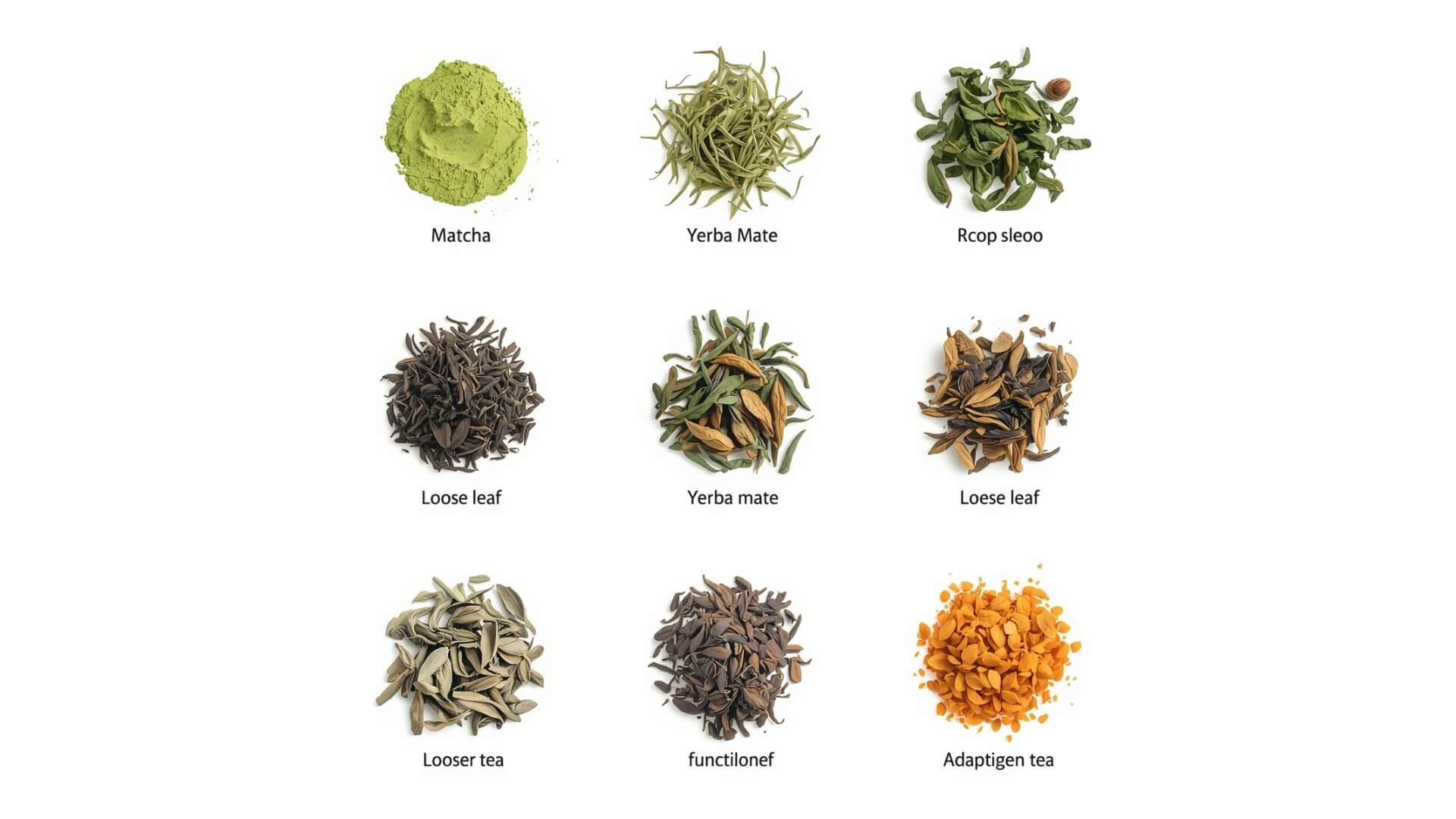
Among the fastest-growing categories today are matcha, yerba mate, loose leaf tea, and functional wellness blends. Each niche appeals to a different consumer demographic and offers unique opportunities for premium positioning and recurring purchases.
Matcha is currently one of the most profitable and visually marketable tea categories in ecommerce. Search demand for matcha has grown consistently between 2022 and 2025, driven by wellness culture, cafe trends, and social media content on platforms like TikTok and Instagram. Bright green ceremonial matcha products perform especially well in short video content, making matcha dropshipping an ideal niche for creators and lifestyle brands.
Another reason matcha works so well for dropshipping is its premium pricing potential. High-quality ceremonial-grade matcha commonly retails between $20 and $60 for small quantities, allowing sellers to maintain strong margins even after fulfillment and advertising costs. Consumers are also highly interested in sourcing origin, tea grades, and preparation rituals, which creates opportunities for storytelling marketing.
Yerba mate dropshipping remains one of the most underrated opportunities in the specialty beverage market. While matcha has already become mainstream in many Western markets, yerba mate is still relatively underdeveloped in the US and Europe, creating significant room for new brands to establish themselves early.
Consumers are increasingly searching for alternatives to coffee that provide natural caffeine without the crash associated with energy drinks. Yerba mate fits perfectly into this trend because it offers a combination of energy, antioxidants, and cultural authenticity tied to Argentine, Brazilian, and Uruguayan traditions.
Compared to other tea categories, competition in yerba mate ecommerce is still relatively low. This gives sellers an opportunity to build authority through educational content, brewing tutorials, and storytelling around South American tea culture. Many successful stores also increase average order value by bundling mate gourds, bombillas, and starter kits alongside the tea products themselves.
Loose leaf tea dropshipping is ideal for brands focused on premium experiences and higher average order values. Compared to traditional tea bags, loose leaf tea is often perceived as more authentic, eco-friendly, and higher quality, allowing stores to charge premium prices more easily.
This niche also pairs naturally with subscription business models. Customers who enjoy trying different flavors and seasonal blends are more likely to subscribe to monthly tea boxes or curated tasting collections. Popular loose leaf tea varieties include Earl Grey, jasmine green tea, oolong, rooibos, chamomile, and fruit-infused herbal blends.
Another major advantage is the strong bundling potential within this niche. Many stores increase profitability by selling tea infusers, storage tins, kettles, and tea accessories alongside the core products. This not only raises average order value but also helps create a more complete lifestyle brand.
Functional tea blends are currently one of the fastest-growing wellness categories in ecommerce. Instead of focusing purely on flavor, these products are marketed around lifestyle benefits such as relaxation, focus, immunity support, stress relief, and sleep quality. Many blends include ingredients like turmeric, reishi mushroom, lion’s mane, passionflower, and ashwagandha.
For ecommerce entrepreneurs, this niche offers exceptionally strong branding and pricing opportunities. Functional tea products are often positioned as premium wellness solutions, with retail prices ranging from $25 to $45 for relatively small packages. White label and private label tea suppliers also commonly support adaptogen blends, making it easier for brands to develop unique product lines.
However, sellers in this niche should be careful with compliance and advertising claims. Avoid making direct medical or disease-related promises in product descriptions or ad copy, especially when selling in the US market, where FTC and FDA guidelines apply.
Starting a tea dropshipping business is much easier today than it was a few years ago, especially with platforms like Shopify offering direct integrations with tea suppliers and automation tools. For most beginners, Shopify remains the best platform for tea dropshipping because it combines a simple store setup, premium visual themes, and strong compatibility with fulfillment apps such as DSers, AutoDS, and supplier-specific integrations.
The key to success is not simply launching a store quickly, but building a tea brand that feels trustworthy, premium, and visually appealing from the beginning. Below is a step-by-step framework for launching a professional tea dropshipping store even if you have no prior ecommerce experience.
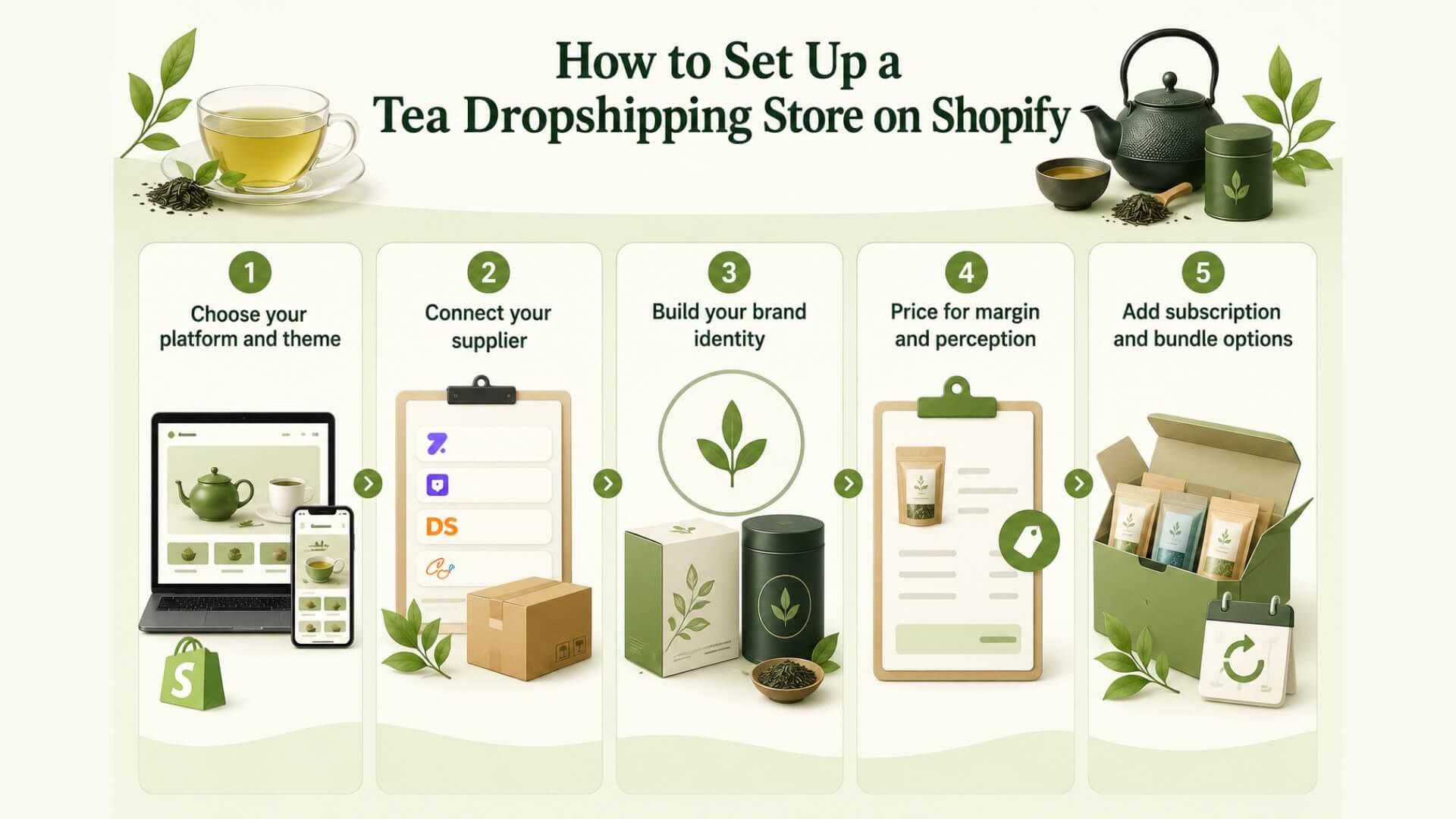
For beginners, Shopify Basic is usually the best starting point because it includes everything needed to run a tea ecommerce store without requiring technical knowledge. The platform is especially suitable for tea brands because it supports strong visual storytelling through photography, lifestyle content, and mobile-optimized product pages.
When selecting a theme, prioritize clean and minimal designs that allow product imagery to stand out. Tea products perform best when the store aesthetic feels calm, premium, and wellness-oriented rather than overly aggressive or sales-focused.
Once your storefront is ready, the next step is connecting your supplier and importing products into your store. Some tea dropshipping suppliers offer direct Shopify integrations, while others require manual product uploads or fulfillment routing through automation tools.
Tea is an experience-driven product category, which means branding matters far more than in many other dropshipping niches. Customers are often buying into a lifestyle, ritual, or wellness identity rather than simply purchasing tea itself.
Start by choosing a memorable brand name that reflects your niche and positioning. Matcha brands may lean toward Japanese naming, while wellness tea stores may emphasize calmness, balance, or natural living.
Next, invest in packaging and visual identity. Even simple white-label tea dropshipping becomes far more premium when combined with clean branding, elegant typography, and lifestyle product photography.
Pricing strategy plays a major role in tea ecommerce because consumers often associate higher pricing with higher quality. Undervaluing tea products can actually reduce customer trust, especially in premium niches such as ceremonial matcha or functional wellness blends.
Tea is naturally suited for subscription ecommerce because customers consume products repeatedly and often enjoy trying new blends regularly. Adding subscriptions early can dramatically increase customer lifetime value and stabilize monthly revenue.
Launching a tea dropshipping store is only the first step. The real challenge is building a brand that customers remember and trust in an increasingly competitive ecommerce market. Fortunately, tea is one of the most content-friendly product categories online. Matcha preparation videos, cozy tea rituals, wellness routines, and aesthetic product photography naturally perform well across social media, SEO, and email marketing channels.
The most successful tea brands rarely rely on paid ads alone. Instead, they combine visual storytelling, educational content, influencer partnerships, and subscription retention strategies to create long-term customer loyalty.
Tea products are highly visual, which makes platforms like Instagram and TikTok especially powerful for tea dropshipping businesses. Matcha whisking videos, slow pour tea shots, cozy morning routines, and minimalist wellness aesthetics consistently generate strong engagement because they fit naturally into lifestyle social media trends.
In particular, “matcha aesthetic” and “morning wellness routine” content continues to perform extremely well on TikTok. Consumers are drawn not only to the product itself, but also to the calming and premium lifestyle associated with tea culture. This gives tea brands a major advantage compared to less visually appealing ecommerce niches.
User-generated content is also extremely effective for tea brands. Many Shopify tea dropshipping stores send free samples to micro influencers with audiences between 5,000 and 50,000 followers because these creators often generate higher engagement and lower collaboration costs than larger influencers.
On Instagram, short Reels tend to outperform static product photos, especially for ceremonial matcha and loose leaf tea products. Educational content combined with aesthetic visuals typically receives higher save and share rates, helping organic reach grow over time.
SEO remains one of the highest ROI marketing channels for tea ecommerce because consumers frequently search for educational and comparison content before making purchases. Instead of targeting only highly competitive keywords like “buy matcha,” successful tea brands focus on long tail informational searches that attract high intent traffic.
Building topical authority is especially important in the tea niche. Stores that consistently publish educational blog content about tea origins, brewing techniques, cultural traditions, and wellness recipes tend to perform better in search rankings over time.
Recipe content is particularly effective because it combines SEO traffic with social sharing potential. Matcha latte tutorials, iced yerba mate recipes, moon milk blends, and seasonal tea drink guides often generate strong engagement across both Google and Pinterest.
However, brands selling functional tea blends should avoid exaggerated health claims in blog content. Focus on general wellness positioning and educational information rather than making direct medical promises.
Paid advertising can accelerate growth for tea dropshipping businesses, especially when paired with strong visual branding and lifestyle content. Platforms like Facebook and Instagram work particularly well for tea because they allow advertisers to target audiences based on wellness, yoga, fitness, coffee alternatives, skincare, and healthy lifestyle interests.
Carousel ads are often highly effective because they allow stores to showcase multiple tea varieties, flavors, or bundle options within a single campaign. Video creatives featuring tea preparation and lifestyle aesthetics also tend to outperform static images in most tea niches.
Pinterest is another underrated traffic source for tea ecommerce. Unlike many social platforms, Pinterest users often browse with strong purchase intent, especially for categories related to wellness, gifts, recipes, and home lifestyle products.
Email marketing is one of the most profitable growth channels for tea dropshipping stores because tea is a repeat purchase product. Unlike many ecommerce categories that depend heavily on constant customer acquisition, tea businesses can build recurring revenue through replenishment campaigns and subscription models.
Educational content performs especially well in tea email marketing because consumers enjoy learning about preparation methods, flavor profiles, and cultural traditions. Seasonal recommendations and recipe content also help maintain engagement between purchases.
One of the highest converting automation flows for tea stores is the replenishment reminder. Since customers typically reorder tea every few weeks, sending reminder emails around the 25 to 30-day mark can significantly increase repeat purchase rates.
One of the main reasons entrepreneurs enter tea dropshipping is the strong profit potential compared to many other ecommerce niches. Tea products are relatively inexpensive to source, lightweight to ship, and capable of supporting premium pricing through branding and storytelling. However, actual profitability depends heavily on which business model you choose, how well you position your brand, and whether you build recurring revenue through subscriptions and repeat purchases.
While many beginners expect instant success, the reality is that tea dropshipping usually becomes more profitable over time as branding, customer retention, and organic traffic improve. Stores focused only on low price competition often struggle, while brands that build trust and premium positioning tend to achieve much healthier margins.
Different tea business models produce very different profit margins. Ready to ship dropshipping offers the lowest startup risk, but usually comes with lower margins because the products are less differentiated. White label and private label tea models typically generate stronger profitability because customers perceive them as branded premium products rather than generic tea listings.
Here is a general margin comparison across the three main tea dropshipping models:
Metric | Ready-to-ship | White Label | Private Label |
Gross margin | 15–25% | 30–50% | 50–70% |
Net margin (after ads) | 5–12% | 18–30% | 25–45% |
AOV target | $15–25 | $25–45 | $35–80 |
Monthly revenue potential | $500–$3K | $3K–$15K | $15K–$80K+ |
Ready-to-ship stores usually compete more heavily on convenience and trend testing. Because many sellers may offer similar products, advertising costs can reduce profitability quickly unless the store has strong marketing content.
White label tea dropshipping offers a much better balance between scalability and simplicity. Sellers can maintain healthier pricing because the customer experiences a branded product instead of a generic marketplace listing. This is why many successful Shopify tea dropshipping stores eventually transition into white label packaging once they identify winning products.
Private label tea businesses often achieve the highest margins because they control everything from sourcing and formulation to packaging and brand storytelling. Premium matcha brands, wellness tea companies commonly operate within this model.
One of the biggest misconceptions about dropshipping is the idea that stores become profitable immediately. In reality, tea dropshipping usually follows a gradual growth curve as sellers improve product selection, branding, content creation, and customer retention.
For most beginners, the first few months are focused heavily on testing products and learning marketing fundamentals rather than generating large profits.
A realistic income trajectory often looks like this:
Month 1–3:
Most stores generate between $0 and $1,500 in revenue while testing tea products, experimenting with paid ads, and building social media content. This stage is primarily about validating demand and identifying winning products.
Month 4–6:
Stores with strong branding and consistent marketing may reach between $2,000 and $8,000 per month in revenue. By this point, many sellers begin seeing repeat customers, growing email lists, and better conversion rates from optimized product pages.
Month 7–12:
Established tea brands with successful white label products and subscription revenue can scale into the $10,000 to $40,000 monthly revenue range. At this stage, organic SEO traffic, influencer collaborations, and recurring customers often become major growth drivers.
Of course, results vary significantly depending on niche selection, marketing skill, supplier quality, and brand positioning. Stores focused purely on generic products and aggressive discounting tend to struggle long term, while brands that emphasize premium experiences, authenticity, and customer loyalty usually build more sustainable ecommerce businesses.
Yes, tea dropshipping can be highly profitable when combined with strong branding and niche positioning. Products like matcha, loose leaf tea, and functional wellness blends often support premium pricing while maintaining relatively low sourcing and shipping costs. Tea also has strong repeat purchase behavior, which helps increase customer lifetime value through subscriptions and recurring orders.
For most beginners and growing ecommerce brands, Siplii is one of the best tea dropshipping suppliers for Shopify because it offers white label services, no MOQ requirements, and direct Shopify integration. Other strong suppliers include Teas Etc. for loose leaf tea and Fujian Tea Trader for matcha sourcing.
Yes, matcha dropshipping is one of the fastest-growing tea ecommerce niches today. Many suppliers offer ceremonial-grade and culinary-grade matcha with white label or private label packaging options. Matcha works especially well for Shopify stores because of its premium pricing potential and strong visual appeal on social media platforms like TikTok and Instagram.
White label tea uses an existing supplier formula packaged under your brand name, while private label tea involves creating custom blends and formulations specifically for your business. White label tea dropshipping is usually faster and more affordable for beginners, while private label tea offers greater product differentiation and higher profit margins.
Starting completely with no money is difficult, but tea dropshipping has relatively low startup costs compared to many ecommerce businesses. Beginners can reduce expenses by using ready-to-ship tea suppliers, free Shopify trials, organic TikTok marketing, and print-on-demand style white label packaging. Focusing on one niche, such as matcha or loose leaf tea, can also help keep initial costs manageable.
Yes, yerba mate dropshipping is becoming increasingly popular, especially among consumers looking for coffee alternatives with natural caffeine and wellness positioning. Compared to matcha, the yerba mate market currently has lower competition in many Western countries, which creates strong opportunities for new ecommerce brands.
Requirements vary depending on your country and where your supplier operates. In many cases, dropshipping tea through established suppliers does not require you to manufacture or handle food products directly. However, if you move into private label tea or store inventory yourself, additional business licenses, labeling compliance, or food safety regulations may apply. Always check local laws and consult a legal professional if needed.
For most beginners, Shopify is usually the better choice because it is easier to set up, supports direct supplier integrations, and offers strong ecommerce design tools for premium tea branding. WooCommerce can be a good alternative for sellers who want more customization flexibility or lower platform costs, especially in European markets.
Tea dropshipping has evolved into far more than a simple ecommerce trend. With growing global demand for matcha, loose leaf tea, yerba mate, and functional wellness blends, the niche now offers opportunities for entrepreneurs who want to build a scalable online brand without managing inventory themselves. Compared to many saturated dropshipping categories, tea stands out because of its premium positioning potential, repeat purchase behavior, and ability to connect with customers through lifestyle branding.
Whether you start with ready-to-ship products, launch a white label tea brand, or eventually scale into private label tea dropshipping, the key to success is differentiation. Stores that focus on authentic sourcing, visual storytelling, educational content, and customer experience consistently outperform generic competitors. Platforms like Shopify, combined with reliable tea dropshipping suppliers and subscription marketing strategies, make it easier than ever to enter the specialty tea market with relatively low upfront investment.
As consumer interest in wellness beverages and premium tea culture continues to grow, now is an ideal time to establish a presence in the market. By choosing the right niche, partnering with trusted tea dropshipping companies, and building a recognizable brand around matcha, loose leaf tea, or yerba mate, you can create an ecommerce business with strong recurring revenue potential and long-term scalability.

Work with us
Our solutions
Address:
 〒136-0082, Japan, Tokyo, Koto-ku, Shinkiba 3-5-6, 5F
Connect us:


Japan
〒136-0082, Japan, Tokyo, Koto-ku, Shinkiba 3-5-6, 5F
Texas, USA
1606 Audrey Dr, Garland, TX 75040, United States
California, USA
1316 John Reed Ct, City of Industry, CA 91745, United States