

News
Ichiba OnePlatform Team - 20/05/2026
In this article
India is rapidly emerging as one of the most attractive markets for ecommerce entrepreneurs, and for good reason. With hundreds of millions of digital consumers coming online, a booming mobile-first economy, and a payment ecosystem that supports everything from UPI to cash on delivery, the barriers to starting an online business have never been lower.
Within this landscape, dropshipping has become an especially appealing business model for both beginners and experienced sellers. Instead of investing heavily in inventory or warehousing, you can focus on marketing and customer acquisition while suppliers handle fulfillment. This makes choosing the right tools a critical decision, since your entire operation, from product sourcing to order automation and shipping, depends on the dropshipping apps you use.
However, not all dropshipping apps in India are built the same. Some platforms are designed specifically for domestic reselling with strong support for COD and GST compliance, while others focus on global supplier networks and advanced automation features. Understanding these differences is essential if you want to build a profitable and scalable business.
In this guide, we will break down the best dropshipping apps in India, compare their strengths and limitations, and help you identify which solution fits your business model. Whether you are looking for Indian dropshipping apps with zero upfront cost or advanced tools to sell internationally, this article will give you a clear roadmap to get started and grow effectively.
As global ecommerce growth begins to stabilize in more mature regions, India continues to stand out as a market with enormous untapped potential and a rapidly evolving digital ecosystem. For dropshipping sellers, this creates a rare combination of high demand, improving infrastructure, and relatively low entry barriers, especially when compared to saturated markets like the US or Europe.
What makes this opportunity even more compelling is the alignment between consumer behavior and the dropshipping model. Indian shoppers are increasingly comfortable buying online, yet price sensitivity remains high, which rewards sellers who can source competitively priced products and test new niches quickly. This is exactly where dropshipping apps India play a crucial role, enabling sellers to launch, validate, and scale without heavy upfront investment.
At its core, dropshipping is one of the simplest ways to start an online business, but understanding the flow clearly is essential before choosing any platform or tool. Rather than holding inventory, you act as the middle layer between the customer and the supplier, focusing primarily on marketing and sales.
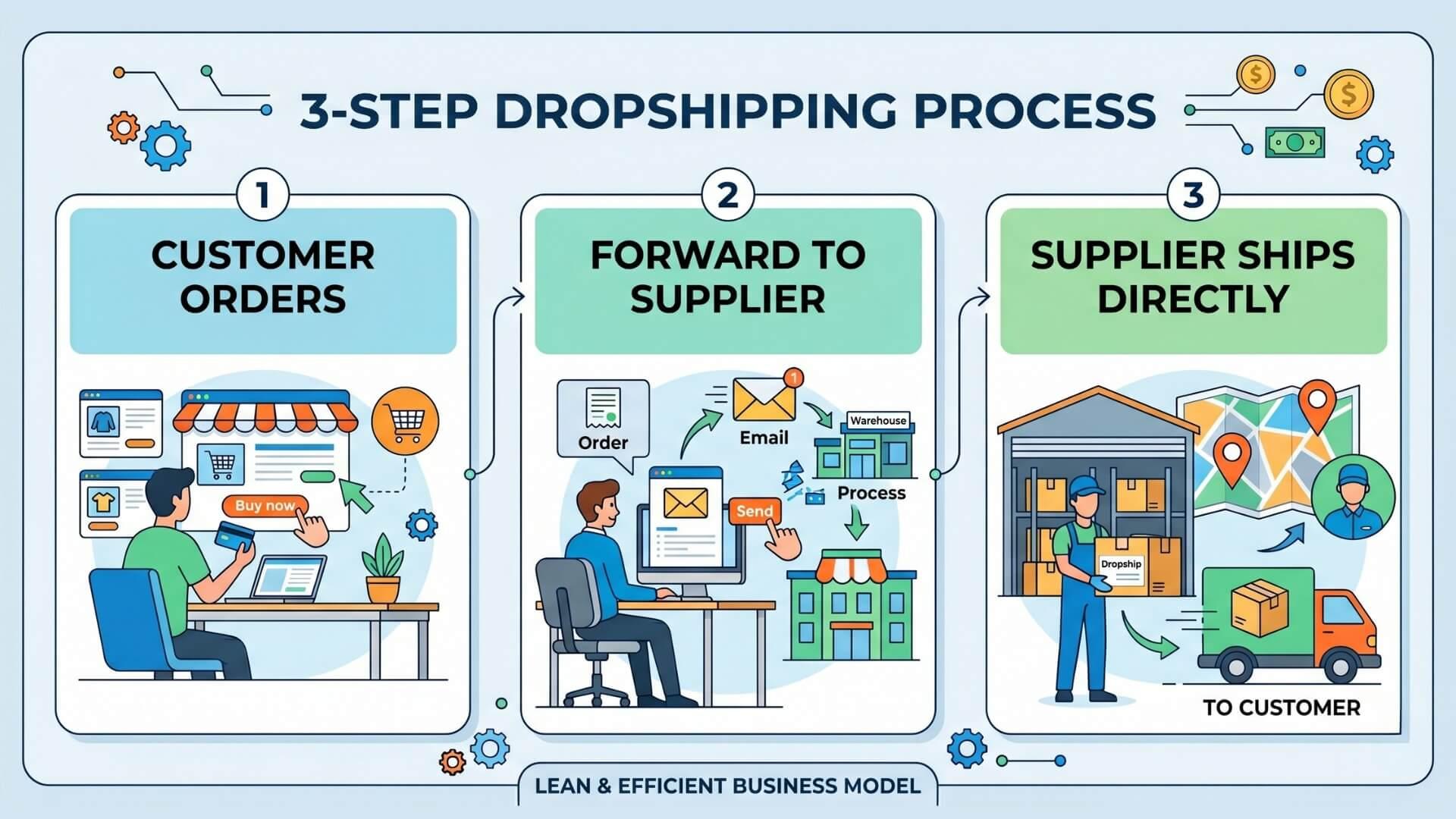
The process can be broken down into three straightforward steps. First, a customer places an order on your online store at your retail price. Next, you forward that order to your supplier through your chosen dropshipping app or platform. Finally, the supplier packs and ships the product directly to the customer, often without revealing their identity.
Compared to traditional retail, this model eliminates the need for warehousing, bulk purchasing, and inventory risk. Instead of tying up capital in stock that may or may not sell, you can test multiple products with minimal financial exposure. This is why many beginners gravitate toward Indian dropshipping apps that offer ready-to-sell catalogs and automated order processing.
India’s ecommerce growth is not just fast, it is structurally different from many other markets. With over 900 million internet users and a mobile-first user base, the scale alone creates massive demand across categories ranging from fashion and home decor to electronics and wellness products. At the same time, much of this growth is coming from Tier 2 and Tier 3 cities, where competition is still relatively low, and consumer demand is rising quickly.
Another key advantage lies in the country’s payment infrastructure. Solutions like UPI, Razorpay, PayU, and Cashfree have made digital payments seamless, while cash on delivery continues to bridge the trust gap for first-time online buyers. This hybrid payment environment is particularly favorable for dropshipping, as it allows sellers to cater to a wider audience without losing conversions.
From a regulatory perspective, the Goods and Services Tax framework also plays an important role. While small sellers can start without immediate registration depending on their turnover, scaling a dropshipping business in India typically requires GST compliance, especially when working with established suppliers or selling across state lines. Many of the best dropshipping apps in India now include built-in GST invoicing and tax support, reducing operational complexity for sellers.
Choosing the right dropshipping app in India is not just about features; it is about how well the platform fits your business model, target market, and long-term scalability. With dozens of tools available, having a clear evaluation framework helps you avoid costly mistakes early on.
One of the first factors to consider is supplier availability and product catalog depth within India. Platforms that offer a wide range of locally sourced products can significantly reduce shipping times and improve customer satisfaction. Closely related to this is GST support, since proper invoicing and tax compliance become critical as your business grows.
Payment integration is another non-negotiable element. The ability to seamlessly connect with gateways like Razorpay, PayU, or Cashfree, along with support for cash on delivery, directly impacts your conversion rate. In addition, shipping speed and courier partnerships with providers such as Delhivery or Shiprocket can determine whether your customers receive their orders in days or weeks.
Beyond operations, profitability must also be evaluated carefully. Platform fees, supplier pricing, and competition within specific niches all affect your final margins. Some dropshipping apps in India offer zero upfront cost but lower margins, while others require subscriptions but provide better automation and higher scalability.
Finally, ease of use versus advanced automation is an important tradeoff. Beginners may benefit more from simple, plug-and-play platforms, while experienced sellers often prioritize tools that support bulk order processing, dynamic pricing, and multi-channel integration. Understanding where you stand will help you choose the best dropshipping apps in India for your specific stage of growth.
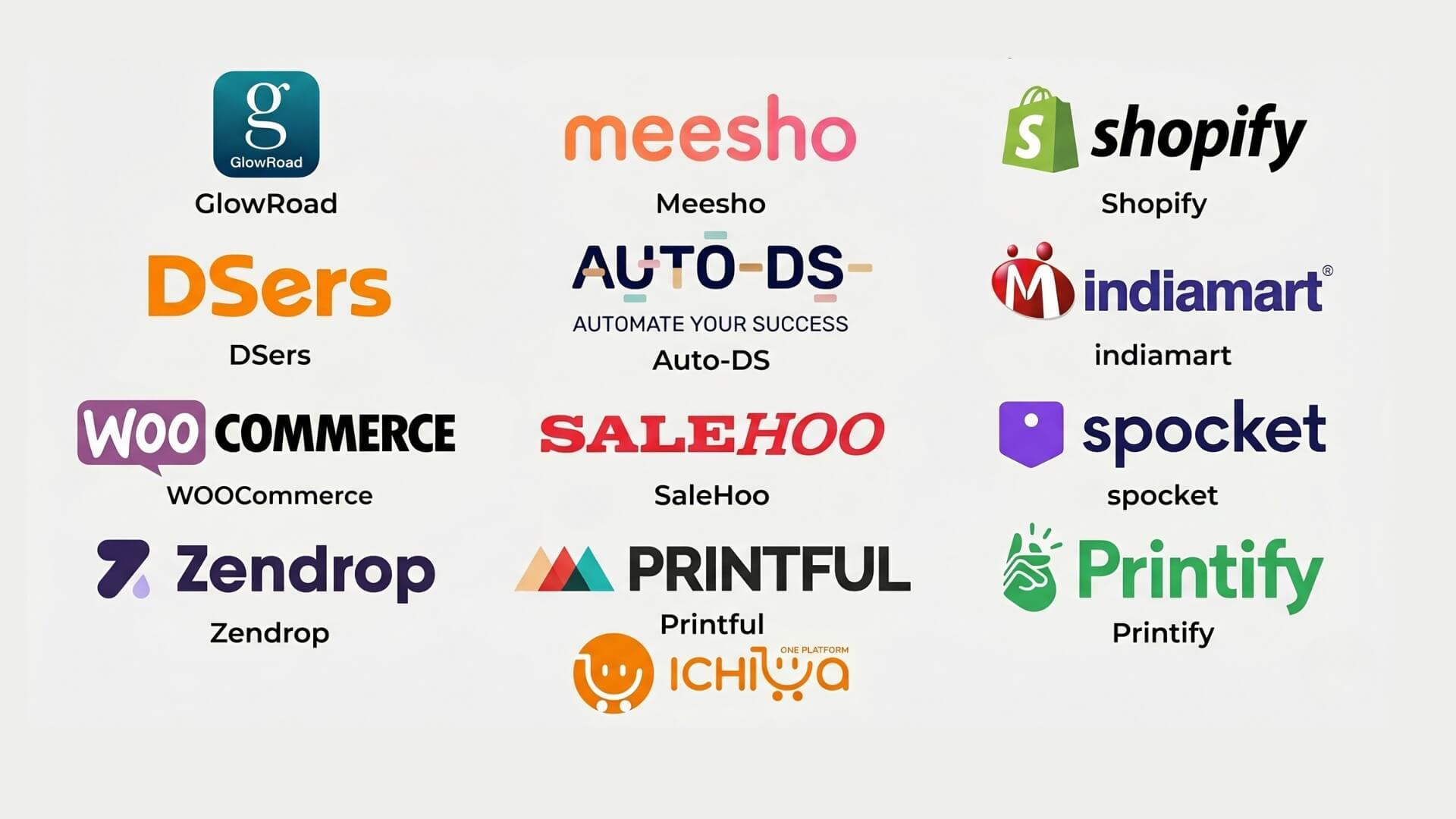
With the rapid growth of ecommerce in India, a wide range of dropshipping apps and platforms have emerged to serve different types of sellers. Some focus on domestic reselling with strong COD support, while others enable global selling with advanced automation and supplier networks. Understanding how each platform operates, along with its strengths and limitations, will help you choose the best dropshipping apps in India for your specific business goals.
GlowRoad has positioned itself as one of the most accessible indian dropshipping apps for beginners who want to sell within the local market. Built specifically for Indian resellers, the platform offers a catalog of over 500,000 products across categories like fashion, home essentials, and beauty.
One of its biggest advantages is the zero-upfront cost model, which allows sellers to start without paying listing fees. The platform also supports cash on delivery and automatically generates GST invoices, making it easier to stay compliant while scaling. However, because many sellers use the same catalog, competition can be intense in popular categories, which often leads to margin compression.
GlowRoad is best suited for first-time sellers targeting Tier 2 and Tier 3 cities, where price competitiveness and COD availability are critical. Depending on the niche, sellers can typically expect margins ranging from 15 to 40 percent.
Meesho has become a dominant force in India’s social commerce space, making it one of the best dropshipping apps in India for sellers who rely on platforms like WhatsApp, Facebook, and Instagram to drive sales. Its supplier base is massive, and the app is designed to simplify product sharing directly with customers.
A key differentiator is its zero commission model on most categories, which allows sellers to maximize profits, especially in price-sensitive segments. Meesho performs particularly well in fashion, home decor, and gifting niches, where visual appeal and impulse buying play a significant role.
That said, the platform offers limited control over branding and store customization, which may not be ideal for sellers looking to build a long-term brand rather than just resell products.
For sellers who want to go beyond the domestic market, combining Shopify with automation tools like DSers or AutoDS provides a powerful and scalable setup. This approach allows you to source products globally, including from AliExpress, while also integrating Indian payment gateways such as Razorpay for local transactions.
AutoDS, in particular, supports automated order fulfillment from both Indian and international suppliers, reducing manual work and enabling faster scaling. While this setup requires a monthly investment, with Shopify plans starting around ₹1,499 plus app subscription fees, it offers significantly more flexibility and control compared to marketplace-based platforms.
This combination is ideal for sellers targeting both Indian and international customers, especially those looking to build a branded ecommerce store rather than relying on third-party marketplaces.
IndiaMART is one of the largest B2B marketplaces in India, and when combined with WooCommerce, it can be used as a powerful sourcing channel for dropshipping. Unlike plug-and-play apps, this setup requires manual coordination with suppliers, which adds complexity but also opens the door to higher margins and better quality control.
By working directly with manufacturers or wholesalers, sellers can negotiate pricing, customize products, and differentiate themselves from competitors who rely on standardized catalogs. However, this approach is not beginner-friendly, as it requires more effort in supplier management, order processing, and logistics coordination.
For experienced sellers, though, this model can provide a significant competitive advantage in less saturated niches.
SaleHoo and Spocket are popular platforms for sellers who prioritize supplier reliability and product quality. SaleHoo functions primarily as a vetted supplier directory, offering access to verified wholesalers and manufacturers for an annual fee, making it a strong option for niche research and long-term sourcing.
Spocket, on the other hand, focuses on suppliers based in the US and Europe, which enables faster shipping times for international customers. This makes it particularly useful for Indian sellers targeting NRI audiences or global markets where delivery speed is a key factor.
While both platforms involve additional costs, they help reduce the risks associated with unreliable suppliers, which can be a major issue in dropshipping.
Zendrop is designed for sellers who want more control over branding and fulfillment, especially when targeting international markets. The platform supports private labeling, allowing you to customize packaging and create a more professional brand experience.
It also offers access to US-based warehouses, which significantly reduces shipping times compared to traditional China-based suppliers. This can improve customer satisfaction and reduce refund rates, both of which are critical for long-term profitability.
Zendrop integrates seamlessly with Shopify, making it a strong choice for sellers who are already using or planning to use Shopify as their primary ecommerce platform.
Print-on-demand platforms like Printful and Printify provide a completely different approach to dropshipping, focusing on customized products such as t-shirts, mugs, and phone cases. Instead of selling pre-made items, you can create your own designs and have them printed only after a customer places an order.
This model eliminates inventory risk while allowing for strong brand differentiation. Printify, in particular, has expanded its network to include fulfillment partners in India, which helps reduce shipping times and costs for domestic orders.
These platforms are ideal for sellers targeting niche audiences, such as fandom communities or personalized gift buyers, where uniqueness and branding are more important than price alone.
IChiba OnePlatform stands out as a comprehensive solution that combines product sourcing, order management, and fulfillment into a single ecosystem. Unlike many other dropshipping apps in India that focus on either domestic or international markets, IChiba bridges both by connecting sellers with suppliers from Vietnam, Japan, and other regions.
One of its biggest advantages is the zero-cost entry model, which allows sellers to access a curated product catalog without upfront fees. In addition, the platform supports automated order processing and fulfillment services, making it easier to scale without operational bottlenecks.
For sellers looking to diversify beyond traditional Indian supplier networks, IChiba offers access to unique product categories such as handcrafted goods and Asian beauty products, which can help differentiate your store in competitive markets. This makes it a strong option for both beginners and experienced sellers who want a more flexible and globally connected dropshipping solution.
With so many options available, selecting the right platform is less about finding a universally “best” solution and more about identifying what aligns with your business model, target audience, and growth strategy. A beginner selling low-ticket products within India will have very different needs compared to an experienced seller targeting global markets with branded products. Because of this, evaluating dropshipping apps in India requires a balance between operational efficiency, profitability, and long-term scalability.
One of the most important considerations is your target market. If your focus is on domestic customers, especially in Tier 2 and Tier 3 cities, then platforms that support cash on delivery, local suppliers, and fast shipping within India should be prioritized. On the other hand, if you are targeting international buyers, you will need apps that integrate with global suppliers, support multi-currency payments, and offer reliable cross-border fulfillment.
Another key factor is the level of control you want over your brand. Marketplace apps such as GlowRoad or Meesho are easier to start with, but they limit customization and brand identity. In contrast, platforms like Shopify combined with automation tools allow you to build a fully branded store, but they require more effort in setup, marketing, and ongoing management.
Equally important is automation capability. As order volume increases, manually processing orders quickly becomes a bottleneck. Choosing apps that support auto ordering, inventory syncing, and real-time tracking can significantly improve efficiency and reduce errors. This is particularly relevant if you plan to scale aggressively using paid ads or multiple sales channels.
Finally, always evaluate the true cost structure. While some indian dropshipping apps advertise zero upfront fees, they often come with lower margins or hidden costs in product pricing. Paid tools may seem expensive at first, but they can deliver better supplier pricing, faster shipping, and higher conversion rates, all of which contribute to overall profitability.
Choosing the right niche is just as important as selecting the right platform, since even the best dropshipping apps in India cannot compensate for poor product-market fit. The Indian market offers a wide range of opportunities, but certain categories consistently perform better due to consumer demand patterns and cultural factors.
Home decor and kitchen accessories remain one of the most reliable niches, driven by increasing urbanization and the influence of social media trends. Products such as aesthetic storage solutions, smart kitchen tools, and decorative lighting tend to have strong demand while still offering room for differentiation.
Festive and gifting products represent another high-potential category, especially in a country where celebrations play a central role in consumer spending. Occasions like Diwali, weddings, and Raksha Bandhan create recurring demand for unique and affordable gift items. Sellers who can quickly adapt their product offerings to seasonal trends often see significant spikes in revenue.
Health and wellness is also gaining traction, particularly among younger consumers who are more conscious about fitness and lifestyle. Items such as posture correctors, massage tools, and wellness gadgets perform well when paired with strong content marketing and targeted advertising.
Finally, customized and personalized products present a strong opportunity for building a brand rather than just reselling. Print-on-demand items, such as custom apparel, mugs, and phone cases, allow sellers to create unique offerings that are less price sensitive and more emotionally driven. This niche works especially well when combined with storytelling and niche targeting, making it a powerful option for long-term growth.

Once you have selected the right platform from the many available dropshipping apps in India, the next challenge is turning a functional store into a scalable business. While getting started is relatively easy, long-term success depends on how well you optimize operations, build a brand, and continuously improve your marketing performance.
A critical mindset shift at this stage is to stop thinking like a reseller and start operating like a brand owner. Even if you are using indian dropshipping apps with shared product catalogs, differentiation is still possible through positioning, customer experience, and marketing execution.
One of the most effective ways to scale is by building a recognizable brand identity rather than relying solely on generic product listings. This can include custom packaging, branded inserts, or even slight product modifications through print on demand partners. When customers begin to associate your store with a consistent experience, repeat purchases and word of mouth growth become much easier to achieve.
Marketing strategy also plays a decisive role in scaling. In the Indian market, regional targeting can significantly improve ad performance, especially when running campaigns on Meta platforms. Creating ads in local languages and tailoring messaging to specific regions helps increase engagement and conversion rates, particularly in Tier 2 and Tier 3 cities where competition is still developing.
At the same time, high-intent channels such as Google Shopping should not be overlooked. For categories like electronics, gadgets, or home essentials, users often search with clear purchase intent. By optimizing product feeds and bidding strategically, you can capture demand from customers who are already close to making a buying decision.
Automation becomes increasingly important as order volume grows. Relying on manual processes limits your ability to scale and increases the risk of errors. Using tools that support automatic order routing, inventory synchronization, and tracking updates allows you to handle larger volumes without proportionally increasing workload. This is where more advanced dropshipping apps in India provide a clear advantage over basic platforms.
Equally important is tracking the right performance metrics. Instead of focusing only on revenue, successful sellers monitor indicators such as customer acquisition cost, average order value, and return rate. These metrics provide a clearer picture of profitability and help identify areas that need optimization. For example, a high return rate may indicate issues with product quality or misleading product descriptions, both of which can erode margins quickly.
Finally, learning from the community can accelerate your growth curve. Engaging with other sellers through forums, Reddit communities, or Telegram groups provides real world insights that are often not available in official documentation. Trends, winning products, and ad strategies often emerge from these communities first, giving active participants a competitive edge.
Q1. Is dropshipping legal in India?
Dropshipping is fully legal in India, provided that you comply with applicable tax and financial regulations. As a seller, you are responsible for issuing invoices, collecting taxes where applicable, and maintaining proper records of transactions. Once your business crosses the GST registration threshold, you are required to register under GST and file returns accordingly.
If you are dealing with international transactions, such as sourcing from overseas suppliers or receiving payments from foreign customers, you must also comply with FEMA regulations. In practice, most sellers using established dropshipping apps in India can operate smoothly as long as they use compliant payment gateways and maintain proper documentation.
Q2. Which is the best free dropshipping app in India?
There is no single answer, as the best platform depends on your business model, but several indian dropshipping apps offer zero-cost entry. GlowRoad and Meesho are among the most popular choices for beginners, as they allow you to start selling without upfront fees and provide built-in supplier networks.
However, these platforms come with tradeoffs such as limited branding and lower margins in competitive categories. On the other hand, platforms like Shopify offer a short free trial and require a monthly subscription, but they provide greater control, scalability, and long-term growth potential. The choice ultimately depends on whether you prioritize ease of entry or flexibility and branding.
Q3. Can I do dropshipping from India to other countries?
Yes, it is entirely possible to run a cross-border dropshipping business from India. Many sellers use platforms like Shopify combined with global supplier networks such as AliExpress or Spocket to target customers in the US, Europe, and other regions.
To operate smoothly, you will need a payment gateway that supports international transactions and foreign currency settlements. Additionally, you should ensure compliance with FEMA regulations when receiving foreign payments. Shipping times, return policies, and customer support expectations also need to be adapted for international markets.
>> Also read: Dropshipping from India to USA: Complete Guide to Shopify, Amazon & Supplier Strategy
Q4. How much money do I need to start dropshipping in India?
The initial investment for dropshipping in India can vary depending on the platform and strategy you choose. If you start with marketplace apps like GlowRoad or Meesho, you can begin with almost zero upfront cost, focusing mainly on marketing expenses.
For a more scalable setup using Shopify and automation tools, a realistic starting budget typically ranges from ₹3,000 to ₹5,000 per month. This includes your store subscription, domain cost, and a basic advertising budget. As you scale, your costs will increase, but so will your revenue potential if your campaigns are optimized effectively.
Q5. What are the best Indian dropshipping suppliers?
India offers a growing ecosystem of suppliers that cater specifically to dropshipping sellers. Some of the most commonly used sources include GlowRoad’s supplier network, verified sellers on IndiaMART, and platforms like WholesaleBox and Baapstore.
Each option has its own strengths. Marketplace suppliers are easier to work with and faster to set up, while direct sourcing through platforms like IndiaMART allows for better pricing and customization. The best choice depends on your experience level and how much control you want over product quality and branding.
Q6. Is dropshipping profitable in India in 2026?
Dropshipping can still be profitable in India, but it is no longer a low-effort, high-margin business in most categories. Increased competition has led to tighter margins, especially in saturated niches like fashion and general accessories.
On average, sellers can expect net profit margins in the range of 10 to 25 percent, depending on their niche, pricing strategy, and operational efficiency. Profitability is higher in less competitive niches, customized products, and branded stores where differentiation is stronger.
Q7. Do dropshipping apps work with Shopify in India?
Yes, most major dropshipping apps in India integrate seamlessly with Shopify, making it one of the most popular platforms for building scalable ecommerce stores. Tools like DSers, AutoDS, Spocket, and Zendrop all offer native integrations that support product import, automated order fulfillment, and tracking.
To operate effectively in India, you will also need to connect a payment gateway such as Razorpay to handle INR transactions. Once set up, Shopify, combined with the right apps, provides a powerful ecosystem for managing both domestic and international dropshipping operations.
As India continues to evolve into one of the fastest-growing e-commerce markets in the world, the opportunity for dropshipping sellers is both real and highly accessible. With a strong digital infrastructure, diverse consumer demand, and a wide range of tools available, entering the market has never been easier. At the same time, increasing competition means that success now depends less on simply getting started and more on how strategically you build and scale your business.
Choosing the right dropshipping apps in India is a foundational step, since your platform will directly impact everything from product sourcing and order fulfillment to customer experience and profitability. Whether you begin with beginner friendly indian dropshipping apps like GlowRoad or Meesho, or invest in a more scalable setup using Shopify and automation tools, the key is to align your choice with your long-term goals rather than short-term convenience.
Beyond tools and platforms, sustainable growth comes from focusing on the fundamentals. Identifying the right niche, building a recognizable brand, optimizing your marketing channels, and continuously tracking performance metrics are what separate successful sellers from those who struggle to scale. The market still offers plenty of room for new entrants, especially for those who are willing to test, adapt, and differentiate.
Ultimately, dropshipping in India is not just about finding the best dropshipping apps in India, but about building a system that can evolve with the market. Sellers who approach it with a long-term mindset, supported by the right tools and strategies, are well-positioned to capture the growing demand and turn it into a profitable and sustainable business.

Work with us
Our solutions
Address:
 〒136-0082, Japan, Tokyo, Koto-ku, Shinkiba 3-5-6, 5F
Connect us:


Japan
〒136-0082, Japan, Tokyo, Koto-ku, Shinkiba 3-5-6, 5F
Texas, USA
1606 Audrey Dr, Garland, TX 75040, United States
California, USA
1316 John Reed Ct, City of Industry, CA 91745, United States