

News
Ichiba OnePlatform Team - 23/06/2026

In this article
Dropshipping is not only about finding a winning product and running ads. Once real orders start coming in, fulfillment becomes the part that decides whether customers trust the store, receive their products on time, and come back for another purchase.
This is why choosing the right dropshipping fulfillment platform matters. A seller may begin with simple tools to import products into Shopify or WooCommerce. But as order volume grows, a basic product listing app is no longer enough. Sellers need a system that can process orders, coordinate suppliers, manage fulfillment, ship internationally, and update tracking without creating too much manual work.
For global sellers, especially those sourcing Japanese products, fulfillment is even more important. Buyers do not only care about whether a product looks attractive. They also care about delivery time, tracking visibility, shipping cost, packaging quality, and how the seller responds when something goes wrong.
A strong ecommerce fulfillment platform helps sellers move from manual order handling to a workflow that can scale. Instead of checking each order, sending files to suppliers, tracking every shipment manually, and updating customers by hand, sellers can manage orders, fulfillment, and shipping in a more structured system.
This guide explains what a dropshipping fulfillment platform is, how it differs from a basic dropshipping platform, how ecommerce fulfillment platforms work for cross-border dropshipping, what features to look for, which fulfillment models are common, and why IChiba OnePlatform can be a strong option for global sellers working with Japanese products.
A dropshipping fulfillment platform helps sellers manage the steps that happen after a customer places an order. These steps may include receiving order data, coordinating with suppliers or warehouses, packing products, arranging shipping, updating tracking, and handling post-shipment issues such as returns or delivery exceptions.
A basic fulfillment flow usually looks like this:
A customer places an order on a sales channel.
The order is sent to a supplier or fulfillment system.
The product is sourced or picked from warehouse stock.
The fulfillment center packs and ships the order.
Tracking is updated to the sales channel.
The customer receives the product.
The key point is that a dropshipping fulfillment platform is not only about selling. It supports the operational layer behind each order. This is often the part sellers underestimate in the early stage, but it quickly becomes a bottleneck when the store begins to scale.
Shopify describes ecommerce fulfillment as the process of getting online orders to customers, including receiving, warehousing, inventory management, picking and packing, shipping, and returns. That same logic applies to dropshipping, but cross-border sellers often need even more coordination because products, suppliers, warehouses, carriers, and customers may all be in different countries.
If fulfillment is slow, tracking is unclear, or the wrong product is delivered, customers will not care how good the ads were. Refund requests, support tickets, negative reviews, and chargebacks can increase simply because the fulfillment workflow is not reliable.
For cross-border ecommerce, this risk is even higher. International orders usually have longer delivery windows, higher shipping costs, and more handoff points. Sellers need a fulfillment platform that makes order status, shipping methods, tracking, returns, and exceptions easier to manage.
Many sellers confuse a dropshipping platform with a fulfillment platform.
A dropshipping platform usually focuses on product sourcing, product import, supplier connection, store integration, and basic order automation. These tools often appear as Shopify apps, product sourcing apps, supplier marketplaces, or simple integration tools.
This type of platform is useful for product testing. Sellers can quickly add products to a store, test demand, and process early orders without building a complex operation.
A fulfillment platform focuses more on what happens after the order is placed. It supports warehouse handling, packing, shipping, tracking, returns, and delivery workflows. It becomes more important when sellers need faster delivery, better control, lower fulfillment errors, and clearer tracking.
In simple terms:
A dropshipping platform helps sellers find or list products.
A dropshipping fulfillment platform helps sellers deliver products reliably.
When a business is small, simple tools may be enough. But when order volume grows, fulfillment quality directly affects customer experience, reviews, refund risk, and scalability. This is when sellers need a stronger ecommerce fulfillment platform.

Ecommerce fulfillment platforms connect the process from order creation to final delivery. For cross-border dropshipping, they also help sellers manage international shipping, carriers, tracking, warehouse locations, consolidation, and returns.
The process begins when a customer places an order on a sales channel.
That sales channel may be Shopify, WooCommerce, Amazon, eBay, a local marketplace, social commerce, or a B2B storefront. The order usually includes customer information, shipping address, product SKU, quantity, payment status, and shipping method.
For multi-channel sellers, orders may come from several dashboards. Without a centralized system, it becomes easy to miss orders, enter the wrong information, or update tracking too late.
After the order is created, it enters the fulfillment workflow.
At a basic level, sellers may upload orders manually. But for sellers that are scaling, order data should sync automatically from the sales channel into the fulfillment or order management system.
The fulfillment platform then checks product availability, fulfillment source, warehouse location, and shipping option. This step reduces operational errors, especially when sellers manage many SKUs or sell across several channels.
Depending on the fulfillment model, the product may be handled in different ways.
If the item is already in warehouse stock, the fulfillment center picks and packs it. If the seller uses an agent-based model, the product may need to be purchased or sourced first. If the seller uses a hybrid model, best-selling products may ship from warehouse inventory, while long-tail products are sourced on demand.
This step directly affects processing time. If the product is not available or the supplier responds slowly, the order will be delayed. Sellers need to know which products are in stock, which products must be sourced, and how long each type of order takes to process.
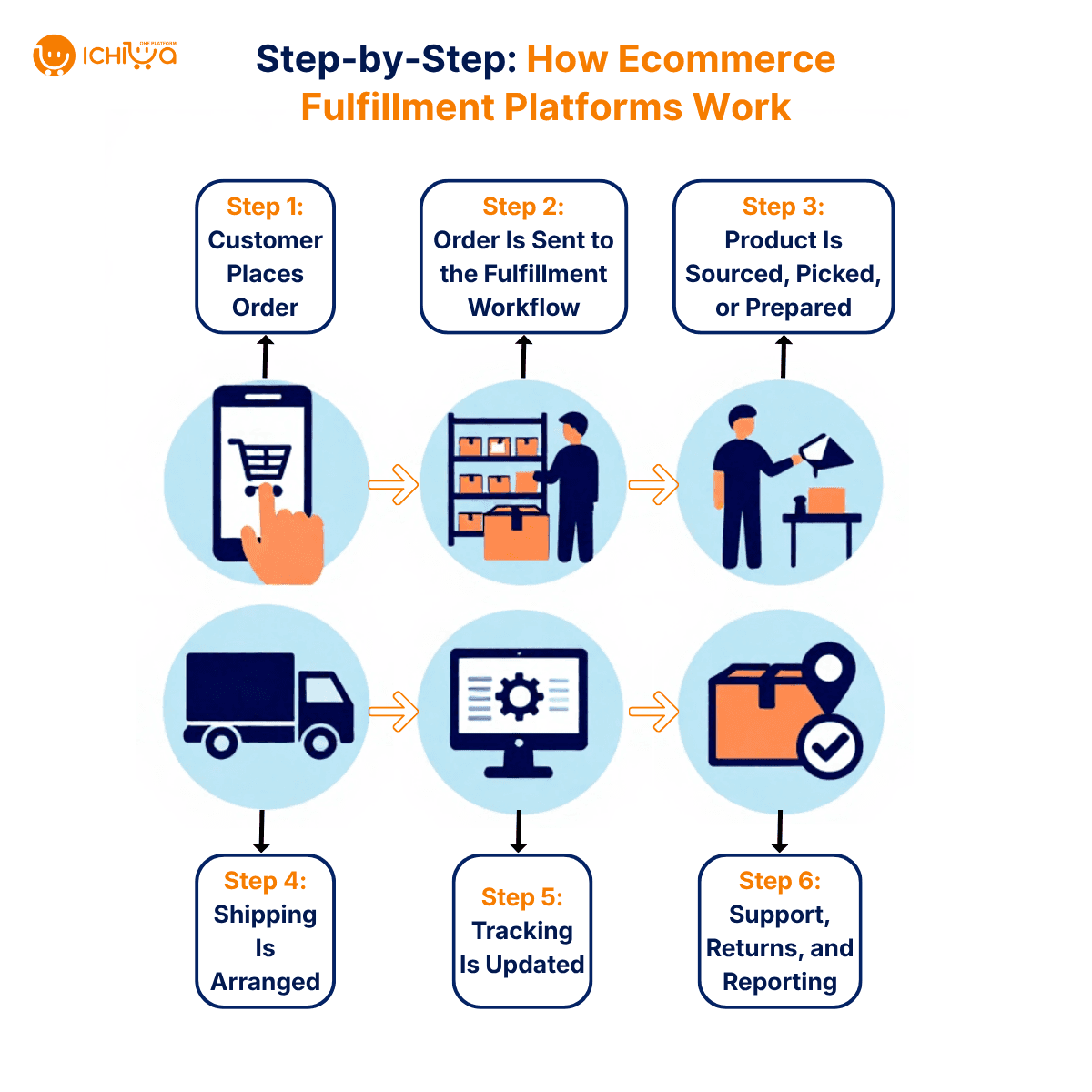
After the product is ready, the fulfillment platform supports the shipping process.
Sellers need to balance shipping speed, shipping cost, destination country, and tracking visibility. For international orders, the cheapest shipping method is not always the best option if delivery takes too long or tracking is weak. On the other hand, the fastest shipping method can damage margins if the product value is too low.
Consolidation shipping may also be used when an order includes multiple products or packages. For sellers sourcing from several suppliers or Japanese marketplaces, consolidation can reduce shipping cost and improve shipment control.
Tracking is one of the most important parts of dropshipping fulfillment.
After the order is shipped, the tracking number should be updated to the sales channel and shared with the customer. Clear tracking reduces customer support pressure because customers can check the order status themselves.
For cross-border dropshipping, tracking also helps sellers handle exceptions earlier. If a shipment is delayed, failed, or stuck in customs, the seller needs to see the issue quickly and support the customer before the problem becomes worse.
Fulfillment does not end when the parcel is shipped.
Sellers still need to handle customer support, returns, damaged items, failed delivery, lost parcels, and refund requests. A good ecommerce fulfillment platform should help sellers understand where the issue happened: product, warehouse, carrier, destination country, or shipping policy.
Reporting also helps sellers improve operations. They can review delivery time, shipping cost, fulfillment error rate, return rate, and channel performance. This data helps sellers decide which products to keep, which shipping methods to change, and which warehouse location may be more effective.
When choosing a dropshipping fulfillment platform, sellers should not look only at shipping rates. A strong platform should help control the full workflow from order to delivery.
Multi-channel integration helps sellers receive and process orders from multiple sales channels in one system.
If sellers use Shopify, WooCommerce, Amazon, eBay, social commerce, or a B2B channel, checking every dashboard manually becomes time-consuming. As order volume grows, manual work can lead to wrong addresses, duplicate processing, missed orders, and late tracking updates.
A strong fulfillment platform should help sellers centralize orders, standardize order data, and move each order into a clear fulfillment workflow.
For sellers managing stock across several channels, this guide on multi-channel ecommerce inventory management can provide more context.
Automated order processing reduces manual work in the order handling process.
Instead of copying order information and sending it to a fulfillment team by hand, the system can receive order details, route the order to the correct fulfillment source, and update the order status when changes happen.
Automation becomes especially important when sellers manage many SKUs, multiple suppliers, or several sales channels. It reduces errors, prevents delays, and allows the team to focus on product selection, marketing, and customer experience.
Consolidation shipping is important for cross-border sellers.
If a customer buys multiple products, or if a seller sources from multiple suppliers, packages can be combined before international shipping. This can reduce shipping cost, improve packaging, and create a cleaner delivery experience for the customer.
For sellers working with Japanese products, consolidation is also useful when items come from different marketplaces, suppliers, or warehouses. Instead of shipping many small parcels separately, sellers can consolidate, inspect, and ship goods with more control.
Real-time tracking helps both sellers and customers monitor order status more clearly.
The more transparent tracking is, the fewer customer support questions sellers receive. Customers can follow the shipment themselves, while sellers can respond earlier when a delay or exception happens.
For cross-border dropshipping, real-time tracking is especially important because delivery windows are usually longer than domestic delivery. Without clear tracking, customers may lose patience and request a refund.
DHL’s Delivery and Returns Report highlights the importance of delivery, parcel tracking expectations, preferred delivery methods, and returns in today’s online shopping experience. This is a useful reminder that fulfillment is part of customer trust, not only a logistics task.
Inventory visibility helps sellers know which products are available, reserved, inbound, or running low.
Without accurate stock visibility, overselling can happen quickly. A customer places an order, but the warehouse has no stock. The seller then has to delay the order, replace the product, or issue a refund. This damages trust and can hurt reviews.
A fulfillment platform should help sellers view stock by SKU and keep inventory updates clear, especially when the same products are sold across multiple channels.
No fulfillment workflow is perfect. Sellers need to prepare for lost parcels, damaged products, failed delivery, returned items, and customer complaints.
A strong ecommerce fulfillment platform should help sellers handle exceptions clearly. When there is a return or delivery issue, the seller needs to know where the order is, who is responsible, what cost is involved, and what the next step should be.
This protects the customer experience after the order leaves the warehouse.
Reporting helps sellers understand whether fulfillment is supporting the business or hurting margin.
Important metrics include delivery time, shipping cost, fulfillment error rate, return rate, lost parcel rate, cost by destination, and performance by sales channel.
Without data, sellers may not know which shipping method to optimize, which warehouse location to use, which products to remove, or which products need a higher selling price. Reporting helps sellers scale based on real performance, not guesswork.
Dropshipping fulfillment can follow different models. Each model fits a different business stage, product type, and operational goal.
An agent-based model means the platform or agent purchases products on behalf of the seller or customer, then handles shipping.
This model is suitable for product testing, rare items, low-volume orders, and sellers sourcing from Japanese marketplaces. For Japan-only, limited, collectible, or niche products, an agent-based workflow can help sellers access products without managing local accounts, domestic payment methods, or a Japan shipping address.
The main advantage is that it is easy to start. Sellers can test multiple products without buying bulk inventory.
The limitation is scalability. Agent-based fulfillment usually has lower automation and can become slow when order volume increases. Manual coordination may also make cost control harder.
A warehouse-based model means the seller buys inventory in advance and stores it in a fulfillment center.
When a customer places an order, the warehouse picks, packs, and ships the product from available stock. This model works well for products with proven demand, repeat orders, and sellers that need faster delivery.
The advantage is stronger control over stock, packaging, and processing time. It is also more suitable when sellers need to meet marketplace or customer expectations around delivery speed.
The downside is upfront inventory and storage cost. If demand is weaker than expected, sellers can be left with dead stock.
A hybrid model combines on-demand sourcing with warehouse inventory.
Sellers can keep best-selling products in stock while sourcing long-tail or untested products on demand. This creates a balance between flexibility and control.
The hybrid model is useful for sellers that are scaling but do not want to store their full product catalog. They can keep inventory for products that already sell well, while continuing to test new products through on-demand sourcing.
However, a hybrid model requires a stronger system. Sellers need to know which orders should be fulfilled from stock, which products should be sourced on demand, which SKUs need to be reordered, and which tracking updates must be sent back to each channel.
Without inventory visibility and order routing, hybrid fulfillment can become messy.
IChiba OnePlatform can be a strong option for global sellers that need a dropshipping fulfillment platform to support sourcing, order management, fulfillment, tracking, and cross-border ecommerce operations.
For sellers working with Japanese products, the challenge is not only finding products. The harder part is managing the full flow after an order is placed: where the product comes from, whether packages need consolidation, which warehouse handles the order, how shipping cost is calculated, when tracking is updated, and how long the customer waits for delivery.
IChiba OnePlatform should not be seen only as a sourcing tool. It is more useful as a commerce operation platform that helps sellers connect product sourcing, warehouse handling, order management, fulfillment workflow, and international shipping in a clearer system.
The value is operational control. Instead of working with disconnected suppliers, files, shipments, and dashboards, sellers can build a more centralized workflow for order handling and fulfillment.
Sellers that want to understand Japan-based product sourcing can also read Dropshipping From Japan, Top Japan Dropshipping Suppliers in 2026, and How to Find Reliable Japanese Suppliers.
Shipping speed is one of the biggest factors affecting customer experience in dropshipping.
If shipping is too slow, customers may ask support questions, request refunds, or leave negative reviews. If tracking is unclear, trust drops even faster. For cross-border ecommerce, sellers need realistic delivery timelines and reliable shipping options from the beginning.
IChiba OnePlatform can support sellers working with Japanese products through a Japan-side fulfillment workflow. Sellers can consolidate, inspect, pack, and ship products internationally with more control than handling every order separately.
For global coverage, sellers should consider:
Destination countries
Carrier options
Delivery time
Tracking visibility
Customs handling
Shipping cost
Return options
A good fulfillment platform does not only ship parcels. It helps sellers understand which markets can be served, how long delivery may take, how visible tracking is, and whether the shipping cost still fits the target margin.
For sellers evaluating speed as a competitive advantage, this guide on fastest dropshipping suppliers is a relevant next read.
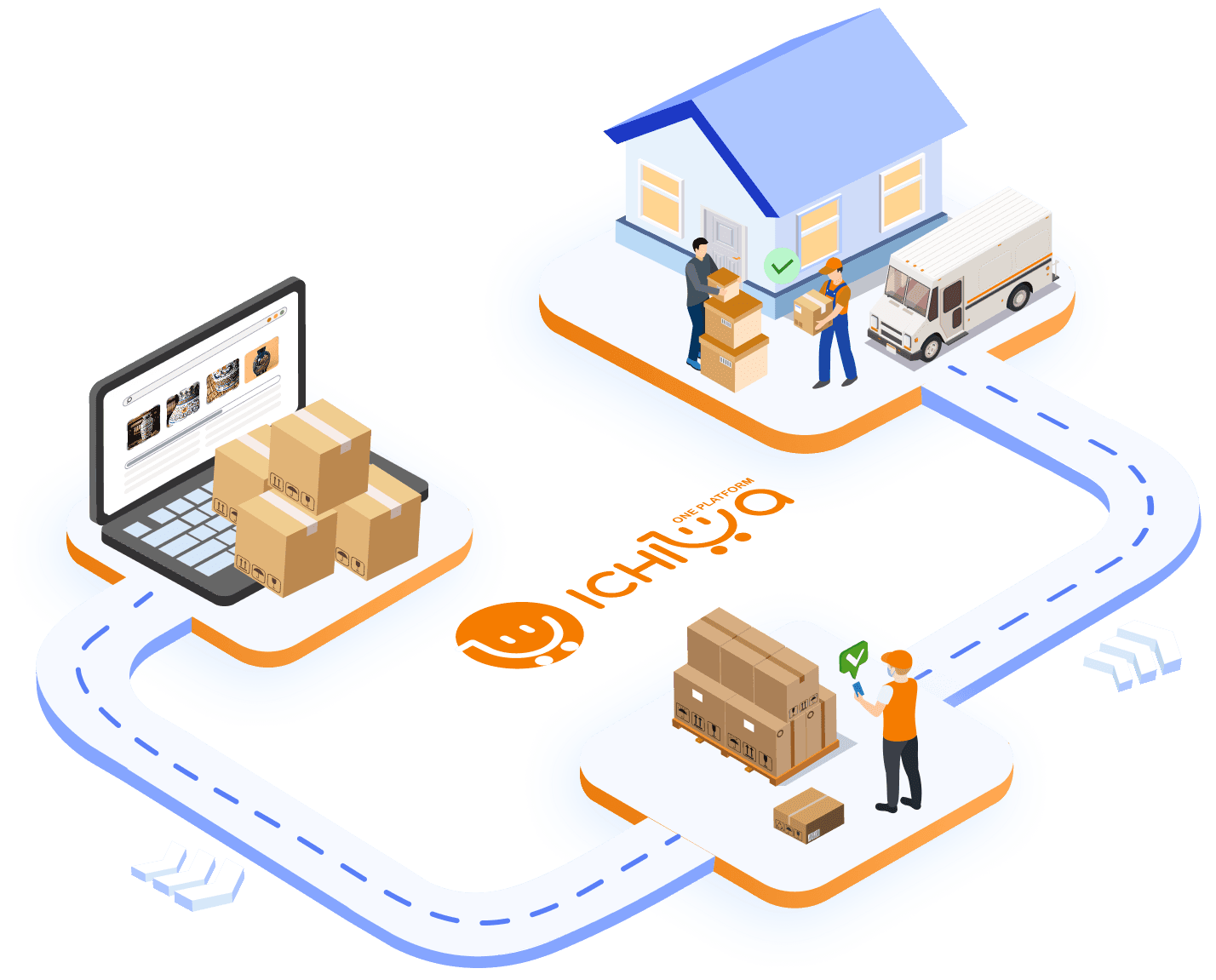
Cost structure is one of the most important parts of choosing an ecommerce fulfillment platform.
Many sellers focus only on shipping fees, but the real cost of fulfillment is broader. A single order may include product cost, domestic shipping, warehouse receiving fee, storage fee, pick-and-pack fee, packaging material, international shipping, customs and duties if applicable, platform fee, payment fee, return handling, and customer support cost.
If these costs are not calculated properly, a product may look profitable on paper but lose money in real operations.
IChiba OnePlatform helps sellers control the fulfillment workflow and understand cost-related steps more clearly. This is especially useful for sellers sourcing Japanese products from multiple suppliers, marketplaces, or warehouses. Each source may have different costs, handling needs, and shipping timelines.
Sellers should compare fulfillment cost by SKU and destination country. A small, lightweight product with low return risk may work well for international fulfillment. A heavy, fragile, or regulated item may reduce margin quickly.
For sellers building a broader Japan-focused sourcing strategy, the guide on dropshipping Japanese products can help connect product selection with fulfillment planning.
Automation helps sellers scale without increasing operational errors at the same pace as order volume.
Manual order processing may work when sellers receive only a few orders per day. But as orders increase, copying order details, entering addresses, sending information to fulfillment teams, and updating tracking by hand become risky.
Common problems include wrong addresses, slow processing, late tracking updates, inaccurate stock, and missed orders. These errors do not only waste time. They directly affect customer experience.
IChiba OnePlatform can help sellers connect sourcing, order management, fulfillment, and tracking in a more centralized workflow. For sellers using Shopify, WooCommerce, marketplaces, or B2B storefronts, reducing manual coordination helps operations stay more stable as the business scales.
Parts of the workflow that should be automated include:
Order sync
Inventory update
Fulfillment routing
Shipping label generation
Tracking update
Reporting
Reorder alerts
Automation is not only about saving time. It helps sellers reduce errors and control the business more effectively.
Not every product is suitable for dropshipping fulfillment.
A product may perform well in ads but still be difficult to fulfill internationally if it is too heavy, fragile, expensive to ship, or risky from a compliance perspective. Sellers should evaluate product type before scaling.
Products that often fit dropshipping fulfillment better include:
Lightweight products
Small to medium-sized items
Non-regulated goods
Products with clear demand
Products with low return risk
Products that can support shipping cost
Niche Japanese products with premium value
Products that need extra caution include:
Heavy or oversized products
Fragile items
Food
Cosmetics
Supplements
Batteries
Electronics
Branded goods
Products with import restrictions
Products requiring special labeling or certification
Sellers should review import and compliance risk when dealing with sensitive categories. Japan Customs provides official information on import procedures and goods with prohibitions, controls, and restrictions, which can be useful starting points before shipping products into Japan.
With IChiba OnePlatform, sellers can gain better control over sourcing, handling, fulfillment, and shipping suitability. This helps sellers decide which products to test, which products to hold in stock, and which products may not be suitable for scaling.
Product compatibility matters because a product with good demand can still fail if fulfillment is too difficult or too expensive.
Fulfillment in dropshipping will continue moving toward more automation, better tracking, and more flexible logistics models. For global sellers, fulfillment is becoming a competitive advantage, not only a back-office function.
AI and automation will play a larger role in fulfillment.
Ecommerce fulfillment platforms may increasingly support smarter order routing, predictive inventory planning, automated carrier selection, demand forecasting, fraud and risk detection, and cost optimization.
Instead of reacting only after problems happen, sellers can use data to forecast demand, choose better warehouse locations, select more suitable carriers, and reduce the risk of stockouts or late delivery.
Cross-border logistics will continue to improve.
Sellers can expect faster delivery routes, more regional warehouses, better tracking visibility, improved customs data handling, and more flexible return solutions.
This creates more opportunity for global sellers. However, faster logistics is not always cheaper logistics. A strong fulfillment strategy must balance shipping speed, shipping cost, and customer expectations.
More sellers are moving beyond mass-market platforms and targeting niche marketplaces or community-driven channels.
Niche marketplaces can work well for Japanese products, collectibles, hobby goods, beauty products, lifestyle products, and other categories with clear buyer intent. However, when selling to niche buyers, fulfillment reliability becomes even more important.
Niche buyers often care about product condition, packaging, tracking, and seller credibility. If fulfillment is unreliable, sellers will struggle to build repeat customers or word-of-mouth growth.
A dropshipping fulfillment platform helps sellers move beyond basic product listing and build a more reliable ecommerce operation. It supports order processing, product handling, shipping, tracking, and customer experience as the business begins to scale.
For global sellers, fulfillment directly affects delivery speed, trust, refund risk, reviews, repeat purchase, and long-term growth. A strong ecommerce fulfillment platform should support multi-channel orders, automation, tracking, cost control, and product compatibility.
For sellers sourcing Japanese products, IChiba OnePlatform can help connect sourcing, order management, fulfillment, tracking, and cross-border operations in a more centralized workflow. This helps sellers reduce manual work, improve fulfillment control, and prepare for scalable growth.
The goal is not only to sell more products. The goal is to deliver products reliably, protect margin, and scale without losing control of operations.

Work with us
Our solutions
Address:
 〒136-0082, Japan, Tokyo, Koto-ku, Shinkiba 3-5-6, 5F
Connect us:


Japan
〒136-0082, Japan, Tokyo, Koto-ku, Shinkiba 3-5-6, 5F
Texas, USA
1606 Audrey Dr, Garland, TX 75040, United States
California, USA
1316 John Reed Ct, City of Industry, CA 91745, United States