

News
Ichiba OnePlatform Team - 23/06/2026

In this article
China to Japan dropshipping is a cross-border ecommerce model that connects product sourcing from China with fulfillment, sales operations, or warehousing in Japan. Instead of shipping every order directly from China to the final customer, sellers can source products from China, move inventory or selected batches to Japan, store or process goods through Japan-based fulfillment, and then sell to Japanese or global buyers.
This model is attractive because China offers strong advantages in manufacturing, product variety, supplier access, and competitive sourcing costs. Japan, on the other hand, can add stronger logistics, buyer trust, domestic delivery speed, and access to Japan-based ecommerce channels. When managed properly, sellers can combine China’s sourcing advantage with Japan’s fulfillment and market access.
However, China to Japan dropshipping is not always the same as pure “no-inventory” dropshipping. In many cases, sellers need to buy products in batches, import goods into Japan, store inventory in a Japan warehouse, and fulfill orders from there. That makes this model closer to a structured cross-border ecommerce operation than a simple supplier-to-customer dropshipping setup.
The advantage is better control. Sellers can manage product quality, packaging, tracking, delivery time, and customer experience more effectively than if they ship every order individually from China. The challenge is that sellers must understand logistics, customs, taxes, compliance, landed cost, inventory planning, and fulfillment workflow.
This guide explains how China to Japan dropshipping works, whether the model is legal, how to set up the workflow step by step, what costs to calculate, which tools to use, and how IChiba OnePlatform can support sellers building a more controlled China-to-Japan ecommerce operation.
China to Japan dropshipping can be legal if sellers follow the correct import, tax, product compliance, labeling, consumer protection, and fulfillment requirements in Japan.
The model itself is not the issue. The real compliance questions depend on the product type, import method, seller structure, importer of record, product documentation, labeling needs, and whether the seller is selling to Japanese buyers or using Japan as a fulfillment hub for global orders.
Before launching this model, sellers should answer several practical questions:
Can this product be imported from China into Japan?
Is the product restricted, regulated, or prohibited?
Who is responsible for customs declaration?
Who is the importer of record?
Does the product require Japanese labeling, instructions, or warnings?
How are import duties and Japan consumption tax calculated?
Is the seller selling to Japanese customers or using Japan for fulfillment?
Are product claims allowed in Japan?
According to Japan Customs import procedures, goods imported into Japan must be declared to customs and receive import permission after examination. Japan Customs also explains that imported goods may be subject to customs duty and consumption tax under its tariff and duty rates system. Sellers should also review Japan Customs’ list of goods with prohibitions, controls, and restrictions before shipping products.
Product categories that need extra caution include:
Cosmetics
Supplements
Food and beverages
Electronics
Batteries
Baby products
Medical or health-related products
Branded goods
Used goods
Products with safety, labeling, or certification requirements
If sellers are unsure about import rules, they should check with a freight forwarder, customs broker, local compliance advisor, or ecommerce operation partner before buying products in bulk.
China to Japan dropshipping usually includes five core steps: sourcing products in China, shipping goods to Japan, setting up Japan-based fulfillment, selling through ecommerce channels, and processing orders through a clear fulfillment workflow.
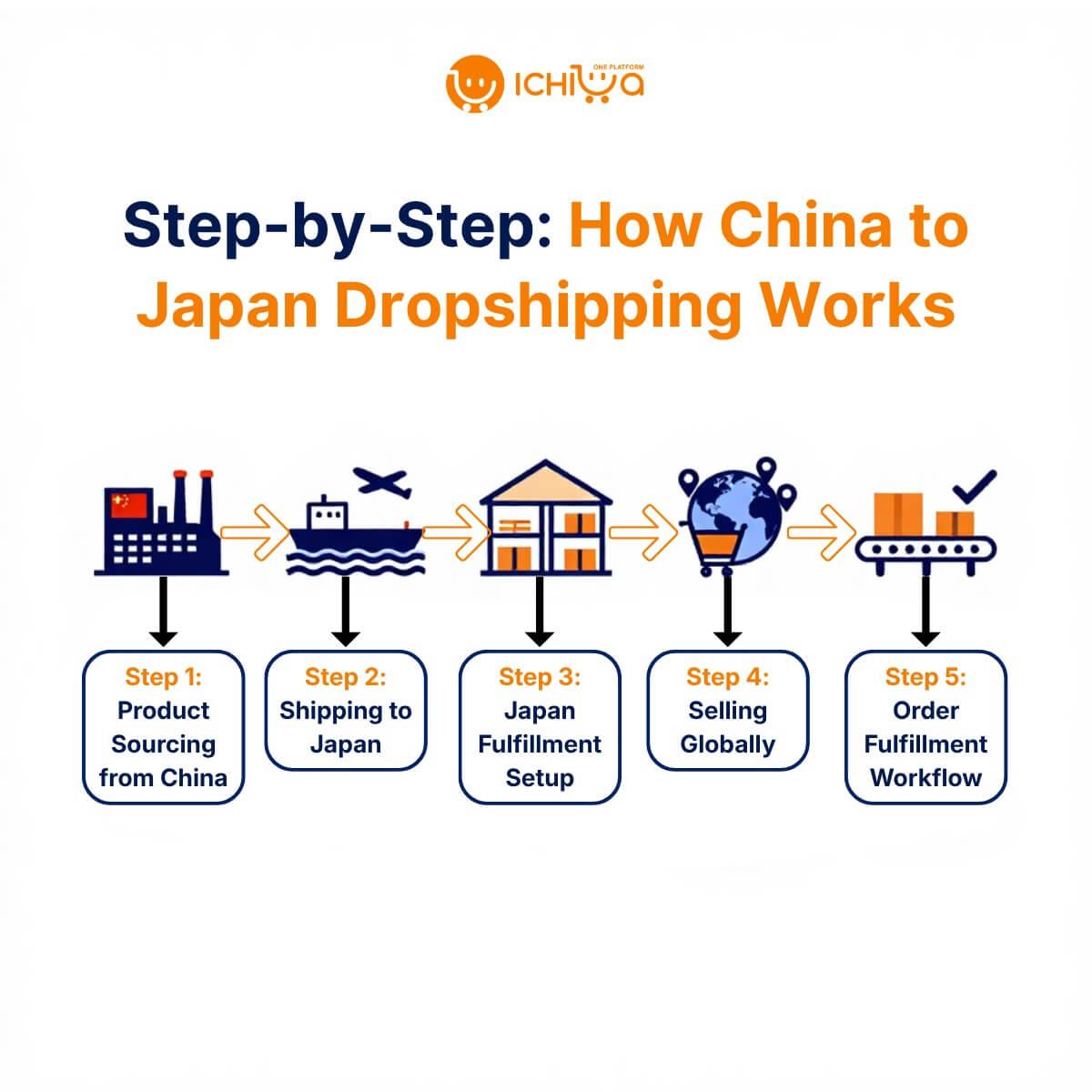
The first step is finding products from China.
Sellers can source from factories, wholesalers, trading companies, sourcing agents, or B2B marketplaces. Common sourcing channels include Alibaba, 1688, Made-in-China, direct factories, and private-label suppliers.
At this stage, sellers should not look only at unit price. A product with a low sourcing cost may still become unprofitable after adding shipping, customs duty, consumption tax, storage, last-mile delivery, payment fees, return costs, and marketing.
Suppliers should be evaluated based on:
Product quality
Minimum order quantity
Unit price
Production lead time
Packaging options
Sample availability
Export experience
Product certificates or test reports when required
Communication quality
Ability to support repeat orders
For new products, sellers should start with samples or small test batches. Once demand and margin are validated, they can negotiate better pricing, packaging, reorder terms, and shipping schedules.
Sellers that are still comparing sourcing models can also read this guide on dropshipping from China for broader supplier and shipping considerations.
After selecting suppliers, sellers need to move goods from China to Japan.
Depending on the product type, shipment size, budget, and urgency, sellers can use air freight, sea freight, courier services, or freight forwarders. Air freight is faster but more expensive. Sea freight can be more cost-effective for bulk shipments, but it takes longer. Courier services may work for samples or small shipments, but they are not always the best option for long-term margin control.
Before shipping, sellers should prepare:
Commercial invoice
Packing list
HS code
Declared value
Product description
Country of origin
Supplier information
Importer information
Product documents if required
Sellers should check duties, taxes, import restrictions, and documentation requirements before shipping. Incorrect HS codes, unclear product descriptions, or wrong declared values can cause customs delays and extra costs.
Japan Customs provides a tariff schedule that sellers and logistics partners can use as a reference when reviewing import classification. However, if sellers are not sure how to classify a product, they should work with a customs broker or freight forwarder.
For sellers sourcing from multiple suppliers, shipping consolidation can reduce costs. Instead of sending several small shipments to Japan, sellers can consolidate goods in China and ship them in batches.
Once goods arrive in Japan, sellers need a warehouse or fulfillment setup.
This can be a Japan warehouse, 3PL provider, fulfillment center, or ecommerce operation platform with Japan-side logistics support. Goods may be received, checked, stored, labeled, repacked, and prepared for order fulfillment.
A Japan-based fulfillment workflow may include:
Receiving goods
Checking product quantity
Basic inspection if needed
Storage
SKU management
Labeling if required
Pick and pack
Last-mile delivery
Tracking updates
Return handling
The main advantage of holding stock in Japan is better delivery speed for Japanese customers. For Japan-based marketplaces or local buyers, clear delivery timelines and reliable tracking are important for trust and conversion.
However, Japan fulfillment also creates costs. Sellers need to calculate warehouse receiving fees, storage fees, pick-and-pack fees, packaging costs, and last-mile delivery before moving inventory to Japan.
For sellers comparing fulfillment models, this guide on fastest dropshipping suppliers can provide useful context on how shipping speed affects ecommerce operations.
After sourcing and fulfillment are ready, sellers need to choose the right sales channels.
China to Japan dropshipping can support several models:
Selling to Japanese buyers through Amazon Japan, Yahoo Shopping Japan, Rakuten Japan, or a Japan-focused Shopify store
Using Japan as a fulfillment hub for international customers
Selling through Shopify or WooCommerce to global buyers
Selling through eBay or other marketplaces
Selling B2B through a storefront or distributor channel
Selling through social commerce, TikTok, Instagram, or community channels
If sellers target Japanese buyers, localization becomes critical. Product pages should use natural Japanese, clear product information, accurate shipping details, and customer support that matches local expectations.
If sellers sell to global buyers while fulfilling from Japan, they should explain why the product ships from Japan, how long delivery takes, how tracking works, and what the return policy is.
Sellers interested in the Japan market can also read this guide on dropshipping to Japan to better understand localization, buyer expectations, and market entry planning.
When a customer places an order, the fulfillment workflow must run smoothly.
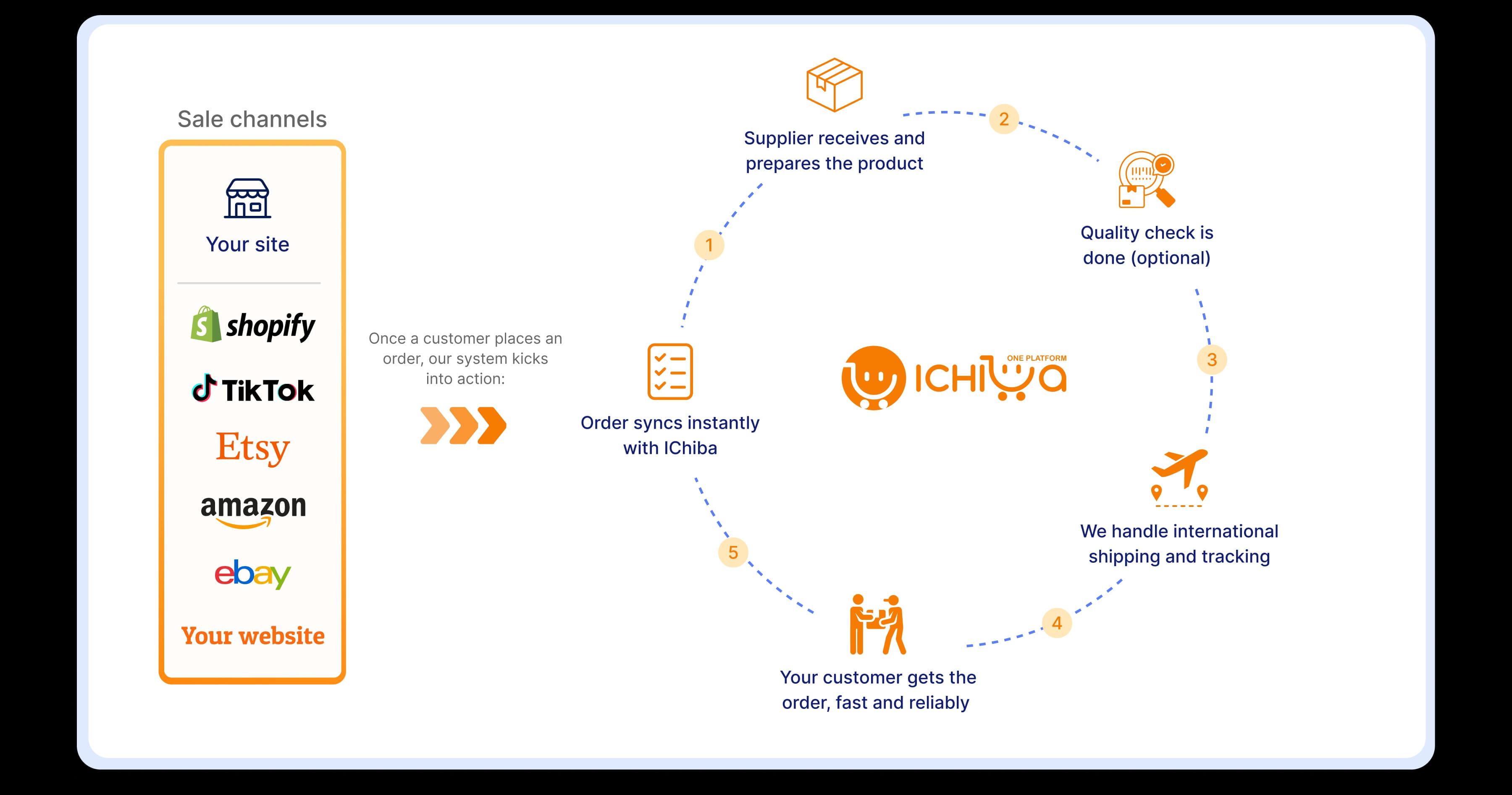
A basic workflow includes:
The customer places an order on the sales channel.
The order is synced or sent to the order management system.
The Japan warehouse receives the order details.
The product is picked, packed, and handed to the carrier.
Tracking is updated to the sales channel.
The customer receives tracking information.
The seller handles support, returns, refunds, or after-sales issues if needed.
At the beginning, sellers may handle part of this process manually. But as order volume grows, manual workflows can create errors. Tracking may be updated late, inventory may become inaccurate, orders may be processed incorrectly, and customer support can become overloaded.
For that reason, sellers should consider order management, inventory sync, or an ecommerce operation platform once the workflow becomes more complex.
China to Japan dropshipping offers strong advantages, but it is also more operationally complex than standard dropshipping.
China offers strong sourcing and manufacturing advantages. Sellers can access a wide range of factories, suppliers, and product categories at competitive prices.
If sellers choose the right supplier, they may benefit from better unit costs, more packaging options, custom product support, and flexible production terms. This can help improve margin, especially for products with clear positioning or stable demand.
However, low product cost is only one part of the equation. Sellers still need to calculate shipping, customs, taxes, warehouse fees, fulfillment, platform fees, and marketing costs.
If inventory is stored in Japan, sellers can deliver faster to Japanese customers than if every order ships directly from China.
This matters when selling on Japan-based marketplaces or competing with local sellers. Japanese buyers often expect clear delivery timelines, accurate tracking, and reliable service. Japan-based fulfillment can help sellers build a more trustworthy buying experience.
Japan-based fulfillment can make a business look more professional than direct China-to-customer shipping.
Products handled in Japan, shipped with clear tracking, and packed consistently may improve customer trust. For some buyers, receiving a product from Japan can feel more reliable, especially if the seller is offering Japan-style products, lifestyle goods, or products that need careful packaging.
Holding inventory in Japan can help sellers access domestic ecommerce channels more effectively.
Japan-based stock may support selling on Amazon Japan, Yahoo Shopping Japan, Rakuten Japan, or local ecommerce stores. Each marketplace has its own requirements, but having fulfillment in Japan can help sellers meet delivery, return, and customer experience expectations more effectively.
For sellers building a business in Japan, this can be an important advantage.
China to Japan dropshipping has more steps than direct dropshipping.
Sellers need to manage Chinese suppliers, China-to-Japan shipping, customs clearance, Japan warehousing, inventory, fulfillment, and last-mile delivery. Each step can create delays or unexpected costs if not managed properly.
Without a clear workflow, sellers may face late inbound shipments, inaccurate stock, unclear tracking, or fulfillment costs that are higher than expected.
Importing goods from China into Japan requires proper customs and import handling.
Sellers need to identify the HS code, declare the correct value, check duties and taxes, prepare invoices and packing lists, and confirm whether the product is prohibited, restricted, or subject to extra documentation.
Some product categories may require inspection, labeling, permits, or certification. If sellers ignore this step, shipments may be delayed, rejected, or become more expensive than planned.
Compared with pure dropshipping, China to Japan dropshipping often requires more setup.
Sellers may need to buy inventory in batches, pay freight charges, use a Japan warehouse, set up a fulfillment partner, check compliance, and build an order management workflow. This means the upfront cost can be higher.
The model is better suited for sellers that want to scale over time, not only test one product quickly. If the seller is new and demand is not proven, starting with small batches is safer than importing large volumes too early.
Legal, tax, and compliance planning are important in China to Japan dropshipping.
Because goods move from China into Japan, sellers need to understand basic import declaration, duties, taxes, restricted products, labeling requirements, and selling regulations in Japan.
When importing goods from China into Japan, sellers need to provide accurate customs information.
Important factors include:
HS code
Product description
Country of origin
Declared value
Quantity
Commercial invoice
Packing list
Importer information
Product documents if required
The HS code can affect duty rates and product requirements. Sellers should not choose it randomly. If they are unsure, they should ask a customs broker, freight forwarder, or compliance partner.
Japan Customs offers official information on import procedures, tariff and duty rates, and Japan’s tariff schedule. Sellers should use these resources as a starting point, then confirm details with a logistics or customs professional.
Duties and taxes depend on product category, customs value, HS code, and current regulations.
Sellers may need to calculate:
Customs duty
Japan consumption tax
Customs clearance fee
Freight-related charges
Import handling cost
A common mistake is calculating only the product cost from China plus basic shipping. That is not enough. Sellers need to calculate the full landed cost to understand whether the product can generate real profit.
Some products may be restricted, controlled, or require extra documentation before they can be imported into Japan.
Categories that need extra review include:
Food
Cosmetics
Supplements
Electronics
Batteries
Medical items
Chemicals
Baby products
Branded goods
Counterfeit-risk products
Products that may violate intellectual property rights
Japan Customs lists multiple prohibited, controlled, and restricted goods, including narcotics, firearms, explosives, counterfeit goods, and goods that infringe intellectual property rights. Sellers should be especially careful with products that have unclear origins, health-related claims, brand names, or safety risks.

If sellers target Japanese buyers, product pages and store operations must also match Japanese consumer expectations and legal requirements.
Sellers should review:
Consumer protection rules
Return policy
Refund policy
Delivery conditions
Product claims
Product safety
Customer support
Pricing transparency
Advertising claims
Product pages should avoid exaggerated claims, especially for cosmetics, supplements, health-related products, or products that affect the body. Information should be clear, accurate, and complete enough for buyers to make a purchase decision.
Some products may require Japanese labels, usage instructions, warnings, ingredient information, material details, country of origin, or importer information.
Labeling requirements depend on product category. Cosmetics, food, electronics, textiles, household goods, and baby products may all have different rules. Sellers should check requirements before importing products.
If a product needs labeling but the seller has not prepared it, the goods may not be ready for sale even after customs clearance.
China to Japan dropshipping can be structured in several ways.
Common options include:
Local entity in Japan
Overseas seller with a Japan-side partner
Distributor or agent model
3PL or fulfillment partner
Ecommerce operation platform
Marketplace-specific setup
B2B reseller model
There is no single best setup for every seller. If sellers only want to test products, a partner or platform-supported model may be more practical. If sellers want to build a long-term business in Japan, a local entity or long-term local partner may be more suitable.
Payment setup depends on the sales channel and target market.
If sellers sell through Shopify or WooCommerce to global buyers, payment setup may be more flexible. If sellers sell on Japanese marketplaces, local payment and bank account requirements may be more complex.
Sellers should check payment requirements before choosing a channel. If they cannot receive payments or connect the required payment system, the selling model may not work.
China to Japan dropshipping is difficult to manage with only spreadsheets and manual communication. Sellers need the right tools for sourcing, shipping, fulfillment, ecommerce operations, automation, and analytics.
Sourcing tools help sellers find products, compare suppliers, and evaluate buying conditions.
Common options include:
Alibaba
1688
Made-in-China
Direct factories
Trading companies
Sourcing agents
Product research tools
Supplier verification tools
Sellers should use sourcing tools to compare suppliers, check MOQ, request samples, evaluate lead time, and confirm whether the supplier has export experience.
Fulfillment and 3PL partners become important once goods are moved into Japan.
Sellers may need:
China freight forwarders
Japan warehouses
Japan 3PL providers
Cross-border fulfillment partners
Consolidation services
Inspection services
Repacking services
Return handling partners
A good 3PL should do more than ship products. It should support receiving, storage, pick-and-pack, tracking, return handling, and reporting. For multi-channel sellers, fulfillment partners should also provide clear order and shipment data.
The sales channel determines how sellers reach customers and process orders.
Possible channels include:
Shopify
WooCommerce
Amazon Japan
Yahoo Shopping Japan
Rakuten Japan
eBay
Social commerce
B2B storefronts
Sellers should choose channels based on their target market. If they sell to Japanese buyers, Japanese marketplaces and localized storefronts become more important. If they sell to global buyers, Shopify, WooCommerce, eBay, or B2B channels may offer more flexibility.
Automation helps reduce errors as order volume grows.
Useful tool categories include:
Order management systems
Inventory sync tools
Product catalog management
Shipping and tracking automation
Analytics dashboards
Multi-channel selling tools
When sellers have only a few orders, automation may not be urgent. But when they manage many SKUs, suppliers, sales channels, and shipments, automation becomes important for operational control.
For sellers planning to scale across channels, this guide on multi-channel ecommerce inventory management is a useful next read.
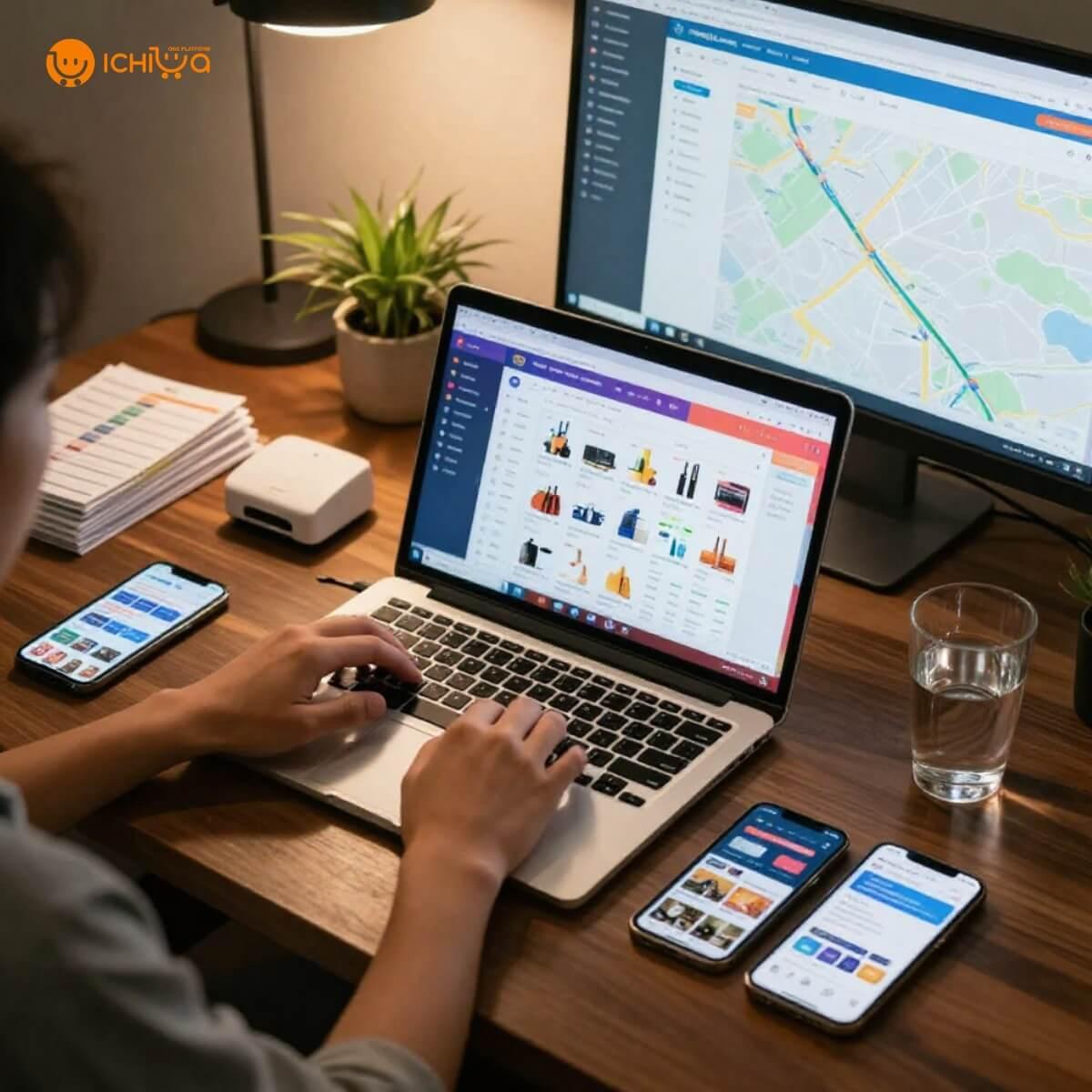
IChiba OnePlatform can be a strong option for sellers that want to build China to Japan dropshipping with more structure instead of managing every supplier, shipment, and order manually.
This model has many moving parts: Chinese suppliers, China-to-Japan shipping, Japan warehousing, fulfillment, sales channels, tracking, customer support, and cost control. If sellers manage each part with separate tools and spreadsheets, operations can quickly become difficult as order volume grows.
IChiba OnePlatform helps sellers connect sourcing, order management, fulfillment, tracking, and multi-channel ecommerce in a clearer workflow. This is important for sellers that want to use China’s supply advantage while relying on Japan-side operations to improve delivery speed, fulfillment control, and sales expansion.
For China to Japan dropshipping, IChiba OnePlatform can act as a commerce operation platform that supports sellers from product sourcing to order fulfillment.
Instead of stopping at sourcing or shipping, IChiba OnePlatform helps sellers manage the full flow:
Product sourcing
Supplier and catalog management
Cross-border operation from China to Japan
Japan-side fulfillment coordination
Inventory and order management
Shipping and tracking workflow
Multi-channel ecommerce support
Data and reporting
The strength of IChiba OnePlatform is operational support. Sellers do not only need to buy goods from China. They need to import them correctly, manage Japan-side inventory, process orders on time, update tracking, and control costs.
Sellers exploring Japan-side sourcing and fulfillment can also read Dropshipping From Japan and Top Japan Dropshipping Suppliers in 2026 for related strategy.
IChiba OnePlatform can support sellers across multiple parts of the workflow.
For sourcing, sellers can manage product data, supplier information, and catalog structure more clearly. For operations, sellers can track orders, fulfillment, and shipment status in a more centralized workflow. For scaling, sellers can use data to understand which products have demand, which costs are affecting margin, and which channels deserve more focus.
For sellers using multiple sales channels, a centralized system reduces manual coordination. Instead of checking many files, suppliers, shipments, and dashboards separately, sellers can build a clearer process for order handling.
Sellers can also explore IChiba’s dropshipping solution to understand how sourcing, fulfillment, and cross-border operations can work together.
China to Japan dropshipping has many moving parts. Without a system, sellers may face late inbound shipments, inaccurate stock, missing tracking updates, rising fulfillment costs, or unclear product margin.
IChiba OnePlatform fits this model because it helps reduce fragmentation in operations. Sellers can connect product sourcing, Japan fulfillment, order management, and multi-channel selling into a workflow that is easier to scale.
The platform is suitable for:
Resellers
Dropshipping sellers
B2B sellers
Brands using Japan as a fulfillment hub
Global sellers connecting China supply with Japan operations
Ecommerce teams that want to scale without too much manual work
For serious sellers, the goal is not only to move products from China to Japan. The goal is to build a system that can handle more orders, more SKUs, more channels, and more markets with better control.
Cost breakdown determines whether China to Japan dropshipping is worth doing.
Many sellers are attracted by low product costs in China. But after adding freight, customs, taxes, storage, fulfillment, last-mile delivery, platform fees, payment fees, returns, and marketing, the final margin may be much lower than expected.
That is why sellers need to calculate landed cost and operating cost before importing products or scaling volume.
A typical cost structure may include:
Product cost from China
Domestic shipping in China
China-to-Japan freight
Customs duties and taxes
Customs clearance fee
Japan warehouse receiving fee
Storage fee
Pick-and-pack fee
Packaging cost
Last-mile delivery
Platform fees
Payment processing fees
Returns and refunds
Marketing costs
Customer service cost
Operation or partner fee
Sellers should calculate costs by SKU, not only as an average across all products. A small, lightweight, low-return product can have a very different margin from a bulky, fragile, or regulated product.
The example below shows why sellers should calculate total cost, not only product cost.
Cost item | Example amount |
Selling price | $50 |
Product cost from China | $12 |
China domestic shipping | $1 |
China-to-Japan freight | $4 |
Duties/tax estimate | $3 |
Japan warehouse and fulfillment | $5 |
Last-mile delivery | $6 |
Platform/payment fee | $4 |
Marketing cost | $5 |
Estimated total cost | $40 |
Estimated profit | $10 |
Estimated margin | 20% |
In this example, the product cost is only $12, but the estimated total cost reaches $40 after logistics, tax, fulfillment, payment, and marketing. If sellers look only at the sourcing price, the product seems attractive. After full cost calculation, the margin is much tighter.
This is why landed cost matters more than product cost alone.
Low product cost does not guarantee profit.
Sellers should evaluate products based on:
Final selling price
Total landed cost
Fulfillment cost
Return risk
Marketing cost
Platform fee
Payment fee
Customer support cost
Repeat purchase potential
Products that are too heavy, too fragile, too cheap, or too competitive can be difficult to scale. Products with clear differentiation, stable demand, manageable shipping, low return risk, and premium positioning are usually better suited for China to Japan dropshipping.
Once the basic workflow is clear, sellers can optimize the model to reduce costs and improve scalability.
Bulk purchasing can reduce unit cost and international shipping cost per item.
However, sellers should only buy in bulk after validating demand. Importing too much inventory too early can create dead stock in a Japanese warehouse. A safer approach is to test small batches, measure demand, calculate real margin, and then increase volume.
Supplier negotiation is not only about getting a lower price.
Sellers should negotiate MOQ, lead time, packaging, inspection, payment terms, sample policy, and reorder process. A reliable supplier can help stabilize product quality and reduce risk as the business grows.
Important negotiation points include:
MOQ
Volume-based unit price
Production lead time
Packaging requirements
Labeling support
Inspection before shipment
Replacement policy
Payment terms
Export documents
A long-term supplier relationship can create more value than simply choosing the cheapest supplier.
Shipping consolidation helps sellers combine goods from multiple suppliers before shipping to Japan.
If sellers buy from several sources, sending many small shipments can increase freight cost. Consolidation can reduce shipping cost, make inbound shipments easier to manage, and improve inventory planning.
Sellers can use a freight forwarder, China warehouse, or sourcing partner to consolidate goods before sending them to Japan. However, consolidation should be planned around sales forecasts to avoid stockouts or excess inventory.
Inventory planning helps sellers keep enough stock for sales without holding too much inventory.
Sellers can group products into categories:
Products being tested
Products with stable demand
Seasonal products
Products with long lead time
Products with high return risk
For products with stable demand, sellers can keep safety stock in Japan. For untested products, they should keep smaller quantities to reduce dead stock risk. Reorder timing should be based on sales velocity, supplier lead time, and shipping time from China to Japan.
If sellers sell to Japanese buyers, product localization is essential.
Localization may include:
Japanese product titles
Japanese product descriptions
Japanese labels if required
Usage instructions
Product warnings
Size and material information
Suitable packaging
Customer support content
Return and shipping policy
If sellers sell to global buyers from a Japan fulfillment hub, localization should still match the target market. A product page for Japanese buyers will not be the same as a product page for US buyers or Southeast Asian buyers.
Good localization improves trust and conversion, especially for new products or unfamiliar brands.
Yes, China to Japan dropshipping can be legal if sellers follow import, tax, product compliance, labeling, and consumer protection requirements.
Sellers should check product requirements before sourcing and shipping. Some products may require permits, certificates, Japanese labels, or additional documents. If sellers are unsure, they should consult a customs broker, logistics partner, or local compliance advisor.
It may be possible in some models, but direct China-to-customer shipping often has longer delivery times and lower local trust than Japan-side fulfillment.
For serious selling in Japan, holding some inventory in Japan or using a Japan fulfillment partner may be better. This can improve delivery speed, tracking, and customer experience.
The best products are usually lightweight, easy to ship, low-risk from a compliance perspective, stable in demand, and profitable after all costs are calculated.
Sellers should prioritize products that are:
Lightweight
Non-regulated
Easy to package
Low return risk
Clear in use case
Visually appealing
Healthy in margin
Stable in demand
Sellers should be careful with fragile products, heavy items, batteries, chemical ingredients, health-related claims, or branded products without clear documentation.
It depends on the sales channel, product category, and business model.
If sellers sell on Japanese marketplaces, payment setup or store requirements may require local business presence. If sellers sell through Shopify or global channels while using Japan as a fulfillment hub, the setup may be more flexible.
Sellers can consider a local entity, Japan-side partner, distributor, 3PL, or ecommerce operation platform depending on long-term goals.
The best platform depends on sourcing needs, fulfillment model, order volume, sales channels, and compliance requirements.
For sellers that need to connect China supply, Japan fulfillment, order management, and multi-channel ecommerce, IChiba OnePlatform can be a strong option. The platform helps sellers control the workflow from sourcing to fulfillment more clearly, instead of managing everything manually across disconnected partners and tools.
China to Japan dropshipping can help sellers combine China’s sourcing advantage with Japan’s fulfillment, logistics, and market access. When managed properly, the model can support competitive product costs, faster delivery in Japan, better customer experience, and more structured cross-border ecommerce growth.
However, this is not a simple model. Sellers need to manage logistics, customs, tax, compliance, labeling, landed cost, inventory, and fulfillment workflow. If sellers look only at low product cost and ignore operational expenses, margin can disappear quickly.
For sellers that want to build China to Japan dropshipping with more control, IChiba OnePlatform can support sourcing, order management, fulfillment coordination, tracking, and multi-channel growth through a more centralized workflow.
The goal is not only to move products from China to Japan. The goal is to build a cross-border ecommerce operation that can scale sustainably, control costs, and create a better buying experience for customers.

Work with us
Our solutions
Address:
 〒136-0082, Japan, Tokyo, Koto-ku, Shinkiba 3-5-6, 5F
Connect us:


Japan
〒136-0082, Japan, Tokyo, Koto-ku, Shinkiba 3-5-6, 5F
Texas, USA
1606 Audrey Dr, Garland, TX 75040, United States
California, USA
1316 John Reed Ct, City of Industry, CA 91745, United States